
Featured Anti-Vibration Mounts for Textile Infrastructure
Precision-calibrated elastomeric, pneumatic, and spring-damped units designed to neutralize high-frequency reciprocal shock loads and structural floor resonance in textile production sheds.

Low Price BKVV Type Rubber Mounts

High-Quality BK-A Type Air Mounts

High-Quality MB Type Spring Mounts

High-Quality BKDD Type Rubber Mounts

High-Quality BK-MT Matrix Mount

Custom BKDE Type Rubber Mounts

High-Quality CPB Type Inertia Bases

BK-DT Optical Vibration Platform
Industrial Status: Dynamics of Modern High-Speed Weaving & Spinning
How modern rapier, air-jet, and water-jet weaving looms running at over 800 to 1,200 picks per minute (PPM) exert severe dynamic cyclic stress, demanding heavy-duty engineered damping.
Reciprocating Inertial Shock Loads
In modern rapier and air-jet looms, the sley mechanism and rapier drive generate massive horizontal reciprocating forces. Left unmitigated, these dynamic lateral forces induce severe foundation fatigue, machine "walking," and premature bearing spalling.
Multi-Story Mill Floor Resonance
Industrial land constraints across South Asian and Southeast Asian textile hubs (such as Bangladesh, Vietnam, and India) have forced manufacturing into multi-story reinforced concrete structures. Without low natural frequency isolators, harmonic floor excitation risks structural cracking.
Fabric Quality & Yarn Breakage Reduction
Excessive structural vibration manifests directly as warp tension fluctuations, reed marks, and weft insertion faults. Engineered damping systems stabilize the loom frame, decreasing yarn breakage rates by up to 32% and boosting machine efficiency.
The global textile machinery sector has transitioned from simple, slow mechanical operations to ultra-high-speed mechatronic manufacturing plants. Ring spinning machines now exceed 25,000 RPM, and shuttleless weaving equipment operates under violent, intermittent acceleration peaks exceeding 3.5 G to 5.0 G. Historically, textile mills relied on rudimentary recycled neoprene pads or rigid anchor bolting. Rigid bolting transmits nearly 100% of cyclic shear energy into building slabs, resulting in resonance amplification where building natural frequencies (typically 4–8 Hz) align with loom beat-up frequencies.
Consequently, the demand for precision textile machinery dampers has surged worldwide. Modern textile engineers no longer view anti-vibration mounts as simple rubber feet, but as critical kinematic decoupling elements. Selecting an optimal isolator requires calculating the disturbing frequency (fd), the natural frequency of the mounting system (fn), and maintaining an isolation ratio of fd / fn ≥ 3 to achieve over 90% vibration reduction.
Next-Generation Isolation Architectures for Textile Plants
From multi-axial elastomeric shear cores to pneumatic self-leveling arrays and IoT-enabled predictive telemetry.
Hybrid Viscous-Elastomeric Cores
Integrating high-damping natural rubber polymers (Shore A 45–70) with internal viscous silicon dampening fluid to suppress transient start-up and shutdown resonance without excessive displacement.
Self-Leveling Pneumatic Systems
Utilizing closed-loop precision air mounts (such as the BK-A and BK-R series) with mechanical proportional leveling valves. These maintain a constant machine datum plane within ±0.05 mm under shifting fabric rolls.
IoT Wireless Vibration Telemetry
Embedding MEMS tri-axial accelerometers and temperature sensors into damper housings. Real-time vibration spectral metrics are streamed to mill edge-servers to forecast bearing failure before catastrophic line shutdowns.
Corrosion & Chemical Immunity
Standardization of 900-hour Dacromet protective treatments across all metallic housings, paired with specialized synthetic nitriles engineered to withstand harsh scouring steam, alkaline dye-mists, and oil sprays.
Engineering Insight: Active vs. Passive Damping in Textile Machinery
While active electromagnetic damping platforms dominate semiconductor lithography, their prohibitive expense ($15,000–$40,000 per axis) renders them economically unviable for textile weaving sheds operating hundreds of looms. The prevailing industrial roadmap champions optimized passive elastomeric matrix systems and hybrid spring-viscous isolators. These deliver 95%–99% of active-system performance at less than 5% of the total equipment capital expenditure.
Low Price Factory Economics: Cost Drivers & Procurement TCO
How Bellking’s integrated Kunshan manufacturing base delivers true factory-direct wholesale pricing without compromising alloy metallurgy, vulcanization chemistry, or cycle life.
Procuring industrial vibration isolators for large textile facilities often exposes buyers to wide price variations. Commercial markups from international trading companies frequently inflate equipment costs by 200% to 350%. Sourcing direct from an established ISO 9001 production factory like Bellking Vibration Reduction Equipment Manufacturing (Kunshan) Co., Ltd. secures genuine wholesale tier pricing structured on measurable engineering specifications rather than distributor markups.
| Damper Series | Isolation Type | Natural Freq. (fn) | Typical Textile Application | Estimated Factory Price Range (USD) | Service Life Expectancy |
|---|---|---|---|---|---|
| BKVV / BKDD Series | Elastomeric Rubber Mount | 8.0 – 14.0 Hz | Circular knitting, small winding frames, yarn texturizers | $8.50 – $24.00 / pc | 8 – 12 Years |
| BKDE Series | Shear-Damped Rubber Foot | 7.0 – 12.0 Hz | Carding machines, draw frames, blowroom machinery | $14.00 – $38.00 / pc | 10 – 12 Years |
| MB / MD Series | Open/Enclosed Spring Mount | 3.0 – 5.0 Hz | Heavy rapier looms, air compressors, chillers, water pumps | $32.00 – $85.00 / pc | 15+ Years |
| BK-MT Series | Multi-Mount Matrix Array | 4.5 – 8.0 Hz | High-speed projectile looms, stenter frames, fabric dryers | $45.00 – $120.00 / pc | 12 – 15 Years |
| BK-A / BK-R Series | Pneumatic Air Mount | 1.7 – 3.2 Hz | Precision textile inspection stations, metrology tables | $110.00 – $290.00 / pc | 6 – 8 Years |
| CPB Series | Inertia Base & Pump Frame | Tunable (2.5–4.5 Hz) | Central HVAC air conditioning units, primary dye pumps | $280.00 – $850.00 / set | 20+ Years |
Raw Material Cost Optimization
By procuring high-silicon 60Si2Mn spring steel and virgin natural rubber compounds at bulk scale (over 100,000 units annually), raw material consumption costs are minimized, lowering per-unit prices for tier-1 mill contracts.
Automated Robotic Manufacturing
Our 2,000 m² Kunshan facility integrates CNC multi-axis turning, automatic robotic welding, and automated powder coating, cutting direct human assembly labor hours by 42% while holding dimensional tolerances within ±0.02 mm.
Calculated ROI & TCO Breakdown
Implementing engineered dampers delivers full payback within 6 to 9 months by preventing loom structural fatigue, eliminating concrete anchor pull-out repairs, and decreasing building maintenance downtime.
Localized Application Scenarios in Mill Environments
Addressing specific dynamic challenges across multi-tier spinning sheds, corrosive wet-dyeing facilities, and ultra-high-speed shuttleless weaving sheds.
Scenario A: Vertical Multi-Story Weaving Mills
Location Profile: Urbanized industrial parks in Dhaka, Chittagong, Surat, and Ho Chi Minh City.
The Problem: Scores of water-jet and rapier looms operating on 2nd, 3rd, and 4th elevated concrete floor slabs generate dangerous structural harmonic resonance. Floor oscillation can exceed 4.5 mm/s, causing employee fatigue and wall shear cracking.
The Solution: Installing MB Type Anti-Vibration Spring Mounts paired with internal high-damping polymer stops. Natural frequency is dropped to 3.5 Hz, delivering a 94% reduction in transmitted dynamic floor shear.
Scenario B: Humid, Acidic Dyeing & Finishing
Location Profile: Textile finishing, bleaching, and stenter drying departments.
The Problem: Relative humidity exceeds 85% RH at 45°C ambient, compounded by airborne sulfuric fumes, bleach aerosols, and wash-down chemicals. Standard electro-galvanized mounts rust through within 14 months.
The Solution: Specifying BKDJ Rubber Pads and BKDD Rubber Mounts manufactured with high-density EPDM/nitrile elastomeric compounds and 900-hour Dacromet-coated fasteners to guarantee over a decade of corrosion-free performance.
Scenario C: Air-Jet Looms & Precision Spinning
Location Profile: Ultra-fast denim and synthetic weaving facilities operating air-jet looms at 1,000+ PPM.
The Problem: Intense horizontal beat-up shocks trigger lateral displacement ("machine creep"), pulling rigid pneumatic airlines out of alignment and warping warp tension reeds.
The Solution: Deploying BK-MT Matrix Anti-Vibration Mounts. The multi-directional elastomeric orientation provides high lateral shear stiffness while preserving vertical compliance, halting machine drift completely without floor bolting.
Macro Plant Vibration Control & Mechanical Isolation
Integrating isolated foundations, dynamic pump inertia slabs, and overhead suspended piping to decouple the entire textile production facility.
Comprehensive vibration reduction in a modern textile facility extends beyond the footprint of the loom itself. Auxiliary support infrastructure—including multi-stage high-pressure air compressors (powering air-jet weft insertion), industrial chillers, supply fans, and high-velocity overhead yarn suction ducts—generates intense broadband structure-borne acoustic noise.
1. Concrete Inertia Base Decoupling (CPB Series)
For heavy reciprocating air compressors and primary dye circulation pumps, mounting directly to elastomeric feet is insufficient. Unbalanced rotational torque causes significant angular rocking. Integrating concrete-filled steel CPB Type Inertia Bases lowers the overall center of gravity, multiplies total mass by 1.5x–2.0x, dampens start-up surging, and isolates dynamic hydraulic pulsation from rigid pipe unions.
2. Suspended Piping & Overhead Ductwork Isolation (HV & Spring Hangers)
High-velocity yarn exhaust fans and humidification duct systems suspended from roof trusses frequently convert ceiling structures into giant sounding boards. Retrofitting overhead supports with HV Type Spring Hangers and elastomeric rod isolators breaks mechanical flanking transmission paths, dropping indoor ambient plant acoustics by 8 to 14 dBA.
3. Foundation Isolation Trenching & Perimeter Polymer Pads
For ultra-sensitive testing labs housing tensile testers, spectrophotometers, and yarn regular testers situated adjacent to the primary weaving floor, structural foundation isolation is mandatory. Cutting a 100 mm continuous perimeter isolation trench filled with high-density closed-cell BKDJ Rubber Pads arrests Rayleigh surface waves, shielding measurement accuracy from adjacent loom impacts.
Why Global Textile Mills Partner with Bellking
Founded in 2013 in Kunshan, China. A recognized National High-Tech Enterprise holding 37 patents, operating full in-house spectrum testing, tension-compression cycling, and Dacromet coating lines.
Years Dedicated R&D Engineering
Peak Vibration Isolation Efficiency
Patents (Incl. 16 National Inventions)
Salt Spray Resistance (Dacromet)
Precision Dynamic Testing
Every production batch undergoes dynamic stiffness calibration, Fourier spectrum resonance verification, and hydraulic cyclic loading to verify damping ratios before container shipping.
24-Hour Engineering Turnaround
Provide loom model, total operating weight, center of gravity coordinates, and operating RPM. Bellking vibration engineers return a complete static deflection and isolation plan within 24 hours.
Direct Export Packaging
Heavy-duty fumigated wooden palletizing and vacuum moisture-barrier casing protect steel spring elements and precision air bellows during ocean freight to global destination ports.
Frequently Asked Questions by Textile Engineering Teams
Key calculations, elastomeric material selections, and installation recommendations for textile plant facility managers.
How do I calculate the required natural frequency (fn) for high-speed rapier and air-jet looms?
Why shouldn't textile looms be rigidly anchored to concrete floors with expansion bolts?
What rubber elastomer formulation should be specified for humid dyehouse environments?
What is the expected operating lifespan of Bellking textile machinery dampers?
How does Bellking ensure price competitiveness compared to European brands?
Can Bellking provide customized mounting brackets for non-standard or older loom feet?
Industrial Isolation Mounts, Hangers & Damping Pads
Complete structural isolation solutions for textile infrastructure—covering suspended yarn exhaust systems, overhead steam headers, carding machines, and auxiliary blowers.
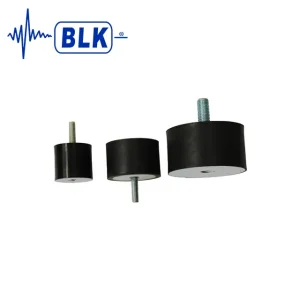
Custom BKVD Type Rubber Mounts
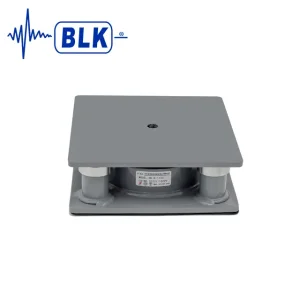
High-Quality BK-R Type Air Mounts

Custom Anti-Vibration Spring Hangers

High-Quality MD Type Spring Mounts

High-Quality HV Type Spring Hangers
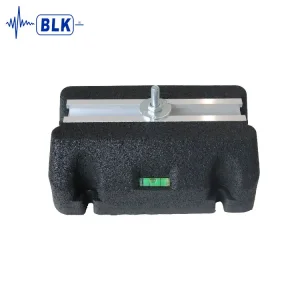
High-Quality BKDJ Type Rubber Pad

High-Quality BKHQ Type Rubber Mounts

Custom BK-DSR Damped Rubber Mounts
How to Request a 24-Hour Sizing & Factory Price Proposal
Follow our 4-step engineering inquiry protocol to receive custom dynamic damping calculations, CAD layout drawings, and transparent wholesale tier pricing directly from our engineering team.
1. Equipment Parameters
Provide the machine brand and model (e.g., Picanol, Toyota, Tsudakoma, Itema), net operational weight with maximum fabric roll load, and the total number of mounting footplates.
2. Kinematic Frequencies
Specify normal operating speed in Picks Per Minute (PPM) or drive motor RPM, along with primary excitation vectors (predominantly horizontal sley motion vs. vertical reciprocating punch).
3. Floor & Ambient Factors
Indicate the installation subfloor type (grade slab vs. elevated suspended concrete floor) and environmental exposure (relative humidity, chemical vapors, or wash-down requirements).
4. Custom Engineering Plan
Our Kunshan engineering office will deliver a formal vibration isolation calculation report within 24 hours—detailing natural frequencies, dynamic safety factors, and direct factory pricing.
Ready to Engineer Your Mill's Vibration Decoupling Solution?
Contact our technical team at [email protected] or call +86-0512-55002468 for factory-direct price sheets, full load-deflection test reports, and custom OEM manufacturing lead times.
Contact Our Application Engineers