
Primary Transformer Isolation & Damping Product Range
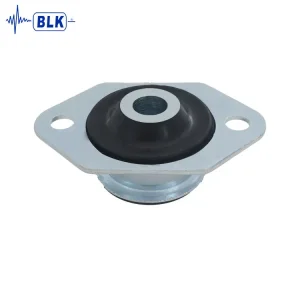
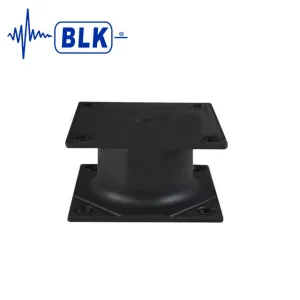
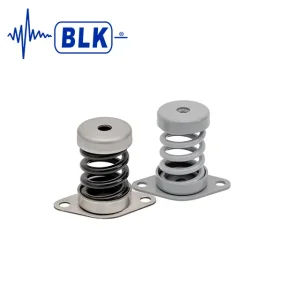
Factory-direct engineered mounts, spring dampers, and precision air platforms designed for heavy electrical machinery and distribution transformers.





Executive Summary & Macro Industry Landscape
Why electrical infrastructure expansion is driving unprecedented demand for cost-effective, high-performance transformer vibration isolation pads globally.
In modern power distribution, electrical transformers—ranging from dry-type distribution units in commercial high-rises to massive oil-immersed step-down transformers in high-voltage substations—are indispensable. However, the operational dynamics of electrical transformers inherently generate continuous low-frequency structure-borne vibration and acoustic noise. This phenomenon is predominantly driven by magnetostriction in the magnetic core and electromagnetic forces within the windings, oscillating at fundamental frequencies of 100 Hz / 120 Hz along with their higher harmonic multiples.
Uncontrolled structure-borne vibration propagates through building foundations, steel superstructures, and rigid conduit networks. Over time, this leads to structural fatigue, loosening of critical electrical connections, premature insulation breakdown, severe acoustic discomfort in nearby tenant areas, and non-compliance with strict municipal noise standards (such as ISO 3744 and OSHA noise exposure limits).
The global transformation toward renewable energy integration (solar PV farms, offshore wind sub-stations), energy storage systems (BESS), hyperscale data centers, and urban industrial parks has escalated procurement demands for highly reliable, highly durable, yet cost-optimized transformer vibration isolation pads. Procurement directors and EPC (Engineering, Procurement, and Construction) contractors are no longer satisfied with choosing between expensive Western tier-1 suppliers and unverified, low-grade rubber sheets. The modern market demands transparent price structures, quantifiable technical parameters (natural frequency, damping ratio, loss factor), and proven OEM-level manufacturing capability.
Technical Deep-Dive: Physics of Transformer Isolation & Pad Engineering
Understanding the mathematical mechanics, elastomer compounding, and structural dynamics required for maximum attenuation of structure-borne noise.
1. Magnetostriction and Dynamic Excitation
When an alternating current passes through transformer core laminations, the magnetic field causes microscopic expansion and contraction of the silicon steel plates. Because magnetostriction is independent of voltage polarity, the core strain reaches peak deformation twice per AC cycle. Consequently, a 50 Hz power supply produces a 100 Hz fundamental vibration frequency, whereas a 60 Hz system vibrates fundamentally at 120 Hz. Additional high-frequency harmonics (200 Hz, 300 Hz, 360 Hz, etc.) are generated due to core non-linearities and cooling fan/pump operation.
2. Isolation Efficiency & Frequency Ratio ($f/f_n$)
To isolate a vibrating mass, the natural frequency ($f_n$) of the installed pad must be significantly lower than the disturbing frequency ($f$) of the transformer. The fundamental isolation transmissibility ($T$) equation is expressed as:
T = | 1 / ( (f / f_n)^2 - 1 ) |
Isolation efficiency ($\eta$) is defined as $\eta = (1 - T) \times 100\%$. Isolation only occurs when $f / f_n > \sqrt{2} \approx 1.414$. To achieve an engineering-grade isolation efficiency exceeding 90% at 100 Hz fundamental harmonic excitation, the isolator pad's natural frequency under static equipment load should ideally be engineered between 6 Hz and 15 Hz.
3. Polymer & Composite Material Science
Unlike generic rubber sheets that experience severe long-term creep (permanent plastic deformation) and environmental cracking, professional transformer vibration isolation pads are engineered from high-grade elastomeric compounds:
Offers exceptional compression set resistance, high mechanical shear strength, and superior resistance to transformer oils, ozone, and weathering. Ideal for indoor and outdoor transformer enclosures.
Formulated specifically for oil-immersed transformers where potential dielectric oil spills or leaks occur. NBR provides chemical inertness while EPDM delivers high damping loss factor ($\eta > 0.15$).
Utilizes cellular void structures to allow volumetric expansion under load. Delivers extremely low natural frequencies (down to 6 Hz) under heavy static loading without excessive pad thickness.
Pricing Drivers, Manufacturer Selection & Total Cost of Ownership (TCO)
Unpacking the economic realities: How low-price direct factory manufacturing achieves cost savings without compromising acoustic performance or safety.
When searching for "low price transformer vibration isolation pads manufacturers & price", B2B procurement managers frequently encounter vast price disparities. Standard elastomeric pads range from $15 to $150+ USD per set depending on material grade, dynamic load rating, seismic certification, and branding overhead.
| Manufacturer Tier | Average Price Range (Per Set) | Material & Compound Quality | Technical Documentation | Total Cost of Ownership (15-Yr Horizon) |
|---|---|---|---|---|
| Western Brand Distributors | $120 - $280 USD | Standard Neoprene / EPDM | Complete Data Sheets & Software | High (Excessive upfront capital expenditure) |
| Direct ISO OEM Manufacturers (e.g. Bellking) | $25 - $75 USD | Engineered Microcellular / High-Grade NBR | Full Test Reports, CAD/BIM, ISO 9001 | Optimal (Lowest TCO, Factory Direct Savings) |
| Uncertified Commercial Rubber Suppliers | $8 - $18 USD | Recycled / Unspecified Rubber | None or Basic Datasheet | Severe Risk (Pad crushing, early replacement cost) |
Key Factors Influencing Manufacturing Cost & Unit Price
Virgin polychloroprene and specialized polyurethane resins command higher raw material costs than filler-heavy recycled rubber compounds, but prevent pad hard-hardening and compression setting over 15+ years.
Pads incorporating vulcanized steel load-distribution plates require precise surface grit-blasting and specialized adhesive primer application. Advanced surface treatments like Dacromet coating provide 900-hour salt spray corrosion defense.
Standard off-the-shelf dimensions (e.g., 100x100mm, 150x150mm, 300x300mm) eliminate custom mold tooling expenses. Custom geometry or specialized bolt-down hole patterns incur modest initial tooling setup fees.
Global Enterprise Procurement Requirements & Supply Chain Security
Ensuring compliance with international electrical codes, environmental mandates, and rigorous factory audit protocols.
When global power utilities, EPC engineering companies, and OEM transformer manufacturers source vibration isolation pads internationally, vendor qualification extends far beyond unit price. Procurement teams must audit manufacturing operations across critical compliance vector check-points:
Substations located in active seismic zones require transformer mounting pads designed to withstand high horizontal shear acceleration (up to 0.5g or 1.0g peak ground acceleration) without structural shear failure or transformer displacement.
International electrotechnical standards require accurate determination of transformer sound levels. Vibration pads must demonstrate verified decibel (dB) reduction in structure-borne transmissibility under full-load operation.
Elastomeric compounds must be completely free of toxic heavy metals, polycyclic aromatic hydrocarbons (PAHs), and restricted plasticizers to comply with European Union and North American environmental building directives.
Macro Industry Engineering Solutions by Application Sector
Tailored vibration control strategies for commercial buildings, heavy industrial plants, hyperscale data centers, and renewable power infrastructure.
Challenge: Dry-type transformers installed in upper-floor electrical rooms transfer low-frequency humming directly to concrete floor slabs, causing noise complaints in offices or residential spaces below.
Solution: Multi-layer elastomeric pad matrices combined with rubber-sleeved anchor bolts (to eliminate acoustic bridging). Provides 15–22 dB structure-borne sound attenuation.
Challenge: Continuous high current loads generate thermal stress alongside constant micro-vibration, which can impact delicate fiber-optic alignment and server hard disk read/write heads.
Solution: Heavy-duty oil-resistant compound pads with steel shim reinforcement designed for high static load ratings (up to 150 kg/cm²) and extreme dimensional stability.
Challenge: Inverter transformers in desert or coastal PV installations face extreme temperature swings (-40°C to +80°C), UV radiation, and high humidity.
Solution: UV-stabilized EPDM and silicone-modified elastomeric pads tested for zero cracking after 1,000 continuous hours of accelerated weathering tests.
Localized Engineering Integration & Installation Guidelines
Step-by-step field guidance to prevent acoustic short-circuiting and guarantee optimal dynamic isolation performance.
Even the highest quality vibration isolation pad will fail to perform if installed incorrectly. Field engineers must adhere to four essential installation rules to prevent dynamic short-circuiting:
- Uniform Load Distribution: Calculate exact center-of-gravity (CG) position. Oil-immersed transformers frequently have asymmetrical weight distribution due to radiator banks and high-voltage bushings. Pad surface area must be adjusted under each foot to achieve identical unit compression.
- Eliminate Rigid Acoustic Bridges: Anchor bolts must never make direct metal-to-metal contact with the transformer mounting flange. Use isolation washers and elastomeric bushing sleeves around every hold-down bolt.
- Flexible Conduit Connections: All electrical busway connections, high-voltage cables, and grounding straps connected to the transformer must incorporate flexible expansion loops to prevent mechanical transmission bypass.
- Clean Base Surfaces: The concrete housekeeping pad or structural steel beam must be flat, smooth, and free of debris before pad positioning to avoid point-loading stress concentrations.
Technical Roadmap: Next-Generation Vibration Mitigation Trends
How IoT integration, smart sensor pads, and bio-based meta-materials are redefining electrical grid damping.
Future transformer isolation pads are integrating embedded piezoelectric sensors and micro-transmitters directly within the vulcanized elastomeric core. These sensors continuously track static load deflection, temperature gradients, and vibration frequency spectra, feeding real-time predictive maintenance data to SCADA and building management systems (BMS).
Advances in additive manufacturing and metamaterial geometry enable creation of internal pad lattice structures that feature complete acoustic band-gaps. These targeted sub-wavelength structures selectively block target harmonic frequencies (e.g., 100 Hz and 200 Hz exactly) while maintaining massive static load bearing capacities.
Aligned with global net-zero sustainability goals, next-gen pads utilize renewable bio-based elastomers derived from plant polymers without degrading oil resistance, flame retardancy (UL 94 V-0 compliance), or 20-year structural degradation limits.
Frequently Asked Questions (FAQ) & Engineering Procurement
Detailed technical solutions for common challenges faced by electrical engineers, EPC buyers, and facility managers.
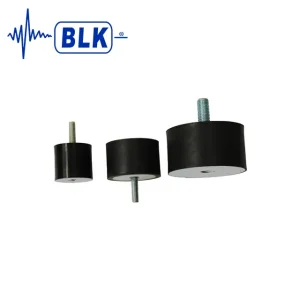
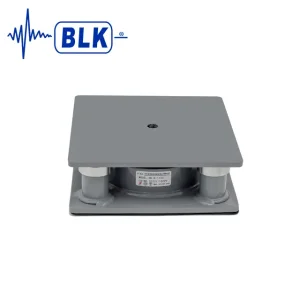
Secondary Transformer & Equipment Isolation Product Line
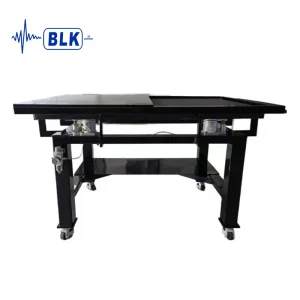
Extended series featuring precision air platforms, rubber buffers, damped mounts, and heavy-duty hangers for comprehensive plant acoustic treatment.





Request Direct Factory Pricing & Custom Sizing Technical Support
Contact Bellking's application engineering team for rapid 24-hour vibration isolation plans, OEM project quotes, and complete CAD submittal packages.