
Direct Sourcing Lineup (Part I)
High-Capacity Vibration Control & Base Isolators
Explore high-precision pneumatic mounts, damped spring bases, and elastomeric vibration isolators designed for HVAC, heavy machinery, and metrology platforms.

Low Price BK-DS Type Damped Spring Mounts Factory, Manufacturers
View Specifications
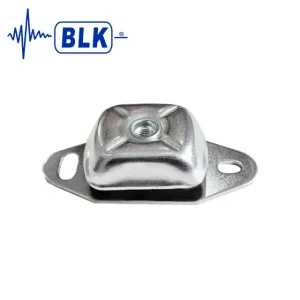
High-Quality BKHQ Type Rubber Mounts Factory, Manufacturers
View Specifications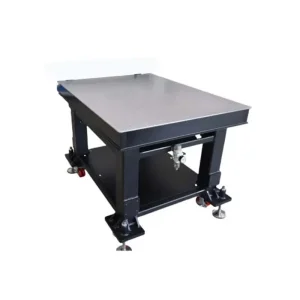
High-Quality BK-DT Type Low-Frequency High-Damping Optical Vibration Isolation Platform Factory, Manufacturer
View Specifications
High-Quality BKDD Type Rubber Mounts Factories, Manufacturers
View Specifications
High-Quality BK-PF Type Precision Air Mounts Factories, Manufacturer
View Specifications
High-Quality MB Type Anti-vibration Spring Mounts Factory, Manufacturer
View Specifications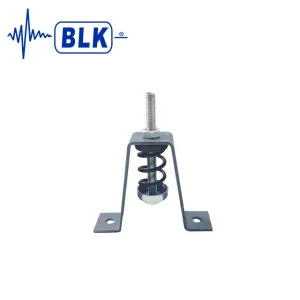
High-Quality HV Type Spring Hangers Manufacturers, Manufacturer
View Specifications
Technical Whitepaper
The Physics & Economics of Vibration Isolation Bases
An engineering deep-dive on mechanical resonance control, mass-spring-damper dynamics, and how advanced manufacturing clusters break the trade-off between price and structural reliability.
Unlocking Low Total Sourcing Cost Without Compromising Dynamic Rigidity
In modern industrial architecture and mechanical engineering, mechanical vibration represents wasted kinetic energy that causes premature bearing wear, structural fatigue, acoustic radiation, and metrology measurement distortion. For procurement executives and consulting MEP engineers, searching for a low price vibration isolation base factory or manufacturer has traditionally raised justified concerns regarding compromised steel stiffness, inferior spring tempering, and deficient rubber vulcanization.
However, modern computerized production lines—characterized by robotic MIG/TIG welding cells, automated structural plasma cutting, laser profiling, and integrated finite element analysis (FEA)—have transformed the cost curve. By fabricating high-capacity structural inertia bases, pump bases, and steel frames within tightly concentrated industrial ecosystems such as Kunshan, China, tier-1 manufacturers achieve significant economies of scale, slashing baseline unit fabrication overhead while maintaining strict compliance with global vibration standards such as ASHRAE 171, ISO 10816, and IBC seismic building codes.
- Structural Mass Optimization: Engineered concrete-filled inertia bases maximize center-of-gravity stabilization without excess uncalibrated deadweight.
- Broadband Attenuation: Combining low-stiffness coil springs (natural frequencies from 3–5 Hz) and precision pneumatic cells (down to 1.7 Hz).
- Direct Factory Margins: Direct procurement eliminates middle-tier distribution markups, delivering up to 40% cost reduction for infrastructure projects.
99%
Peak Attenuation Efficiency Across Resonant Spectra
1.7Hz
Ultra-Low Natural Frequency in Precision Air Mounts
900h+
Dacromet Salt Spray Anti-Corrosion Rating
15yrs+
Structural Design Life in Rigorous Industrial Regimes
Technical Baseline
Engineering Comparison Matrix: Base Types & Elastomers
Detailed mechanical characteristics across isolator classes, detailing load thresholds, natural frequencies, and target excitation environments.
| Base System / Isolator Architecture | Natural Freq. (fn) | Damping Ratio (ζ) | Max Load / Point | Corrosion Defense | Primary Industrial Application | Lifecycle Status |
|---|---|---|---|---|---|---|
| CPB Structural Concrete Inertia Base | 2.5 – 4.5 Hz (w/ springs) | 0.08 – 0.15 | Up to 15,000 kg | Epoxy / Dacromet HW | End-suction pumps, dual chillers, compressors | 15+ Years Service |
| BK-DT High-Damping Optical Table Base | 1.2 – 2.0 Hz | 0.12 – 0.22 | 350 – 2,500 kg | Anodized Al / Powder Coat | Laser interferometers, metrology stages, cleanrooms | Cleanroom Class 100 |
| BK-DS Heavy Damped Spring Mounts | 3.0 – 5.0 Hz | 0.06 – 0.14 | 50 – 8,000 kg | 900h Salt Spray Dacromet | Rooftop cooling towers, gensets, AHUs | 15+ Years Service |
| BK-PF Active-Ready Pneumatic Cells | 1.7 – 2.5 Hz | 0.05 – 0.10 | 150 – 4,200 kg | Nickel Plated / Nitrile | Lithography tools, electron microscopy (SEM/TEM) | 6+ Years Elastomer |
| BKM / BKHQ Engineered Rubber Mounts | 6.0 – 12.0 Hz | 0.15 – 0.28 | 25 – 1,200 kg | Zinc Dichromate / EPDM | High-RPM hydraulic units, motors, CNC spindles | High Shear Resilient |
Field Deployment
Localized Engineering Application Scenarios
From skyscraper mechanical penthouses to sub-nanometer cleanrooms, vibration bases must withstand diverse geographic, environmental, and structural boundary conditions.
Commercial HVAC & Building Plantrooms
Heavy centrifugal chillers, reciprocating compressors, and massive cooling towers installed on upper roof slabs create severe structure-borne vibration that travels through concrete framing. Concrete-filled inertia bases (such as the CPB line) equipped with unrestrained or housed spring isolators lower the assembly's composite center of gravity, mitigating rocking mode coupling and absorbing starting torque while blocking over 95% of harmonic energy.
Semiconductor Lithography & Metrology
Nanoscale fabrication plants operate under stringent generic vibration criterion (VC) curves ranging from VC-C to VC-E (down to 3.12 μm/s RMS velocity). The BK-PF and BK-DT optical platforms leverage ultra-low-frequency pneumatic air chambers, leveling valves, and auxiliary chambers to isolate automated wafer probers, scanning electron microscopes (SEM), and atomic force microscopes (AFM) from ambient foot traffic and HVAC turbulence.
Power Substations & Step-Down Transformers
Electrical substations deployed near high-density residential zones or within mission-critical hyperscale data centers generate persistent low-frequency core magnetostriction hum (100 Hz / 120 Hz harmonics). Bellking's dedicated transformer damping pads and tuned isolator assemblies break acoustic resonance paths, achieving compliant dB(A) perimeter noise levels while enduring heavy static dead loads without creep.
Acoustic Retrofits & Studio Floating Floors
Upgrading existing commercial concrete buildings for broadcast studios, luxury penthouses, or vibration-sensitive testing laboratories demands low-profile isolation solutions. Engineered elastomer buffers and damped spring assemblies decouple floating slabs and modular machinery beds, preventing flanking transmission across architectural boundaries without requiring major foundation excavations.
Heavy Stamping Presses & Machine Tools
Reciprocating punch presses, plastic injection molders, and CNC milling centers generate extreme transient shock impulses of 3–5 G. Bellking heavy-duty elastomeric buffers and damped spring bases provide high viscous dampening to rapidly dissipate shock wave transients, preserving foundation slab integrity and shielding adjacent coordinate measuring machines (CMM).
Seismic & Wind Restrained Installations
Mechanical equipment mounted in high-risk seismic zones (IBC Seismic Design Categories C through F) requires all-directional solid mechanical snubbers to limit displacement during a tremor. Bellking seismic-rated spring bases incorporate internal multidirectional elastomeric snubbers, ensuring continuous dynamic isolation under normal service while safely arresting extreme horizontal shear loads.
Sourcing Intelligence
China Factory Supply Chain Resilience & Efficiency
Why sourcing vibration isolation bases from established manufacturing hubs like Kunshan, Jiangsu delivers distinct cost-to-performance advantages over Western domestic fabricators.
Hyper-Localized Industrial Cluster
Located in Kunshan within the Yangtze River Delta manufacturing corridor, Bellking benefits from instant, zero-delay access to certified 60Si2Mn / 55CrSi high-tensile spring steel, premium vulcanized natural rubber compounds, and specialized hot-dip zinc/Dacromet coating mills within a 30-kilometer radius.
Lean Automated Fabrication
Over 100,000 units produced annually utilizing multi-axis CNC laser cutting centers and robotic welding gantries. High production repeatability cuts cycle times by 65% compared to manual custom fabrication shops, eliminating dimensional weld variance and reducing structural re-work to zero.
Direct Engineering Communication
Contractors and system integrators interact directly with senior structural and vibration calculation engineers rather than non-technical sales brokers. Vibration analysis calculations, modal modeling, and deflection submittals are delivered within 24 hours of receiving site CAD/BIM drawings.
Comprehensive In-House Testing
Every base design and lot run undergoes validation in our internal testing facility equipped with tension-compression cycling machines, cyclic fatigue rigs, dynamic natural frequency spectrum analyzers, and cyclic salt-spray corrosion chambers rated up to 900 hours.
Future Innovations
Vibration Isolation: Technical Roadmap & Next-Gen Outlook
How evolving industrial thresholds—such as 2nm semiconductor geometries, hyper-scale AI data clusters, and Net-Zero ESG directives—are driving the evolution of vibration bases.
Phase I: Active-Passive Hybrid Attenuation Architectures
Traditional passive spring and inertia bases excel at frequencies above 5 Hz, but sub-harmonic floor vibrations (0.5 to 3.5 Hz) caused by micro-seismic shifts and wind sway in supertall towers can bypass conventional passive mechanical elements. Bellking's research laboratory is integrating electro-magnetic actuators and piezoelectric sensors directly into standard spring mounting footings, creating adaptive feed-forward canceling forces that counteract low-frequency seismic hum in real-time.
This hybrid active-passive architecture provides fail-safe structural load-bearing capacity via the baseline mechanical springs while eliminating resonant amplification spikes during transient equipment startup cycles.
Phase II: Magnetorheological (MR) Fluid Tunable Bases
Variable-speed drive (VSD) pumps and chillers fluctuate their operational speeds between 30 Hz and 90 Hz, frequently crossing the natural frequencies of rigid inertia frames during acceleration and deceleration ramps. Bellking is pioneering MR fluid dampers embedded within standard spring isolator housings. By adjusting magnetic field strength via low-voltage microcontrollers, the fluid viscosity modulates within milliseconds, increasing damping ratio (ζ) to 0.40 during startup ramps and relaxing to 0.05 during steady-state cruising for maximum harmonic rejection.
Phase III: IoT-Integrated Structural Health Telemetry
Future iterations of Bellking inertia bases incorporate wireless, low-power tri-axial MEMS accelerometers with LoRaWAN and Modbus connectivity directly into structural anchor plates. Facilities engineers receive automated early warnings of bearing degradation, unbalance development, spring sag, or anchor bolt loosening through edge-computed FFT (Fast Fourier Transform) vibration spectra before catastrophic mechanical failures occur.
Phase IV: Circular Economy & Low-Carbon Metallurgy
In response to global corporate Scope 3 emissions commitments, our production engineering roadmap emphasizes cold-rolled, recycled-content high-strength structural steels, bio-based vulcanized elastomers with extended oxidation lifespans, and heavy-metal-free Dacromet finishing chemistries that comply with European REACH and RoHS environmental directives without degrading 900-hour salt spray resistance.
Compliance & Assurance
Localized Engineering Support & Compliance Guarantees
Full compliance documentation, factory acceptance testing, and engineering submittal packages for seamless integration into international civil, architectural, and MEP tender bids.
Certified Submittal Packages
We provide complete engineering calculation packages, anchor layout drawings, 3D STEP/Revit BIM models, and third-party finite element structural verification for submission to structural engineers of record (EOR) and municipal building authorities worldwide.
Global Code Alignment
Production operates under audited ISO 9001:2015 quality management systems. All structural base weldments comply with AWS D1.1 structural welding standards, while seismic snubber mounts undergo rigorous cyclic shear testing in line with ASCE 7 and IBC Chapter 13 requirements.
Factory Acceptance Testing (FAT)
To safeguard critical delivery paths, we conduct remote video FAT witness testing or host third-party inspection agencies (SGS, TÜV, Bureau Veritas) to verify spring rate linearity, weld penetration, static deflection, and dimensional compliance prior to ocean container loading.
Procurement & Engineering Guide
Frequently Asked Technical Questions (FAQ)
Detailed insights addressing real-world mechanical sizing challenges, cost factors, frequency ratios, and seismic considerations.
Why is procuring directly from an established factory significantly lower priced than traditional distributors?
Traditional distribution networks for structural MEP isolation items involve multiple layers of regional agents, re-sellers, and import houses, each tacking on a 20% to 35% margin. Direct procurement from Bellking's 2,000 m² Kunshan manufacturing facility eliminates these overhead markups. Furthermore, because we maintain our own laser cutting, robotic welding cells, and automated coating lines in-house, we control raw material processing and waste directly, delivering premium-grade isolation hardware at direct factory pricing.
How do I calculate the proper frequency ratio (fd / fn) to guarantee >90% isolation efficiency?
Vibration transmissibility (T) follows the equation: T = √[ (1 + (2ζr)²) / ((1 - r²)² + (2ζr)²) ], where r is the frequency ratio (r = fd / fn), fd is the operating/disturbing frequency of your machine, fn is the isolator's natural frequency, and ζ is the damping ratio. Isolation begins only when r > √2 (≈ 1.414). To achieve over 90% isolation efficiency, a frequency ratio of r ≥ 3.0 to 4.0 is required. For example, a 1,450 RPM motor generates an excitation frequency of ~24.16 Hz. Pairing this equipment with a Bellking spring mount exhibiting an fn of 4.0 Hz yields r = 6.04, delivering well over 95% theoretical isolation efficiency.
When is a concrete-filled inertia base necessary compared to mounting isolators directly to equipment feet?
A concrete inertia base (such as the CPB series) is required under four primary conditions: (1) When the supported machinery (e.g., end-suction or split-case pumps) possesses high rotational torque or large hydraulic dynamic unbalance during startup; (2) When the equipment has an elevated center of gravity that would cause excessive rocking on tall springs; (3) When the machine lacks internal structural torsional rigidity and relies on the base to maintain shaft alignment; and (4) When operating in noise-critical structures where added mass lowers the amplitude of transmitted dynamic force into building slabs.
How does Bellking's Dacromet coating achieve 900 hours in salt spray testing compared to standard hot-dip galvanizing?
Dacromet is an inorganic coating composed of zinc and aluminum flakes bound in a chromate or non-chromate matrix. Unlike conventional hot-dip galvanizing, which can cause hydrogen embrittlement in high-tensile spring steels (such as 60Si2Mn), Dacromet involves non-electrolytic dip-spin application followed by baking at ~300°C. This process provides superior galvanic self-healing protection, low coating thickness without thread gumming, zero hydrogen embrittlement risk, and withstands over 900 hours of ASTM B117 salt spray exposure without red rust formation.
What specific input data does your engineering department require to generate a custom 1:1 base design?
To supply a fully sized vibration isolation schedule within 24 hours, our application team requires: (1) Total equipment wet operating weight; (2) Center of gravity coordinates (X, Y, Z); (3) Machine dimensional footprint and mounting foot hole pattern; (4) Operating rotational speed (RPM) or variable frequency drive range; (5) Installation location (e.g., ground floor slab on grade vs. elevated roof penthouse); and (6) Any localized seismic, wind, or environmental exposure requirements (corrosive, coastal, cleanroom).
Can Bellking bases be engineered to satisfy strict IBC and ASCE 7 seismic and wind restraint criteria?
Yes. For projects governed by International Building Code (IBC) Seismic Design Categories C through F, we supply seismically rated spring isolators and heavy-duty structural steel inertia frames featuring built-in, all-directional elastomeric snubbers. These snubbers maintain dynamic clearance during normal equipment operation, but mechanically restrict excessive lateral and vertical displacement during seismic acceleration events up to 3.0 G, safeguarding associated chilled water piping and duct connections.
What is the realistic service lifespan of pneumatic isolators vs. heavy-duty steel spring mounts?
Under controlled operating conditions, Bellking coil spring isolators and structural steel inertia bases provide an operational lifespan exceeding 15 to 20 years, provided the coating is uncompromised and dynamic loads remain within specified fatigue ratings. Pneumatic isolators (such as the BK-PF series), which incorporate reinforced elastomeric diaphragms, typically provide a service life of 6 to 10 years depending on operating temperature, ambient ozone concentrations, and compressed air cleanliness, with simple diaphragm replacement procedures available.
Direct Sourcing Lineup (Part II)
Engineered Spring Mounts, Air Mounts & Inertia Bases
Full selection of concrete inertia bases, industrial buffers, and level-adjusting rubber feet direct from our ISO 9001:2015 certified production floor.

High-Quality BKVE Type Rubber Mounts Factory, Factories
View Specifications
High-Quality ME Type Anti-vibration Spring Mounts Factory, Factories
View Specifications
Custom BKSW Type Rubber Buffer Factory, Manufacturers
View Specifications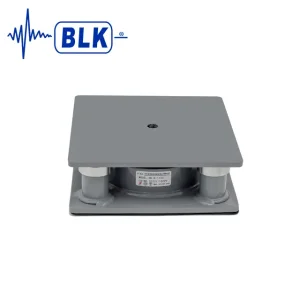
High-Quality BK-R Type Air Mounts Factories, Manufacturer
View Specifications
High-Quality CPB type Inertia Bases & Pump Supports Manufacturers, Manufacturer
View Specifications
Custom BKVD Type Rubber Mounts Factories, Manufacturer
View Specifications
Low Price BKAL Type Adjustment Rubber Feet Factory, Manufacturers
View Specifications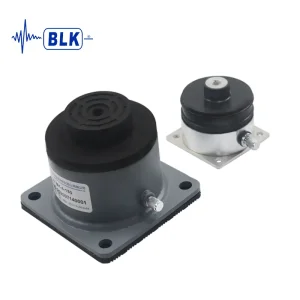
High-Quality BK-A Type Air Mounts Factories, Price
View SpecificationsRequest Sized Vibration Isolation Schedules & Engineering CAD Files
Submit your operating weights, rotational RPMs, and foundation drawings. Our Kunshan application engineering team returns certified dynamic isolation schedules and competitive factory-direct pricing within 24 hours.