
Precision Vibration Control Products (Batch 01)
Featured elastomeric mounts, rubber isolators, spring dampers, and precision air platforms designed for maximum attenuation efficiency.
-

-

High-Quality BKDD Type Rubber Mounts Factories, Manufacturers
-

High-Quality MC Type Anti-vibration Spring Mounts Manufacturer, Price
-

-

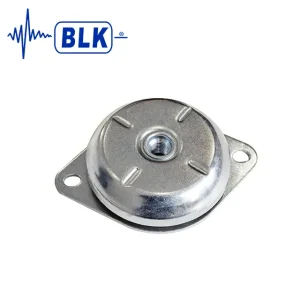
High-Quality BK-PA Type Precision Air Mounts Factories, Manufacturers
-
-
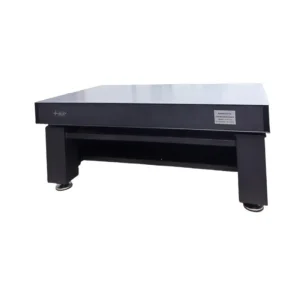
High-Quality BK-RT Type Damped Vibration Isolation Platform Factories, Manufacturers
-

Custom BK-AT Type Desktop Vibration Isolation Platform Manufacturers, Price
Technical Mechanics of Vibration Isolation Washers
Vibration isolation washers are fundamental mechanical components engineered to decouple dynamic energy vectors generated by rotating, oscillating, or impacting machinery from supporting substructures. At a microscopic level, mechanical energy manifests as harmonic or transient forced vibrations. Left unmitigated, these micro-vibrations induce dynamic fatigue, component misalignment, acoustic radiation, and eventual structural failure.
As a leading Low Price Vibration Isolation Washers Factory & Manufacturer, our engineering framework relies on controlling elastomeric hysteresis, shear modulus ($G$), and dynamic loss factor ($\tan \delta$). By inserting optimized elastomeric washers into bolted structural joints, the dynamic stiffness matrix ($K_d$) of the mechanical system is tuned to alter its natural frequency ($f_n$).
When the excitation frequency of the machinery ($f_e$) satisfies the fundamental resonance ratio criterion ($f_e / f_n > \sqrt{2}$), the system enters the isolation zone, achieving energy transmissibility reduction exceeding 90% in precision installations.
Key Mechanical Formulas
Core mathematical models used by our R&D team during custom washer compounding:
f_n = (1 / 2π) * √(k / m)
Where k is the dynamic stiffness of the isolator washer and m is the suspended equipment mass.
T_r = √[ (1 + (2ζr)²) / ((1 - r²)² + (2ζr)²) ]
Where r = f_e / f_n is the frequency ratio, and ζ is the damping factor of the polymer matrix.
η = (1 - T_r) * 100%
Targeting >95% attenuation across operating bandwidths from 10Hz to 2000Hz.
Global Industry Trends in Vibration Isolation Technology
Evolving manufacturing paradigms and high-frequency machinery demand advanced dampening architectures.
Sub-Micron Semiconductor Demands
With sub-2nm node semiconductor fabrication coming online globally, environmental floor micro-vibrations (VC-E to VC-G criteria) destroy yield rates during photolithography and metrology. Standard neoprene washers are being replaced by ultra-pure, low-outgassing silicone-based and fluororubber isolation washers with tuned low dynamic-to-static stiffness ratios.
Transition to Eco-Compliant Polymers
Global regulatory pressure (RoHS 3, REACH, TSCA) has accelerated the phase-out of hazardous plasticizers and vulcanization accelerators in industrial rubber manufacturing. Modern procurement mandates non-toxic, recyclable, flame-retardant (UL94-V0) polymer matrices that maintain elastic rebound properties across extreme thermal gradients (-40°C to +150°C).
HVAC & Urban Acoustics Integration
Urban density increases proximity between commercial infrastructure (data centers, hospitals, high-rise residential) and heavy HVAC equipment (chillers, cooling towers, variable speed pumps). Modern building codes enforce stringent noise criteria (NC-25/30), requiring dual-tier washer and spring isolation setups to eliminate structural flanking transmission.
Global Procurement Demands: Total Cost of Ownership (TCO)
When enterprise procurement teams source anti-vibration washers and mounts, initial purchase price represents only a small fraction of the lifetime operational expenditure. Selecting sub-standard elastomeric washers leads to early permanent set (compression set degradation), bolt tension relaxation, fluid contamination breakdown, and unplanned line shutdowns costing upwards of tens of thousands of dollars per hour.
Global Tier-1 EPC contractors, HVAC OEMs, and industrial plant managers look beyond basic unit pricing to evaluate suppliers on four key procurement pillars:
-
✔
Material Traceability & Batch Consistency: Certified raw material test reports (MTRs) for durometer hardness (Shore A), tensile strength, and elongation at break.
-
✔
Accelerated Aging Validation: Verified performance data after heat aging (ASTM D573) and oil immersion (ASTM D471).
-
✔
Custom Engineering Capability: Ability to mold composite metal-rubber bonded washers for high-shear applications without long tooling lead times.
-
✔
JIT & VMI Logistics: Vendor-managed inventory support to eliminate factory downtime across international assembly plants.
Material Comparison Matrix for Procurement
Evaluating cost versus performance metrics for optimal washer selection:
| Polymer Base | Temp Range | Oil/Chemical | Cost Vector |
|---|---|---|---|
| Natural Rubber (NR) | -40°C to +80°C | Fair | Low (Base) |
| Neoprene (CR) | -35°C to +100°C | Good | Moderate |
| EPDM Elastomer | -45°C to +130°C | Excellent (Acid) | Moderate |
| Nitrile (NBR) | -30°C to +110°C | Superior (Oil) | Moderate |
| Fluororubber (FKM) | -20°C to +200°C | Extreme | High / Specialty |
China Industry 4.0: Supply Chain Resilience & Efficiency Advantages
How advanced automation, localized raw material integration, and precision molding deliver uncompromised quality at competitive price points.
1. Automated Internal Mixing & Rheometry
Our Kunshan manufacturing facility operates fully automated closed-loop internal mixers connected to computer-controlled batch weighing systems. Every batch of rubber compound undergoes inline oscillating disc rheometer testing to guarantee consistent cure rate, minimum viscosity ($M_L$), and maximum torque ($M_H$). This eliminates manual compounding errors, ensuring batch-to-batch durometer uniformity within ±3 Shore A.
2. Precision Vacuum Injection Molding
Standard compression molding often introduces air entrapment and micro-voids, leading to internal fatigue cracking under dynamic cyclic loading. By deploying high-tonnage vacuum injection molding presses, our isolation washers achieve 100% material density, clean flashless parting lines, and superior metal-to-rubber bonding strength ($>10 \text{ MPa}$ tear strength under ASTM D429 Method B).
3. Complete Downstream Vertical Integration
The Yangtze River Delta industrial cluster allows direct sourcing of premium synthetic polymers, specialized carbon blacks, steel insert stampings, and surface treatments (e.g., Dacromet electroplating, phosphatizing) within a 50km radius. This hyper-dense supply chain minimizes logistics lead times, allowing us to offer standard models within 24-hour dispatch schedules and custom tooling turnarounds in as few as 3 working days.
4. Rigorous ISO 9001 & ISO 14001 Quality Gateways
From incoming raw elastomeric bale inspection to 100% automated optical inspection (AOI) sorting for washer dimensions, quality control is embedded into every unit. Products undergo dynamic dynamic mechanical analysis (DMA), salt spray fog testing (passing 900+ hours without red rust), and cyclic fatigue testing exceeding 5,000,000 deflection cycles.
Elastomeric Damping Behavior & Creep Resistance
Understanding non-linear viscoelastic dynamics under sustained static loads and high-amplitude excitation.
The Viscoelastic Phenomenon
Unlike pure steel springs which store energy elastically without significant dissipation, elastomeric vibration isolation washers exhibit combined viscous and elastic characteristics. When subjected to cyclic shear or compressive forces, energy is converted into heat via internal molecular friction. This property is represented by the complex modulus $E^* = E' + iE''$, where $E'$ is the storage modulus (elastic reaction) and $E''$ is the loss modulus (viscous dissipation).
For high-performance applications, maintaining a constant damping factor across fluctuating operating temperatures is critical. Sub-grade rubber washers suffer from thermal softening or glass transition embrittlement, shifting system resonance into operating RPM zones and amplifying structural vibration.
Mitigating Static Creep & Compression Set
When an anti-vibration washer is installed under heavy machinery bolts, it experiences sustained compressive strain. Over time, permanent polymer chain rearrangement occurs—a metric quantified as Compression Set (ASTM D395).
Excessive compression set causes loss of fastener preload torque, altering the washer geometry and degrading its dynamic stiffness properties. Bellking's proprietary sulfur-donor and peroxide curing chemistries limit compression set to <15% after 22 hours at 70°C, ensuring sustained bolt tension and permanent vibration isolation performance over decades of continuous duty.
Localized Industrial Application Scenarios
Engineered vibration control solutions tailored for critical equipment operating environments worldwide.
1. Power Transformers & Electrical Substations
Challenge: Magnetostriction in transformer cores generates low-frequency humming noise (100Hz/120Hz harmonics) that travels into building structures and nearby communities.
Solution: High-damping polymer transformer mounts and washer assemblies isolate the structural mounting rails, eliminating structure-borne noise propagation while enduring outdoor weathering, transformer oil splash, and UV exposure for 15+ years.
2. Heavy HVAC Chillers, Pumps & AHUs
Challenge: Unbalanced centrifugal mass in high-tonnage water chillers creates heavy low-frequency oscillations during startup and continuous operation.
Solution: Combining spring vibration isolators with neoprene snubber washers and inertia base supports provides multi-axis restraint, absorbing transient shock loads while preventing pipe strain and joint cracking.
3. Semiconductor Cleanroom & Metrology Tools
Challenge: Precision CMMs, electron microscopes, and wafer inspection stations require floor vibration levels below optical wavelength thresholds.
Solution: Active-ready passive desktop platforms and BK-PA pneumatic air mounts deliver natural frequencies as low as 1.7Hz, filtering out ambient foot traffic and HVAC background turbulence.
Step-by-Step Washer Selection Methodology
Follow this standardized engineering procedure to calculate and select the correct isolation washer specification for your industrial equipment:
- Determine Total Operating Weight ($W$): Sum the static weight of the machine, internal fluids, and dynamic workpieces.
- Map Load Distribution & Center of Gravity (CoG): Calculate support point loads ($P_1, P_2, \dots, P_n$). Asymmetrical CoGs require washers with differing durometer ratings at individual corners.
- Identify Disturbing Frequency ($f_e$): Identify lowest operating speed in RPM and convert to Hz ($f_e = \text{RPM} / 60$).
- Select Target Natural Frequency ($f_n$): Ensure $f_e / f_n \ge 3.0$ to guarantee isolation performance $\ge 88\%$.
- Calculate Required Static Deflection ($\delta_s$): Using formula $\delta_s = (9.81 / (2\pi \cdot f_n)^2) \times 1000 \text{ (mm)}$.
- Verify Environmental Matrix: Select compound base (NR, EPDM, NBR, FKM) based on fluid contact, UV exposure, and operational temperatures.
Quick Selection Reference
Correlating Operating Speeds with Recommended Isolator Types:
Frequently Asked Questions (FAQ)
Direct technical guidance from our senior application engineers on sizing, installation, and long-term maintenance.
What is the difference between a standard rubber washer and an engineered vibration isolation washer?
How do I prevent over-tightening bolted connections with rubber isolation washers?
Why is factory direct sourcing from China advantageous for high-volume isolation washers?
Can Bellking manufacture custom non-standard vibration washers based on unique CAD files?
What surface treatments are provided on metal components for outdoor corrosion resistance?
How do operating environmental temperatures affect elastomeric washer lifespan?
Precision Vibration Control Products (Batch 02)
Comprehensive mounting systems, spring hangers, matrix dampers, and pump inertia supports for plant-wide vibration mitigation.







Request Your Custom Vibration Control Proposal Today
Send our engineering team your equipment parameters—operating weight, center of gravity, and RPM—and receive a calculated isolation plan within 24 hours.
Contact Engineering Support