
Precision Damping Pads & Mounts for Chukyo Facilities
Direct factory-engineered configurations selected for high-frequency attenuation, dynamic elasticity, and machine tool leveling across Aichi Prefecture industrial plants.

BK-PM Type Polymer Damping Pad
Engineered elastomeric polymer damping matrix delivering high internal friction loss, ideal for surface grinders, gear shapers, and automotive press auxiliary units.
Configure BK-PM Spec
BKVV Type Rubber Mounts
Heavy-duty male/female threaded cylindrical dampeners for hydraulic pump units, cooling towers, and compact compressor beds in compact Japanese factory bays.
Configure BKVV Spec
BKAL Type Adjustment Rubber Feet
Integrated leveling thread combined with a high-durometer vulcanized rubber base to guarantee leveling accuracy on uneven factory floors and automated conveyor lines.
Configure BKAL Spec
BKDJ Type Rubber Pad
High-density ribbed elastomer matrix offering omni-directional friction anchoring, cutting fluid resistance, and impact energy absorption for punch presses.
Configure BKDJ SpecNagoya Industrial Landscape: The Need for High-Efficiency Damping
Why the Greater Nagoya economic powerhouse demands advanced viscoelastic polymer isolation systems across automotive, aerospace, and precision machining ecosystems.
Automotive Tier-1 & Tier-2 Clusters
Home to the Toyota Group cluster across Toyota City, Kariya, and Komaki, the region maintains dense stamping lines, robotic hydro-forming, and high-frequency automated assembly. Structural vibrations from 1,000-ton stamping presses propagate through adjacent concrete foundation slabs, distorting coordinate measuring machines (CMMs) and laser metrology unless isolated with high-loss-factor polymer pads.
Aerospace Heavy Assembly Operations
The Chubu Aerospace Industrial Complex (concentrated around Nagoya Port, Oe, and Minato-ku) manufactures aerostructures, composite wings, and fuselages for commercial aviation. Machining large titanium and carbon-fiber aerospace forgings requires extreme chatter suppression. Our polymer damping pads isolate 5-axis gantry mills, ensuring tool chatter is absorbed at the tool-bed interface.
Seismic Safety & Ground Resonance
Positioned along the Tokai and Nankai Trough geological corridor, plants in Aichi Prefecture face strict Japanese seismic resilience codes (BSL & JIS). Unlike rigid anchors that shear under lateral accelerations or un-damped steel coils that resonate violently during harmonic tremors, viscoelastic polymer isolation pads absorb dynamic shock without secondary harmonic amplification.
Dynamic Viscoelasticity: The Science of Structural Dissipation
A rigorous metallurgical and polymer physics perspective on why modern manufacturing replaces obsolete cork-rubber and un-damped springs with high-loss-factor polymer pads.
The Loss Factor (η = tan δ) & Glass Transition Tuning
The performance of a vibration-damping pad is fundamentally governed by its complex dynamic modulus, defined as E* = E' + iE'', where E' represents the storage modulus (elastic capacity) and E'' denotes the loss modulus (dissipative capacity). The mechanical loss tangent, η = tan δ = E'' / E', dictates how much input vibration energy is immediately converted into non-recoverable micro-thermal friction rather than bouncing back through the system.
Conventional rubber components exhibit loss factors between 0.05 and 0.15, leaving significant residual harmonic resonance near the equipment's natural frequency (fn). In contrast, Bellking's custom-engineered polyurethane and nitrile copolymer pads achieve loss factors between 0.38 and 0.65 at 10 Hz to 200 Hz operating regimes. This broad-band damping attenuates resonance spikes by more than 85% during emergency machine spin-down or abrupt cycle arrests.
Static-to-Dynamic Ratio Control (Kd / Ks ≤ 1.35)
Poorly formulated rubbers stiffen dramatically under dynamic cyclic loads, elevating system natural frequencies into resonant hazard zones. Bellking polymer compounds restrict dynamic stiffening to below 1.35, preserving predictable vibration isolation under high-RPM rotation.
Global Industrial Trends: Synthetic Polymers vs. Legacy Mounts
Across Germany, Japan, and North America, manufacturing plants are replacing un-damped coil springs and natural rubber mounts due to their vulnerability to chemical degradation and low high-frequency performance. Pure steel coils reflect high-frequency acoustic waves (structure-borne sound between 500 Hz and 4,000 Hz), converting industrial utility rooms into acoustic amplifiers.
Polymer damping pads break the acoustic bridge. Their multi-layered microstructure dampens structure-borne flanking transmission, ensuring compliance with strict environmental noise ordinances (such as Japan's Factory Noise Regulation Act) in mixed commercial-industrial wards in Nagoya, such as Nakagawa and Minato.
Chemical, Coolant & Oil Mist Resilience
Nagoya CNC turning and hobbing facilities expose dampeners to synthetic, water-soluble, and ester-based coolants. Bellking vulcanized polymer pads resist hydrocarbon swelling, with compression creep maintained below 3.5% after 5,000 hours of continuous loading.
| Damping Media Type | Loss Factor (η) | Resonance Transmissibility (Q) | Structure-Borne Noise Attenuation | Resistance to Machine Oils | Typical Service Life |
|---|---|---|---|---|---|
| Bellking Engineered Polymer Pad | 0.38 – 0.65 | 1.8 – 2.6 (Heavily Damped) | > 35 dB (High-Frequency Block) | Excellent (ASTM Oil #3 Tested) | 15+ Years (Non-aging) |
| Standard Natural Rubber Mount | 0.08 – 0.15 | 6.5 – 12.0 (Resonant Spike Risk) | 15 – 20 dB | Poor (Softens & Swells) | 3 – 5 Years |
| Bare Steel Coil Springs | < 0.01 | 25.0 – 50.0 (Severe Resonance) | Near Zero (Acoustic Bridge Effect) | Good (Requires Anti-Corrosion) | 10 – 15 Years (Spring Fatigue) |
| Traditional Cork-Rubber Sandwich | 0.12 – 0.20 | 4.5 – 8.0 | 18 – 22 dB | Moderate (Degrades in Solvents) | 2 – 4 Years (Crumbles) |
Why Nagoya Industry Partners with Bellking Kunshan Manufacturing
Combining proprietary high-polymer formulation laboratories with automated compression molding and rapid East Asian maritime logistics.
1:1 Tailored Compound Compounding
Unlike stock distributors offering generic rubber sheets, Bellking formulates specific monomer ratios in-house. Whether your Nagoya equipment demands a soft Shore A 35 for low-frequency metrology or a Shore A 85 pad carrying 350 kN/m² for heavy drop forging, custom formulation molds complete in 3 to 5 business days.
ISO 9001 & Microscopic QA Validation
Every polymer batch undergoes dynamic mechanical thermal analysis (DMTA), fatigue cycling to 106 compressions, and Shore durometer calibration. We provide mill test certificates, static/dynamic stiffness graphs, and full RoHS/REACH compliance documentation ensuring zero audit complications with Japanese customs.
Rapid Logistics: Kunshan to Port of Nagoya
Our Kunshan manufacturing plant is located within 50 km of Shanghai and Taicang ports. Standard shipments clear customs and arrive at the Port of Nagoya within 48 to 72 hours of vessel departure. Standard orders ship out of our factory warehouse within 24 hours, keeping maintenance downtime to an absolute minimum.
Critical Applications Across Nagoya's Industrial Ecosystem
Real-world integration protocols for polymer vibration damping pads across automotive manufacturing, aerospace machining, and urban facility utilities.
Automotive Body Stamping & Blanking Presses
Stamping lines in Toyota and Kariya facilities induce severe shock pulses (3 to 6 Gs acceleration) every cycle. Installing high-damping elastomer pads beneath bolster plates and leveling shoes dissipates kinetic impulse energy, preventing micro-fractures in structural shop foundations and decoupling shock transmission to nearby coordinate measuring rooms.
Precision 5-Axis CNC Milling & Coordinate Boring
Machine tool manufacturers in Aichi (Okuma, Yamazaki Mazak, Brother) depend on rigid tool-to-workpiece interfaces. Residual floor vibrations degrade surface finishes from Ra 0.2 down to Ra 0.8. Polymer damping pads between the bed leveling feet and concrete foundations filter out floor vibrations, preserving mirror finishes.
Commercial HVAC, Chillers & Rooftop Transformers
Commercial developments around Nagoya Station (Meieki) and Sakae enforce strict 35 dB(A) nighttime acoustic thresholds. Large centrifugal chillers and dry-type step-down transformers generate 100 Hz and 120 Hz electromagnetic hum. Polymer pads isolate these tonal frequencies, halting acoustic bridge conduction through reinforced concrete columns.
Semiconductor Cleanroom Inspection & Wire Bonders
Semiconductor packaging plants in Mie and Gifu (bordering Nagoya) require sub-micron stability for automated wire bonders and laser dicing saws. Polymer pads beneath optical granite tables isolate pedestrian footfalls and air handler duct turbulence, eliminating measurement drift and die placement errors.
Engineering Selection Guide: Sizing Damping Pads
A systematic framework for procurement managers, factory directors, and EPC structural engineers evaluating vibration isolation systems.
1. Frequency Tuning Ratio
Isolation begins only when the disturbance frequency exceeds √2 × natural frequency (fd / fn > 1.41). For high-performance damping, we engineer a frequency ratio between 2.5 and 4.0, achieving isolation efficiencies of 92% to 98% without low-frequency resonance amplification.
2. Static Load Deflection & Creep
Pad thickness is matched to target static deflection under equipment self-weight. Deflections between 10% and 15% of pad thickness ensure optimal viscoelastic damping while remaining well below the compound's plastic yield point, preventing long-term creep sag over 15+ years.
3. Chemical & Environmental Exposure
Identify whether the pad will contact hydraulic oil, synthetic water-glycol fluids, high humidity, or extreme ambient temperatures. Bellking provides custom vulcanized oil-resistant nitrile (NBR) or cast polyurethane (PUR) compositions with zero risk of compound hardening or softening.
Full Spectrum Anti-Vibration & Pneumatic Systems
Retaining original manufacturing specifications and configurations for precision instrumentation, suspended utilities, and plant machinery.
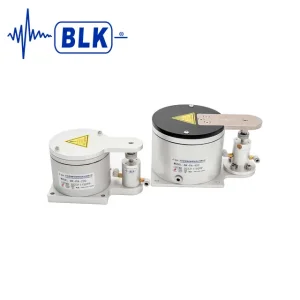
BK-PA Precision Air Mounts
Integrated pneumatic diaphragm system providing ultra-low natural frequency isolation for semiconductor probe stations, electron microscopes, and laser metrology.
Configure BK-PA Spec
Custom Spring Hangers
Combines coil springs with integrated elastomeric bushings to decouple suspended exhaust ductwork, chilled water mains, and air handling equipment from building slabs.
Configure Hanger Spec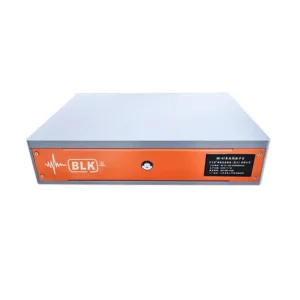
BK-AT Desktop Platform
Compact passive vibration isolation workstation for analytical balances, optical microscopes, and surface profilometers in laboratory environments.
Configure BK-AT Spec
BKDR Type Rubber Mounts
Rugged bell-style enclosed rubber mount engineered for mobile machinery, diesel generator sets, and industrial centrifugal blower assemblies.
Configure BKDR Spec
BKHQ Type Rubber Mounts
Square base flange design engineered for direct bolt anchorage, absorbing horizontal thrust loads and torsional shear in electric motor-driven gearboxes.
Configure BKHQ Spec
BKH Type Rubber Mounts
Circular flange isolator configuration engineered for high-impact industrial applications, internal combustion engines, and industrial crushing machinery.
Configure BKH Spec
BKDE Type Rubber Mounts
Dual-elastomer conical design delivering high compliance in both vertical compression and lateral shear, preventing harmonic resonance during start-up cycles.
Configure BKDE Spec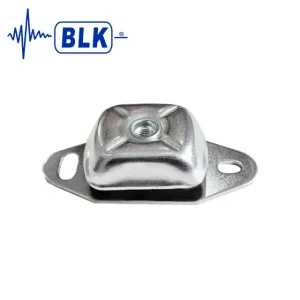
BKM Type Rubber Mounts
Low-profile machinery foot engineered for cleanroom production tools, packaging machinery, and light automation robotics requiring clean aesthetics and vibration control.
Configure BKM SpecFrequently Asked Questions: Polymer Damping Systems
In-depth responses from our chief application engineers for Japanese factory directors and procurement professionals.
How do polymer damping pads prevent resonant amplification during equipment start-up and coast-down?
How does Bellking guarantee long-term creep resistance over 10-15 years of continuous machine loading?
Can Bellking manufacture custom damping pad dimensions and pre-cut mounting bolt slots for Japanese machines?
What documentation and test reports are supplied with shipments destined for the Nagoya Port customs?
How do polymer damping pads perform under coastal and high-humidity environments in Nagoya Port areas?
Optimize Your Nagoya Facility's Dynamic Stability Today
Connect directly with Bellking's senior application engineers. Submit your equipment operating weight, disturbing frequency, and installation drawings to receive a custom vibration isolation and pad sizing plan within 24 hours.