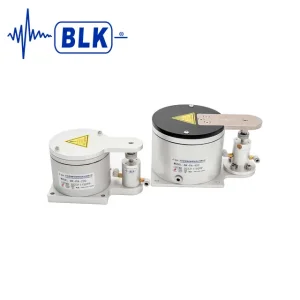
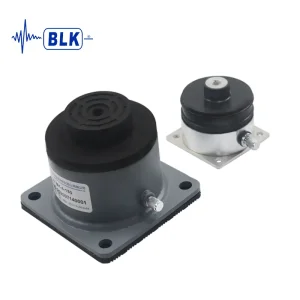
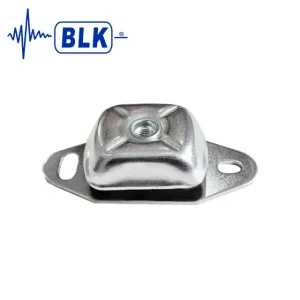
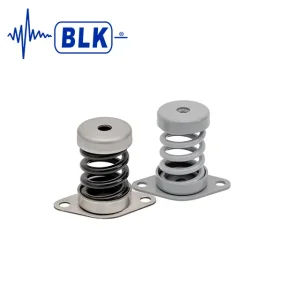
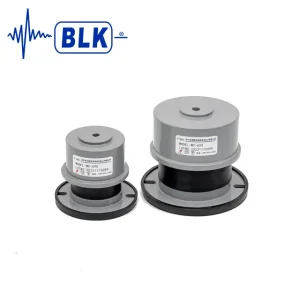
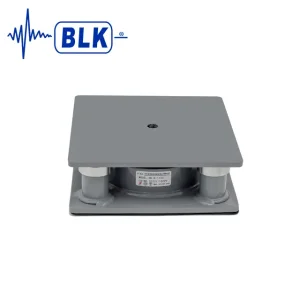
Featured Anti-Vibration Pads & Isolator Mounts
Engineering-grade solutions for HVAC chillers, compressors, and precision industrial platforms
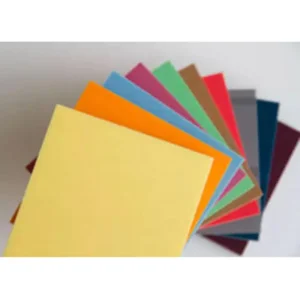
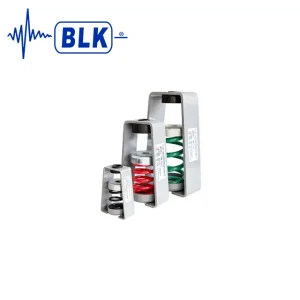

1. Executive Summary: The Engineering Imperative of Compressor Vibration Isolation
Industrial compressors—ranging from high-tonnage centrifugal and screw chillers to high-pressure reciprocating air units—are the thermal and pneumatic workhorses of modern infrastructure. However, the kinetic energy generated during compression cycles inherently produces high-frequency harmonic vibrations, structure-borne noise, and transient shock loads. Unmitigated mechanical energy transferred to building structures leads to structural fatigue, pipe joint shear failure, premature bearing degradation, and compliance breaches under international acoustic standards such as ISO 10816 and OSHA noise exposure directives.
Custom compressor isolation pads act as critical mechanical interfaces designed to alter the dynamic response of the mounted assembly. By decoupling the forcing frequency ($f_d$) of the compressor from the natural frequency ($f_n$) of the supporting floor or sub-frame, engineered elastomeric and polymer composite pads attenuate dynamic transmissibility by up to 99%. As an ISO 9001 certified OEM/ODM manufacturer, Bellking Vibration Reduction Equipment Manufacturing (Kunshan) Co., Ltd. delivers customized isolation geometries, polymer compounding, and inertia system integrations designed for long-term structural integrity.
2. Mechanical Dynamics: Physics of Damping & Transmissibility
To select or engineer the appropriate pad matrix, engineers must evaluate transmissibility ($\tau$), defined as the ratio of force transmitted to the floor versus the force generated by the compressor:
Transmissibility Formula: τ = √[ (1 + (2 ζ r)²) / ((1 - r²)² + (2 ζ r)²) ]
Where r = fd / fn (frequency ratio) and ζ is the structural damping ratio of the polymer compound.
Effective isolation occurs exclusively when the frequency ratio r > √2 (approx. 1.41). When $r < 1.41$, the system operates in the resonance zone, which amplifies dynamic forces and threatens mechanical structural failure. Bellking's custom compressor isolation pads are engineered to achieve an optimum ratio of $r \ge 3.0$, driving total dynamic force transmissibility down to minimal levels.
Material Matrix Comparison: Elastomers, Polymers & Compound Hybrid Pad Designs
Choosing the right core material depends on environmental exposure, dead-weight stress distribution, and operating temperatures. The table below details technical parameters evaluated by our testing laboratory:
| Material Matrix Type | Shore Hardness (A/D) | Static Load Capacity | Damping Ratio (ζ) | Chemical & Oil Resistance | Typical Industrial Target Application |
|---|---|---|---|---|---|
| NBR / Nitrile Polymer | 45 – 75 Shore A | 0.2 to 2.5 MPa | 0.08 – 0.15 | Excellent (Petroleum, Lubes) | Screw Compressors, Engine-driven Compressors |
| High-Damping Polyurethane | 50 – 90 Shore A | 0.5 to 5.0 MPa | 0.15 – 0.30 | Good (Solvents, Ozone) | Heavy Reciprocating Units, Industrial Chillers |
| Cross-Ribbed Neoprene Pads | 40 – 60 Shore A | 0.1 to 1.2 MPa | 0.05 – 0.10 | Moderate to High | HVAC Rooftop Units, Commercial Condensers |
| Cork-Rubber Composites | 60 – 80 Shore A | 0.3 to 1.8 MPa | 0.06 – 0.12 | Moderate (Friction Focus) | Sub-Base Skid Liners, Light Mechanical Room Mounts |
3. Customization Engineering & Technical Workflow
Standard pad sizes often lead to non-uniform deflection across compressor mounting feet due to uneven weight distribution (e.g., motor-heavy vs. compression-block end). Bellking's custom engineering program addresses center-of-gravity offsets through precise structural design.
4. Global Application Scenarios & Localized Compliance
Custom compressor isolation pads must comply with strict localized mechanical codes, environmental conditions, and safety standards depending on geographic and industrial installation parameters.
Challenge: Rooftop-mounted air handlers and centrifugal chillers emit low-frequency hums that transfer through structural concrete slabs into office space below.
Solution: Multi-layer BK-PM type polymer damping pads combined with inertia bases prevent structural noise transmission, keeping indoor noise levels within NC-30 acoustic criteria.
Challenge: Reciprocating natural gas compressors create extreme horizontal and vertical dynamic thrust loads that deteriorate standard rubber pads rapidly.
Solution: High-density poly-elastomeric pads with vulcanized steel restraint plates withstand oil contact, high ambient thermal cycles, and dynamic impact spikes up to 5G acceleration.
Challenge: Micro-vibrations from process gas compressors undermine nanometer-scale lithography tools operating in adjacent sub-fab facilities.
Solution: BK-DT and BK-RT ultra-low natural frequency isolation platforms deliver zero off-gassing, high damping capability, and complete micro-vibration containment.
Challenge: Marine salt-spray, deck pitch/roll forces, and aggressive engine compartment fluids degrade standard rubber mounts.
Solution: Bellking custom pads featuring 900-hour salt spray tested Dacromet hardware and marine-grade oil-proof elastomers ensure uninterrupted offshore service.
5. Technical Roadmap: Next-Generation Smart Isolation Systems
The evolution of industrial vibration control is shifting toward predictive health monitoring and adaptive material science. Bellking’s R&D division is actively testing and integrating several next-gen technologies into our custom pad lines:
- IoT Sensor-Embedded Pads: Integrating piezo-resistive sensor arrays directly inside the elastomeric core to monitor real-time compression stress, degradation creep, and high-frequency harmonics, transmitting data to plant SCADA systems.
- Magnetorheological (MR) Elastomer Layers: Developing hybrid smart pads capable of dynamically altering their stiffness modulus ($K_d$) within milliseconds via magnetic fields to counteract variable-frequency compressor startups.
- Eco-Compliant Bio-Polymer Formulations: Engineering recyclable thermoplastic elastomers (TPE) that maintain high mechanical loss factors while eliminating toxic additives, fully aligning with global RoHS, REACH, and ESG guidelines.
6. Frequently Asked Questions (FAQ) & Technical Guidance
Expert answers on selection, dynamic calculations, and installation best practices
How do I calculate the correct compressor pad durometer and thickness?
When should I choose elastomeric isolation pads over metal spring isolators?
How do oil, solvents, and ambient heat impact compressor pad life?
Why is an inertia base recommended alongside compressor isolation pads?
What is the typical operational lifespan of custom polymer pads?
Can custom isolation pads be manufactured for non-standard footprint shapes?
Complete Vibration Control Product Series
Precision air mounts, heavy-duty rubber isolators, and spring systems