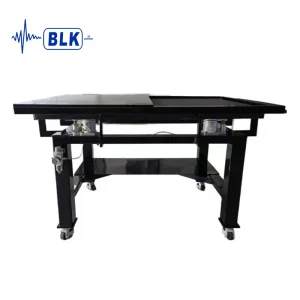
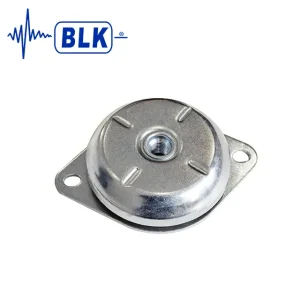
Featured Vibration Isolation Systems (Part I)
Factory-direct anti-vibration solutions designed to reduce mechanical stress, isolate structure-borne noise, and extend pump equipment lifespans.








Executive Whitepaper: Industrial Pump Station Vibration Engineering
In modern hydraulic infrastructure, municipal water distribution, petrochemical processing, and commercial HVAC plants, the management of mechanical vibration is a critical engineering requirement. Pump stations operate under continuous dynamic forces driven by impeller unbalanced mass, fluid turbulence, hydraulic cavitation, and pressure surge transients. Without tailored vibration isolation technology, these forces radiate through support structures, inducing material fatigue, pipe rupture, seal destruction, and severe acoustic discomfort in nearby environments.
As global municipal standards become increasingly stringent—such as ISO 10816-3 criteria for mechanical vibration and ASHRAE equipment isolation protocols—the demand for highly technical, custom-engineered vibration isolator solutions has grown rapidly. Modern engineering teams require more than simple off-the-shelf rubber pads; they demand heavy-duty spring mounts, viscous-damped dampening assemblies, combined inertia base supports, and precision pneumatic platforms capable of suppressing low-frequency energy (1.7 Hz to 5 Hz) with isolation efficiencies surpassing 95% to 99%.
Key Engineering Insight: Vibration isolators do not merely attenuate sound; they alter the dynamic natural frequency of the entire pump system. By ensuring the ratio of disturbing frequency ($f_d$) to natural frequency ($f_n$) exceeds $\sqrt{2}$ (ideally $f_d / f_n \ge 3$), isolators shift the system away from dangerous resonance zones, protecting structural integrity and doubling pump seal lifespans.
Global Procurement Trends in Pumping Infrastructure
Procurement directors and EPC contractors managing large-scale infrastructure projects face distinct technical challenges when sourcing pump station isolators. The industry is currently defined by four macro trends:
- Shift Toward Integrated Inertia Base Solutions: Large end-suction and split-case pumps require heavy concrete-filled inertia bases equipped with perimeter spring isolators to lower the system center of gravity and counteract high starting torque.
- Extreme Corrosion Resistance Demands: Pumping stations in coastal areas, wastewater facilities, and chemical plants require isolator metal components treated with multi-layer Dacromet coatings capable of enduring 900+ hours of continuous salt spray testing without oxidation.
- High Seismic & Wind Restraints: Modern building codes (such as IBC and Eurocode 8) require pump isolators to incorporate internal or external seismic snubbers that limit multi-directional displacement during seismic events or sudden pipe thrust shocks.
- Digital Twin Compatibility & Smart Monitoring: Plant operators are integrating wireless vibration spectrum sensors directly onto vibration mount housings for real-time predictive maintenance analytics.
Engineering Excellence by the Numbers
Delivering tested reliability, patented innovation, and rigorous quality control for complex global engineering projects.
Technical Physics: Dynamic Transmissibility in Pump Systems
To correctly specify a custom pump station vibration isolator, engineers must evaluate the dynamic transmissibility ($T$), which defines the proportion of vibrational force transmitted from the pump casing into the supporting foundation. Transmissibility is expressed mathematically as:
Where:
- $f_d$: Disturbing frequency generated by the pump shaft speed (RPM / 60) and blade pass frequency.
- $f_n$: Natural frequency of the selected isolator, dictated by $f_n = \frac{1}{2\pi} \sqrt{\frac{k}{m}}$ (stiffness $k$ divided by supported mass $m$).
- $\zeta$: Damping ratio of the elastomeric compound or viscous fluid insert.
When $f_d = f_n$, the system reaches resonance, leading to dangerous dynamic amplification that can cause catastrophic equipment failure. High-performance spring mounts engineered with 25mm to 50mm static deflection achieve low natural frequencies (3 Hz to 5 Hz), ensuring that standard 1450 RPM or 2900 RPM pumps operate deep inside the isolation zone ($T < 0.05$).
Isolator Family Selection Criteria Matrix
| Isolator Type | Natural Frequency ($f_n$) | Typical Deflection Range | Optimal Pump Application | Corrosion Coating / Material |
|---|---|---|---|---|
| Heavy-Duty Open Spring Mounts | 3.0 Hz – 5.0 Hz | 25 mm – 75 mm | Large split-case pumps, cooling towers, HVAC chillers | Dacromet / Hot-Dip Galvanized 50CrVa Steel |
| Restrained / Seismic Spring Mounts | 3.2 Hz – 4.5 Hz | 25 mm – 50 mm | Outdoor pump stations, earthquake zone installations | Cast iron / Ductile steel with internal snubbers |
| Custom Molded Elastomer Mounts | 7.0 Hz – 12.0 Hz | 5 mm – 15 mm | High-speed multi-stage pumps, compact booster sets | Neoprene / Nitrile / EPDM compound blends |
| Pneumatic Air Mount Assemblies | 1.7 Hz – 2.5 Hz | Active auto-leveling | Ultra-precise fluid dosing pumps, calibration benches | Multi-ply reinforced rubber air bellows |
Tailored Isolation Architectures for Complex Applications
From municipal clean water works to harsh chemical processing, explore how custom isolator designs resolve sector-specific dynamic challenges.
Municipal Water Treatment Plants
High-capacity intake and booster pumps generate severe low-frequency hydraulic pressure waves. Custom concrete-filled inertia bases combined with high-deflection spring isolators absorb dynamic thrust, prevent pipe flange cracking, and lower plant noise levels to meet urban environmental standards.
Petrochemical & Slurry Handling
Pumps carrying viscous, volatile, or chemically aggressive fluids require customized elastomer formulations (FKM/EPDM) resistant to hydrocarbons and ozone. Metallic components receive specialized thermoset epoxy coatings to prevent stress corrosion cracking.
High-Rise HVAC Chilled Water Plants
Pumping stations installed on upper mechanical floors present a severe risk of structure-borne sound transmission down through occupied concrete slabs. Damped spring mounts combined with ceiling-suspended pipe hangers isolate fluid harmonics across all floors.
Mining & Dewatering Stations
Heavy-duty slurry pumps operate under severe transient impact forces during startup and shutoff. Reinforced steel spring cages with high shock-load absorption withstand 3G to 5G acceleration loads without structural deformation.
Seismic & Wind Retained Infrastructure
Installed in earthquake-prone regions, all-directional seismic isolators feature integrated steel limit stops that allow unrestricted vertical micro-vibration during normal operation while locking the pump firmly during seismic shaking.
Acoustic Retrofit Projects
Upgrading legacy pumping stations plagued by high vibration noise without replacing existing pump foundations. Modern elastomeric pads and low-profile spring conversion kits enable fast, drop-in replacement with minimal operational downtime.
Custom Manufacturing Precision & Quality Assurance
How our dedicated production base delivers high-precision, ISO 9001-certified vibration control hardware for worldwide deployment.
Advanced Manufacturing Capabilities
Our manufacturing facility spans over 2,000 square meters of dedicated engineering space, housing robotic welding stations, multi-axis CNC machining tools, automatic powder-coating lines, and specialized spring coiling machines. Every spring isolator is manufactured from premium alloy steel (such as 50CrVa) selected for exceptional fatigue resistance, undergoing shot-peening and stress-relieving heat treatment to prevent compression set over long service periods.
Finite Element Analysis (FEA)
Custom isolator designs undergo dynamic FEA modeling to simulate stress distribution under peak pressure transients and thermal expansion loads prior to casting and coiling.
In-House Spectral Testing
Every product batch is sampled and tested on tension-compression machines and vibration frequency spectrum analyzers to verify static load deflection curves and damping coefficients.
Global Compliance & Quality Documentation
To ensure frictionless integration into international engineering specifications, our manufacturing operations adhere strictly to recognized global standards:
- ISO 9001:2015 Certification: Comprehensive quality management covering raw material traceabilty, in-process inspection, and final quality sign-off.
- Environmental Compliance: Eco-compliant elastomer compounding matching RoHS and REACH regulations, eliminating hazardous off-gassing.
- Testing Documentation: Factory Acceptance Test (FAT) reports, material mill certificates, salt spray resistance logs, and third-party laboratory verification supplied with every order.
The Future of Smart Vibration Control in Pumping Systems
Pioneering next-generation adaptive isolation systems and predictive maintenance integration.
Phase 1: Smart Sensor Embedding
Integrating MEMS tri-axial acceleration sensors into isolator housing bases, transmitting real-time operational vibration data directly to plant SCADA systems via wireless protocols.
Phase 2: Magnetorheological Damping
Developing semi-active isolators using magnetorheological fluids capable of adjusting damping coefficients within milliseconds during water hammer transients or sudden pump valve shutoffs.
Phase 3: Ultra-Durable Elastomers
Pioneering self-healing nanocomposite rubber matrix compounds capable of absorbing high-frequency dynamic shear forces while doubling traditional fatigue life cycles under severe outdoor weather conditions.
Technical Guidance & Procurement FAQ
Answers to common engineering inquiries regarding pump station isolator sizing, installation practice, and service life.
Featured Vibration Isolation Systems (Part II)
Explore our full line of specialized rubber hangers, precision optical platforms, and high-deflection spring mounts.