
Featured Vibration Isolation & Damping Systems
Discover high-efficiency air mounts, rubber dampeners, spring isolators, and specialized platforms engineered for extreme dynamics.






Macro-Industrial Vibration Dynamics & Global Market Analysis
Mechanical vibration and structure-borne acoustic transmission present substantial engineering challenges to industrial automation, semiconductor fabrication, power transmission, and commercial HVAC infrastructure.
Harmonic Resonance Mitigation
Unmitigated mechanical vibration introduces cyclical fatigue stresses, accelerates bearing wear, and degrades structural integrity. When equipment disturbing frequency ($f_d$) approaches the natural frequency ($f_n$) of the supporting substructure, resonance occurs, amplifying dynamic forces exponentially. Custom vibration control devices disrupt harmonic coupling by forcing the transmissibility ratio into isolated attenuation zones.
Micro-Vibration Cleanroom Standards
In semiconductor wafer fabrication and nanoscale metrology, environmental floor vibrations exceeding VC-E or VC-G criteria lead to pattern distortion, electron beam defocusing, and reduced yield. Precision pneumatic air mounts utilize closed-loop level control and active/passive chamber architectures to dampen ambient seismic disturbance down to sub-Hertz micro-vibrations.
Commercial & Urban Acoustic Regulations
Modern building codes impose strict noise criteria (NC-30 to NC-35) in high-density urban developments. Heavy rooftop chillers, cooling towers, and variable air volume (VAV) units transfer low-frequency structure-borne noise across concrete slabs. Damped spring mounts and elastomeric hangers isolate structural flanks, mitigating acoustic pollution in compliance with ASHRAE standards.
$$T = \sqrt{\frac{1 + (2\zeta r)^2}{(1 - r^2)^2 + (2\zeta r)^2}}$$
Effective vibration isolation is achieved strictly when $r > \sqrt{2}$ ($f_d / f_n > 1.41$). To guarantee $>90\%$ attenuation efficiency, engineered systems target $r \ge 3$.
Vibration Isolator Technology Selection Framework
Compare mechanical characteristics, damping performance, and ideal deployment parameters across primary vibration control categories.
| Device Category | Natural Frequency ($f_n$) | Damping Mechanism | Isolation Efficiency | Primary Industrial Applications |
|---|---|---|---|---|
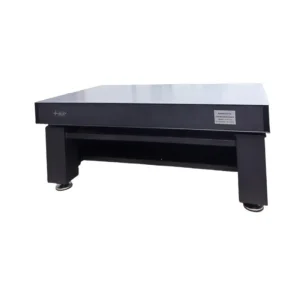
| Pneumatic Precision Air Mounts | 1.7 Hz – 3.0 Hz | Air Chamber & Viscous Orifice Damping | 95% – 99% | Semiconductor Lithography, CMMs, Optical Benches, Electron Microscopes |
| Damped Open/Housed Spring Mounts | 3.0 Hz – 5.0 Hz | High-Tensile Steel Coil & Viscous Liquid | 90% – 98% | Centrifugal Chillers, Heavy HVAC Pumps, Diesel Generators, Cooling Towers |
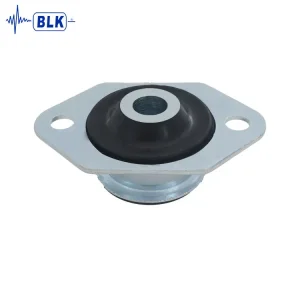
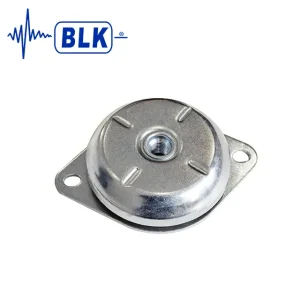
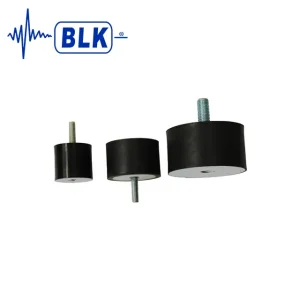
| Elastomeric & Rubber Mounts | 7.0 Hz – 15.0 Hz | Internal Elastomeric Hysteresis | 80% – 92% | High-RPM Electric Motors, Compressors, Small Fans, On-board Equipment |
| Polymer Damping Pads | 10.0 Hz – 25.0 Hz | Visco-Elastic Polymer Deformation | 75% – 88% | Machine Tool Foundations, Punch Presses, Heavy Stamping Equipment |
| Spring & Rubber Hangers | 3.5 Hz – 8.0 Hz | Combined Spring & Neoprene Shear Pad | 88% – 96% | Suspended Piping, Ductwork, Ceiling-Mounted Air Handling Units (AHU) |
Localized Application Scenarios & Case Engineering
Specialized vibration control solutions optimized for critical environments across semiconductor, municipal power, automotive, and commercial sectors.
Semiconductor Cleanroom Fab Foundations
Challenge: Wafer steppers and photolithography equipment operating at sub-5nm nodes are vulnerable to ground vibrations caused by automated guided vehicles (AGVs) and adjacent cleanroom recirculation fans.
Solution: Implementation of pneumatic air isolation platforms (BK-PA / BK-PF series) integrated with auto-leveling mechanical valves. Achieves an ultra-low natural frequency of 1.7 Hz, cutting vertical and horizontal floor disturbances below VC-E criteria.
Power Grid Substation Transformer Isolation
Challenge: Magnetostriction in high-voltage transformer cores produces continuous 100 Hz and 120 Hz low-frequency tonal hum, radiating into surrounding residential zones.
Solution: Installation of heavy-duty, corrosion-resistant transformer anti-vibration mounts under transformer bases. Specially formulated oil-resistant elastomeric components reduce structure-borne noise radiation by up to 28 dB(A).
EV Battery Test Rigs & Stamping Presses
Challenge: Dynamic shock impacts generated by high-tonnage stamping machinery and multi-axis hydraulic battery vibration test platforms damage building foundations.
Solution: High-deflection damped spring mounts paired with viscous fluid dampeners (BK-DS Series) and inertia concrete bases. Capable of absorbing 3-5G transient shock impacts while retaining zero post-impact oscillation tailing.
Precision Factory Manufacturing & Global Standard Assurance
From raw material synthesis to finite element analysis (FEA) dynamic testing, our factory operates under stringent quality control paradigms to deliver tailor-made vibration control solutions.
Material Science & Surface Metallurgy
Spring elements are crafted from high-stress chrome-vanadium alloy steel, undergoing controlled heat treatment to eliminate internal stresses and prevent long-term spring sag. External steel components receive Dacromet anti-corrosion coating, passing 900-hour salt spray corrosion testing for harsh marine and industrial environments.
1:1 Custom FEA Design Workflow
We leverage Finite Element Analysis (FEA) modeling software to simulate dynamic load distribution, center-of-gravity shifts, and thermal expansion effects. Our engineering team converts your equipment CAD specifications into customized vibration isolator geometries within 3 working days.
International Standards Alignment
Products conform strictly to global building and mechanical standards: ISO 9001:2015 quality assurance, CE marking, RoHS/REACH environmental compliance, DIN 4150-3 structural vibration standards, and ASHRAE HVAC isolation criteria.
Technology Roadmap: Smart & Active Damping Systems
Advancing the frontier of vibration control through smart MEMS sensor integration, active electromagnetic force feedback, and eco-friendly polymeric compounds.
IoT MEMS Predictive Maintenance
Embedding wireless MEMS tri-axial accelerometers and temperature sensors directly into spring and air isolator housings. Enables real-time health monitoring, predictive displacement alert algorithms, and cloud-connected machinery diagnostics.
Active Electromagnetic Isolation
Developing hybrid active-passive isolation platforms. Voice-coil actuators generate counter-phase electromagnetic forces in real time to cancel transient disturbances below 1 Hz, delivering sub-nanometer stabilization for next-gen semiconductor EUV equipment.
Bio-Based Sustainable Elastomers
Pioneering zero-VOC synthetic rubber compounds and bio-derived polymer matrix pads that eliminate toxic chemical outgassing in semiconductor cleanrooms while providing superior hysteresis loss factors across extended temperature ranges.
Frequently Asked Engineering & Procurement Questions
Expert insights on choosing, sizing, and maintaining industrial vibration control devices.
How do I determine whether to specify spring, rubber, or pneumatic isolators?
The selection depends primarily on the disturbing frequency ($f_d$) of the machinery and the required isolation efficiency. Isolation occurs only when $f_d / f_n > 1.41$. For high-speed machinery (>1,800 RPM), rubber mounts with natural frequencies ($f_n$) of 7–15 Hz are cost-effective. For medium-to-low speed equipment such as chillers and pumps (500–1,500 RPM), spring isolators ($f_n$: 3–5 Hz) are required. For ultra-sensitive micro-vibration applications (<500 RPM or nanometer metrology), pneumatic air mounts ($f_n$: 1.7–3 Hz) are essential.
What key data must be provided to design a custom vibration control device?
To engineer a precise solution, our engineering team requires: (1) Total operating equipment weight, (2) Center of Gravity (CG) coordinates, (3) Number and spatial arrangement of mounting points, (4) Operating speed range (RPM) or force frequency (Hz), (5) Environmental factors (outdoor exposure, operating temperature, oil or chemical contact), and (6) Any seismic or wind load restraint criteria mandated by local building codes.
How does an inertia base improve vibration control performance?
An inertia base (a concrete-filled heavy steel frame placed beneath equipment) serves three crucial roles: it lowers the overall center of gravity to prevent rocking, increases system mass to reduce vibration amplitude during start-up and shutdown resonance transitions, and provides structural rigidity to maintain pipe alignment between pumps and strainers.
What anti-corrosion treatments are applied to isolators for harsh environments?
All steel spring coils and housings undergo shot-peening to eliminate surface micro-cracks, followed by a Dacromet or hot-dip galvanized finish. Dacromet coating withstands over 900 hours of continuous salt spray testing according to ASTM B117 standards, ensuring resistance to marine environments and HVAC cooling tower drift.
What lead time and quality documentation are provided with custom factory orders?
Standard inventory models ship within 24 hours. Custom non-standard devices require 3 to 7 working days from drawing approval to dispatch. Every order includes ISO 9001 factory batch inspection reports, material physical property test certificates, spring load-deflection curve graphs, and dynamic transmissibility test reports.
Industrial Mounts, Platforms & Hanger Systems
Explore our full line of industrial rubber mounts, damped platforms, and ceiling hangers engineered for comprehensive facility isolation.





Request a Tailored Engineering Vibration Analysis
Partner with our experienced dynamicists and structural engineers. Receive a complete vibration control proposal and CAD layout within 24 hours.
Consult With An Engineer