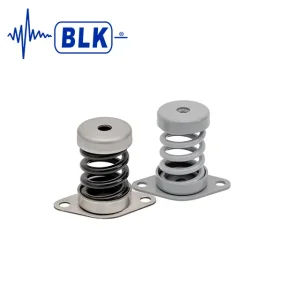
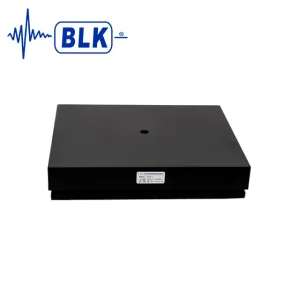
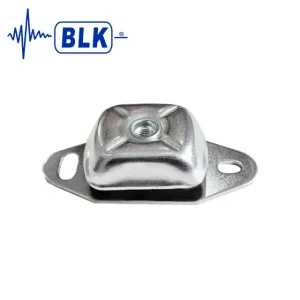
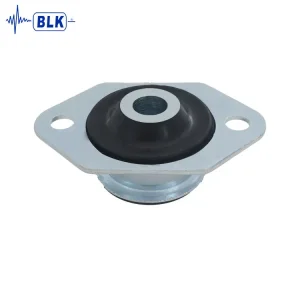
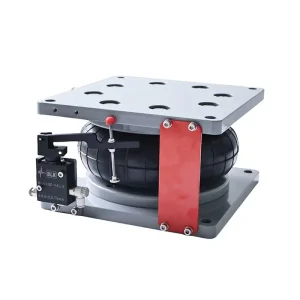
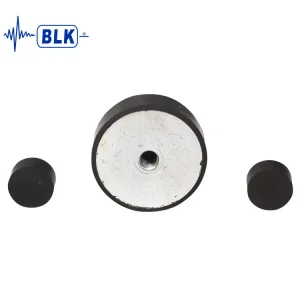
Primary Wind Turbine Isolation Components
Explore standard and engineered anti-vibration solutions designed for nacelles, gearboxes, generators, and auxiliary turbine systems.

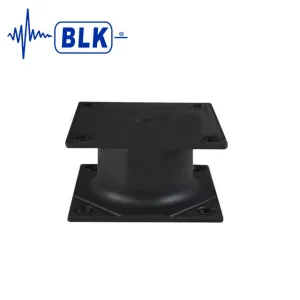





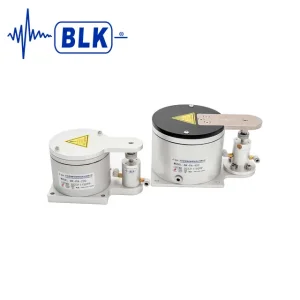
Macro Industry Context: Drivetrain Dynamics & Wind Turbine Structural Integrity
Why custom vibration isolation is no longer optional for modern multi-megawatt onshore and offshore wind energy platforms.
The rapid evolution of global wind turbine architectures—scaling from historical 2 MW–3 MW designs to current 10 MW–18 MW onshore and offshore behemoths—has fundamentally altered the mechanical stress profiles imposed on internal mechanical components. As rotor diameters surpass 200 meters and tower heights stretch past 160 meters, low-frequency dynamic excitations, aeroelastic oscillations, and extreme transient loads have reached levels where unattenuated structural vibration leads to accelerated component wear, micro-fretting fatigue, gear mesh failures, and catastrophic drivetrain misalignment.
Gearbox & Drivetrain Isolation
High-capacity elastomeric and hydraulic reaction mounts absorb variable torque transients, emergency brake shocks, and gear mesh harmonics, preventing localized micro-cracking in casting structures.
Generator Hum & High-Freq Damping
Tuned elastomer formulations attenuate electromagnetic 100 Hz–1000 Hz structure-borne hums, keeping boundary sound emissions well below stringent environmental compliance limits.
Auxiliary Cabinet & Converter Protection
Compact, precision rubber feet and air dampers protect delicate control units, pitch converters, and optical sensors against persistent high-amplitude nacelle vibrations.
Technical Deep-Dive: Engineering Material Science & Isolation Mechanisms
Analyzing high-damping polymers, multi-directional spring damping systems, and marine C5-M surface chemistry.
Designing vibration isolators for wind turbines requires an uncompromising approach to material selection. Unlike stationary industrial factory installations, wind energy assets operate in dynamic outdoor environments subject to extreme temperature swings (-40°C to +60°C), constant salt spray exposure, UV radiation, and continuous cyclic fatigue loading exceeding $10^8$ stress cycles over their lifetime.
| Material Formulation | Static/Dynamic Stiffness Ratio | Operating Temp Range | Damping Ratio ($\zeta$) | Primary Turbine Application |
|---|---|---|---|---|
| High-Damping Natural Rubber (HDNR) | 1.35 - 1.50 | -40°C to +70°C | 0.10 - 0.18 | Standard nacelle generator mounts, auxiliary pump supports |
| Hydrogenated Nitrile (HNBR) | 1.25 - 1.40 | -30°C to +120°C | 0.08 - 0.14 | Gearbox torque arms exposed to synthetic gear lubricants |
| Microcellular Polyurethane (MCU) | 1.15 - 1.30 | -35°C to +80°C | 0.15 - 0.25 | High-deflection base pads, tower flange damping rings |
| Viscous-Damped Helical Steel Spring | 1.02 - 1.08 | -50°C to +150°C | 0.05 - 0.30 (Tuned) | Ultra-low frequency nacelle isolation, heavy transformer mounts |
For offshore wind installations, corrosion protection is directly tied to maintenance frequency. Wind turbine vibration isolators engineered for marine environments utilize Dacromet coatings, multi-layer Zinc-Nickel plating (ISO 19598), or heavy-duty hot-dip galvanizing combined with fluoropolymer topcoats. Every steel structural housing is rated to withstand over 900 hours of continuous neutral salt spray testing (ISO 9227), completely preventing rust-induced stiffness degradation or mechanical seizure.
Global Procurement Demands & Customization Workflow
How Tier-1 turbine manufacturers and EPC contractors specify, validate, and procure custom isolator units.
FEA & Multi-Body Simulation
Engineers perform Finite Element Analysis (FEA) and non-linear dynamic simulation to calculate stiffness tensors, stress hotspots, and natural frequencies prior to steel mold prototyping.
Empirical Stiffness Verification
Physical prototypes undergo bi-axial dynamic servo-hydraulic testing to map dynamic stiffness ($K_{dyn}$) across frequencies from 1 Hz to 500 Hz under multi-ton preload vectors.
Life Cycle Fatigue Testing
Compulsory testing requires surviving 2 million to 10 million cycles under peak continuous dynamic load without exhibiting micro-cracks or dynamic stiffness variation exceeding ±10%.
Wind Turbine Vibration Isolator Pricing Models & Cost Drivers
Understanding CapEx vs. OpEx tradeoffs, custom tooling amortization, and volume pricing structures.
Determining the pricing for custom wind turbine vibration isolators involves multiple technical parameters. Off-the-shelf industrial mounts rarely meet the strict natural frequency, dynamic stiffness tolerance, and environmental rating criteria required by turbine OEMs. Consequently, pricing models reflect engineering overhead, custom rubber compounding, specialized tooling, and rigorous testing requirements.
Load Capacity (kN)
Isolators for 2 MW auxiliary components (1–5 kN) range from $20–$150 USD per unit, whereas primary gearbox mounts for 15 MW offshore platforms (50–300 kN dynamic load) range from $800–$3,500+ USD.
Elastomer Polymer Grade
Standard Natural Rubber is cost-effective, whereas specialized HNBR, Fluoroelastomers, or ultra-low temperature compound formulations add a 30% to 80% raw material premium.
Tooling & Mold Amortization
Custom vulcanization molds cost between $2,000 and $25,000 USD. For high-volume production (1,000+ units/year), tooling costs per unit become negligible.
Certification Overhead
Third-party verification (DNV-GL, Lloyd’s Register, TÜV) and formal EN 10204 3.1 material traceability add documentation and inspection overhead.
Global Commercial & Industrial Market Dynamics
Regional procurement trends across Europe, North America, Asia-Pacific, and emerging wind markets.
Europe (North Sea & Baltic Hubs)
Highest technical stringent criteria focused heavily on offshore reliability (C5-M corrosion, DNV GL compliance). Premium placed on ultra-compact isolator footprints and 25-30 year maintenance-free operational life.
Asia-Pacific (China & India Expansion)
World's largest manufacturing ecosystem for wind energy components. Focus is placed on high speed to market, massive scalability, cost efficiency, and robust supply chain resilience for onshore multi-megawatt turbines.
North America (IRA-Driven Growth)
Strong repowering market upgrading older 1.5 MW–2.5 MW turbine fleets with custom retrofitting isolation mounts to accept larger gearboxes, extending structural asset longevity.
Compliance, Quality Assurance & Global Technical Support
Adhering to international standards for wind turbine safety, structural dynamics, and acoustics.
Custom vibration isolator designs must conform to global engineering directives. Standard compliance frameworks include:
- IEC 61400-1 / IEC 61400-22: Wind turbine design requirements and structural integrity certification.
- ISO 10816-3: Mechanical vibration assessment on non-rotating structural parts.
- DNV-GL-ST-0376: Rotor blades and structural components certification standards.
- DIN 4150-3: Structural vibration effects on buildings and industrial installations.
- REACH & RoHS: Full chemical rubber compliance, avoiding hazardous vulcanization agents.
Leading manufacturers provide global engineering support, offering on-site multi-channel vibration diagnostic testing, 3D laser scanning for retrofit drop-in replacements, and real-time finite element stiffness validation to ensure dynamic performance matches site-specific load conditions.
Frequently Asked Questions (Engineering & Procurement Q&A)
Detailed technical answers for wind platform structural engineers and OEM procurement managers.
How do engineers calculate the required natural frequency for a wind turbine generator mount?
What is the lead time for custom tooling and prototype production of wind isolators?
How does temperature variation affect elastomer dynamic stiffness in extreme climates?
Why are viscous-damped spring mounts preferred over solid rubber pads for certain nacelle applications?
What documentation is required for custom offshore wind turbine isolator orders?
Can custom isolators be designed to drop directly into existing turbine repowering projects?
Additional Anti-Vibration & Precision Isolator Series
Comprehensive product lineup covering precision pneumatic, spring, damped rubber, and specialty industrial feet.