
Heavy Duty Industrial Rubber Mounts & Dampers
Direct factory-engineered anti-vibration mounts manufactured under strict ISO quality control standards. Ideal for high dynamic load suppression, structural isolation, and motor attenuation.
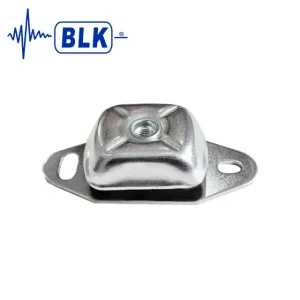




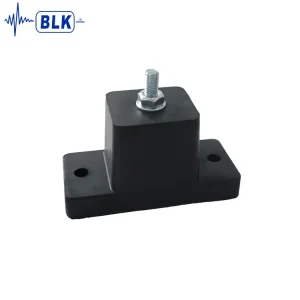

Global Trends in Heavy-Duty Anti-Vibration Rubber Mount Manufacturing
As modern industrial machinery accelerates toward higher power densities, strict acoustic emission standards, and automated sub-micron production tolerances, the demands placed on Heavy Duty Anti Vibration Rubber Mounts have evolved from simple passive shock absorption to advanced multi-axis elastomer dynamic control.
Advanced Elastomer Polymerization
Industrial facilities are increasingly abandoning conventional raw natural rubber formulations in favor of synthetic polymer matrices engineered with nanoscale filler dispersion. Hybrid blend elastomeric compounds (such as Nitrile-EPDM and Fluorocarbon-Silicone blends) deliver exceptional dynamic damping ratios, oil immersion stability, and thermal resilience ranging from -40°C up to +150°C without undergoing rubber compression set hardening.
ESG & Eco-System Compliance
Global Tier-1 OEMs are heavily prioritizing supply chains that fulfill strict environmental directives. Eco-compliant manufacturing mandates zero toxic off-gassing, total elimination of Polycyclic Aromatic Hydrocarbons (PAHs), compliance with EU REACH/RoHS 3 directives, and full traceability of raw materials. Sustainable elastomeric synthesis drastically reduces carbon footprints in power grid and HVAC deployments.
Smart Predictive Isolation (IoT-Ready)
The integration of embedded micro-electromechanical systems (MEMS) and piezoelectric accelerometers inside rubber-to-metal bonded mounts represents the vanguard of Industry 4.0 predictive maintenance. Intelligent mounts monitor real-time harmonic distortion, dynamic fatigue degradation, and structural resonance shifts before catastrophic equipment failure occurs.
Elastomeric Vibration Attenuation Mechanics & Calculations
Achieving optimal vibration isolation efficiency ($E_i$) requires precise mathematical modeling of system forcing frequencies ($f_d$), natural system frequencies ($f_n$), and elastomeric dynamic-to-static stiffness ratios ($K_d / K_s$).
Fundamental Transmissibility & Isolation Equation
Vibration isolation only begins when the forcing frequency ratio ($f_d / f_n$) exceeds $\sqrt{2} \approx 1.414$. The force transmissibility ($T_r$) transmitted to the supporting structure is mathematically expressed as:
Where $\zeta$ represents the elastomeric damping ratio. Bellking heavy-duty rubber mounts are engineered to achieve an optimal damping ratio ($\zeta = 0.05 \text{ to } 0.15$), suppressing resonance peaks during transient start-up conditions while delivering over 95% attenuation at steady-state operating frequencies.
Shear vs. Compression Load Behavior
Rubber mounts exhibit fundamentally distinct stiffness vectors depending on load orientation:
- Compression Loading: Highly non-linear stiffness characteristic. Offers extreme load carrying capacity (up to 100+ tons per mount) but higher natural frequencies ($8 \text{ Hz to } 15 \text{ Hz}$).
- Shear Loading: Linear load-deflection relationship with low stiffness curves. Delivers low natural frequencies ($3 \text{ Hz to } 6 \text{ Hz}$), optimal for isolating delicate low-RPM machinery.
- Combined 45° Angle Mounts: Utilized in Bellking BKM and BKH series to balance multi-directional thrust, axial stability, and shear isolation.
Elastomer Formulation Performance Matrix
| Elastomer Base | Durometer Range (Shore A) | Temp Resistance (°C) | Oil & Solvent Resistance | Damping Ratio ($\zeta$) | Primary Industrial Application |
|---|---|---|---|---|---|
| Natural Rubber (NR) | 40 - 75 Shore A | -40°C to +80°C | Fair / Low | 0.03 - 0.08 | General HVAC, Spring Insulators, High Dynamic Resilience |
| Neoprene (CR) | 45 - 80 Shore A | -30°C to +100°C | Good / Moderate | 0.08 - 0.12 | Marine Engines, Compressors, Outdoor Enclosures |
| Nitrile (NBR) | 50 - 85 Shore A | -25°C to +120°C | Excellent | 0.06 - 0.10 | Hydraulic Power Units, Gearbox Mounts, Automotive Oil Sump Isolation |
| EPDM Rubber | 40 - 80 Shore A | -45°C to +150°C | Poor (Good UV/Ozone) | 0.05 - 0.09 | High-Temperature Steam Turbines, Outdoor Power Grid Substations |
| Fluoroelastomer (FKM) | 60 - 90 Shore A | -20°C to +200°C | Outstanding | 0.10 - 0.18 | Chemical Processing Plants, Aerospace Engine Bay Isolation |
Global Sourcing & Procurement Standards for Tier-1 Manufacturers
Procurement directors and chief structural engineers face non-negotiable compliance, longevity, and structural safety mandates when specifying heavy-duty anti-vibration mounts for industrial equipment.
Rubber-to-Metal Bonding Integrity
The primary failure mode in heavy-duty rubber mounts is delamination along the rubber-metal interface. Bellking utilizes multi-stage chemical surface treatment (shot-blasting, zinc phosphatizing, and proprietary chemlok adhesive application) verified via ASTM D429 post-vulcanization tear testing. Metal housing plates undergo 900-hour salt spray Dacromet coating to prevent galvanic corrosion in coastal installations.
Finite Element Analysis (FEA) Pre-Verification
To eliminate off-center loading and premature elastomeric shear failure, our custom engineering team conducts hyperelastic non-linear FEA modeling (using Mooney-Rivlin and Ogden strain energy density formulations) prior to mold cutting. This guarantees uniform stress distribution across all elastomeric ribs and mounting bolts.
Heavy Industry Macro Application Matrix
Custom engineered anti-vibration rubber mounts tailored to survive extreme physical environments across primary industrial sectors.
1. High-Voltage Power Transformers & Substations
Large power transformers generate persistent low-frequency core hum (100 Hz to 120 Hz magnetostriction excitation). Installing high-damping Bellking BKH and MB rubber/spring matrix isolators attenuates ground-borne structural vibration, mitigating noise pollution in urban residential zones and protecting delicate relay circuitry.
2. Marine Propulsion & Naval Auxiliary Power
Propulsion diesel engines, reduction gearboxes, and gensets onboard commercial marine vessels demand resilient anti-vibration mounts capable of absorbing severe pitch, roll, and wave impact shocks. Captive failsafe rubber mounts prevent engine dislodgement during extreme marine weather conditions.
3. Heavy HVAC Centrifugal Chillers & Cooling Towers
Rooftop chillers and industrial cooling towers transmit severe mechanical vibration into building slabs. Utilizing inertia base steel frames paired with Bellking heavy-duty elastomeric pads neutralizes multi-directional fluid dynamic surges and dynamic pump imbalance.
4. Semiconductor Cleanroom Metrology & Optics
Sub-micron lithography tools and atomic force microscopes require sub-2 Hz floor isolation. Bellking precision BK-PF air mounts and polymer damping pads decouple external ambient floor vibrations, guaranteeing stable nanometer-scale prober operations.
1:1 Custom Engineering Lifecycle & OEM Delivery Workflow
From technical requirements intake to 3D prototype validation and rapid automated mass production, Bellking delivers non-standard custom mounts in as fast as 3 to 7 working days.
Parameter Audit
Evaluation of machine operating weight, Center of Gravity (CoG), forcing RPM, mounting layout, and ambient oil/temp exposure.
FEA Simulation
Non-linear stress analysis, rubber strain distribution modeling, and static load deflection verification using CAD/FEA software.
Rapid Tooling & Molding
In-house CNC mold machining, vacuum vulcanization, and robotic rubber-to-metal chemical bonding application.
Dynamic Batch Testing
MTS hydraulic test rig deflection validation, durometer hardness inspection, and factory certification delivery.
Technology Roadmap: Next-Generation Vibration Isolation (2025–2030)
Bellking’s Kunshan R&D center is currently pioneering smart material innovations that will define the next decade of industrial shock suppression.
Magnetorheological Elastomers (MRE)
Integration of micron-sized iron particles within the rubber polymer matrix. Applying a variable magnetic field instantaneously adjusts shear modulus by up to 300%, enabling real-time adaptive dynamic isolation for variable-speed industrial machinery.
Bio-Based Vulcanized Polymers
Replacing petroleum-derived carbon black fillers with sustainable silica derived from agricultural processing by-products, achieving identical tensile strength (18+ MPa) while eliminating scope 3 supply chain carbon emissions.
Self-Healing Polymer Networks
Development of reversible supramolecular elastomer bonds capable of autonomously healing micro-cracks induced by long-term high-amplitude cyclic dynamic fatigue, extending mount lifespan past 25 years.
Precision Shock Absorbers & Special Applications
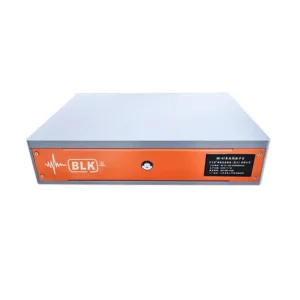
Complete product offerings including multi-layer dampers, rubber pads, desktop platforms, and suspended spring hangers.







Frequently Asked Questions (Procurement & Engineering)
Direct insights from Bellking senior application engineering specialists regarding heavy-duty rubber isolator selection, calculations, and custom OEM manufacturing.
How do I choose between heavy-duty rubber mounts and spring vibration isolators?
What parameters are required to calculate the correct rubber mount size for my factory equipment?
- Total operating weight of equipment plus process fluid loads.
- Center of Gravity (CoG) position and distribution across support points.
- Disturbing frequency / excitation RPM (e.g., 1,450 RPM = 24.16 Hz).
- Number and physical layout of mounting locations.
- Environmental factors: oil/chemical exposure, ambient working temp range, and seismic/wind restraint requirements.
How do Bellking heavy-duty mounts prevent rubber-to-metal bonding failures under extreme shear?
Can Bellking custom manufacture non-standard rubber mounts for OEM machinery?
What is the typical service life of Bellking heavy-duty rubber anti-vibration mounts?
Are Bellking products compliant with international environmental and quality certifications?
Partner with a Direct Manufacturer for Your Anti-Vibration Engineering Needs
Whether you require off-the-shelf heavy-duty rubber mounts or fully customized 1:1 FEA-engineered shock mitigation systems, our Kunshan engineering team delivers complete technical proposals within 24 hours.
Request OEM Engineering Quote & Whitepaper Catalog