High-Quality Laboratory Equipment Isolator Factory & Factories

Engineering White Paper: Advanced Micro-Vibration Mitigation, Sub-Hz Isolation Architecture, and Global Supply Chain Ecosystems for Precision Laboratories

Featured Laboratory Isolation Systems (Series I)

Precision engineered mounts, pneumatic air isolators, and damped pads certified for high-end analytical equipment.


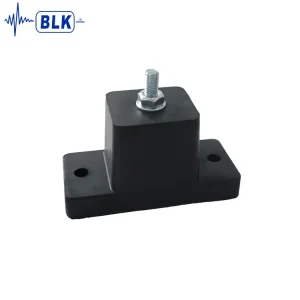
Custom BK-DSR Type Damped Rubber Mounts
Explore Product Specs
Custom Anti-vibration Spring Hangers
Custom Anti-Vibration Spring Hangers
Explore Product Specs
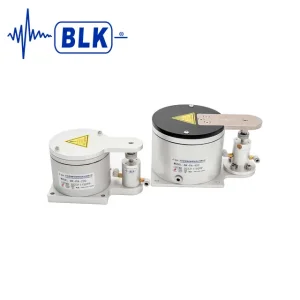
High-Quality BK-PA Type Precision Air Mounts
Explore Product Specs
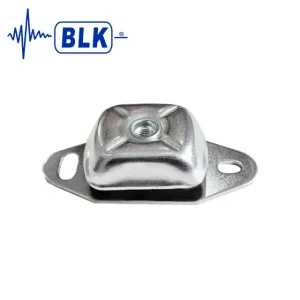
Custom BKM Type Rubber Mounts
Explore Product Specs
High-Quality BKDJ Type Rubber Pad
Explore Product Specs
Low Price BKP Type Rubber Mounts
Explore Product Specs
Low Price BKTS Type Rubber Pad
Explore Product Specs
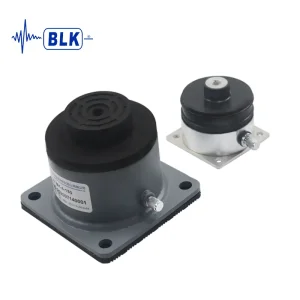
High-Quality MD Type Anti-vibration Spring Mounts
High-Quality MD Type Anti-Vibration Spring Mounts
Explore Product Specs
Manufacturing Scale & Engineering E-E-A-T Metrics

Empirical performance benchmarks establishing factory authority and global reliability.

>99%
Isolation Efficiency
1.7 Hz
Min. Natural Frequency
37+
National Patents
900 Hrs
Salt Spray Resistance
1. Micro-Vibration Mitigation in Modern Laboratory Environments

Understanding the transition from structural isolation to nanometer-scale wave suppression in global analytical research facilities.

In contemporary scientific research and ultra-precision manufacturing, micro-vibration has emerged as a critical limiting factor. As analytical instruments push boundaries into the sub-nanometer realm, ambient environmental disturbances—ranging from low-frequency seismic micro-tremors to building HVAC resonance and pedestrian footfall noise—can severely compromise data integrity, image resolution, and measurement repeatability. A premier Laboratory Equipment Isolator Factory plays an indispensable role in designing passive and active mechanical suppression systems that decouple sensitive instruments from structural dynamics.
Modern research infrastructures, such as semiconductor fabrication pilot lines, transmission electron microscopy (TEM) suites, atomic force microscopy (AFM) cleanrooms, and in-vitro fertilization (IVF) laboratories, operate under stringent vibration criterion (VC) curves. Standard building floors typically exhibit ambient vibration velocity levels corresponding to VC-A (50 μm/s) or worse. However, modern high-resolution tools require environments complying with VC-E (3.12 μm/s) or VC-G (0.78 μm/s). Achieving these demanding standards requires high-performance laboratory equipment isolators manufactured with precise physical properties, controlled natural frequencies, and high damping ratios.
Metrology & Nanotechnology

Scanning Probe Microscopes (SPM), Atomic Force Microscopes (AFM), and Optical Profilometers require low-frequency pneumatic dampeners to eliminate z-axis thermal and mechanical noise drift during topographical scanning.

Semiconductor Inspection

Wafer inspection tools, laser interferometers, and lithography aligners demand active-passive hybrid platforms capable of fast settling times following rapid stage step-and-scan movements.

Biomedical & Life Sciences

Patch-clamp electrophysiology rigs, micromanipulators, and high-magnification confocal microscopes require vibration damping to prevent physical displacement of biological samples.

2. Mechanical Physics & Engineering Architecture of Isolators

Mathematical foundation of transmissibility curves, natural frequency optimization, and resonance damping mechanism.

The primary metric evaluating any laboratory isolator is its dynamic transmissibility ($T$). Transmissibility represents the ratio of force or motion transmitted through the isolator to the payload compared to the input excitation force from the floor:
T = \sqrt{ \frac{1 + (2 \zeta r)^2}{(1 - r^2)^2 + (2 \zeta r)^2} }
Where $r = f_d / f_n$ represents the frequency ratio between the disturbing excitation frequency ($f_d$) and the isolator system's natural frequency ($f_n$), and $\zeta$ denotes the damping ratio. Vibration isolation occurs exclusively when $r > \sqrt{2} \approx 1.414$. To maximize isolation efficiency ($\eta = (1 - T) \times 100\%$), a professional manufacturer must engineer the isolator to achieve a minimum natural frequency ($f_n$) relative to the dominant structural disturbance.
Isolator Technology Type Natural Frequency ($f_n$) Damping Mechanism Isolation Range Primary Lab Applications
Pneumatic Air Mounts (BK-PA / BK-A) 1.2 Hz – 2.5 Hz Viscous Air Orifice & Auxiliary Chamber > 95% at 10 Hz TEM, SEM, AFM, Optical Benches, Interferometers
Precision Damped Spring Mounts (MD / MC) 3.0 Hz – 5.0 Hz Internal Viscous Liquid / Silicone Damping > 90% at 15 Hz Centrifuges, Mass Spectrometers, Heavy Chillers
Elastomeric Damped Rubber Mounts (BK-DSR / BKM) 6.0 Hz – 12.0 Hz High-Hysteresis Synthetic Rubber Polymer > 85% at 30 Hz Vacuum Pumps, Analytical Balances, Mixers
Polymer Damping Pads (BK-PM / BKDJ) 10.0 Hz – 20.0 Hz Viscoelastic Shear Damping High-Frequency Noise Benchtop Shakers, HVAC Ducting, Compressor Mounts
3. Micro-Vibration Technology Roadmap & Future Outlook (2025–2035)

Strategic development of active-passive hybrid dampeners, IoT self-leveling algorithms, and sub-Hz magnetic levitation.

The laboratory equipment isolator industry is experiencing a technological evolution driven by next-generation sub-nanometer fabrication and quantum computing research. Facilities no longer rely on static mechanical rubber blocks or basic pneumatic bladders; instead, the market is shifting toward active electromagnetic suppression and adaptive intelligent feedback networks.
Phase 1: Present Baseline
High-Deflection Passive Pneumatics

Integration of dual-chamber air springs, automatic level adjustment mechanical valves, and optimized elastomeric diaphragms capable of low natural frequencies down to 1.5 Hz.

Phase 2: 2026 – 2029
Smart Hybrid Active Control

Implementation of high-speed piezoelectric and electromagnetic actuators coupled with digital signal processors (DSP). Real-time cancellation of 6-DOF dynamic inertial payload disturbances within 5 milliseconds.

Phase 3: 2030 & Beyond
AI-Driven Sub-Hz Levitating Mounts

Zero-contact active magnetic levitation governed by neural network predictive control models, completely decoupling quantum metrology tools from low-frequency seismic background noise (<0.5 Hz).

4. Localized Application Scenarios & Engineering Field Engineering

Detailed deployment profiles across diverse laboratory topographies, cleanrooms, and high-noise industrial facilities.

Cleanroom Semiconductor Metrology Labs

Environmental Challenge: Cleanroom environments present unique challenges due to high laminar airflow velocity, nearby vacuum pumps, and automated guided vehicle (AGV) floor transit. Standard isolators can off-gas volatile organic compounds (VOCs) that contaminate silicon wafers.

Engineering Solution: Deploying pneumatic precision air mounts (BK-PA series) constructed with anodized aluminum structural plates and low-outgassing fluoroelastomer diaphragms. Integrated with ISO Class 1 cleanroom exhaust valves, these systems maintain zero contaminant generation while isolating ground vibrations from 2.0 Hz upward.

Cryo-EM & High-Resolution Microscopy Facilities

Environmental Challenge: Cryogenic Electron Microscopes (Cryo-EM) are exceptionally susceptible to acoustic waves and low-frequency floor oscillations (1 to 5 Hz). Even sub-micron disturbances blur molecular structure reconstructions.

Engineering Solution: Implementation of inertia base concrete slabs floated on low-frequency spring mounts with viscous liquid dampers (MD series). This creates a high-mass pendulum system that lowers the system center of gravity, shifting natural frequencies well below the operating sensitivity band of the microscope column.

Bio-Pharma & IVF Micromanipulation Workstations

Environmental Challenge: In-vitro fertilization (IVF) laboratories require precise intracytoplasmic sperm injection (ICSI) under 400x optical magnification. Vibrations caused by nearby centrifuges or footsteps cause needle drift and cell damage.

Engineering Solution: Compact desktop damped isolation platforms (BK-RT series) utilizing high-density viscoelastic polymer pads (BK-PM series). These platforms isolate high-frequency transient shocks, allowing micromanipulation needles to remain stable during critical bio-engineering procedures.

High-Capacity Analytical Centrifuges & Heavy Equipment

Environmental Challenge: Industrial research centrifuges and floor-standing mass spectrometers generate intense dynamic unbalance forces during initial spool-up and spool-down sequences, transmitting structure-borne noise throughout multi-story buildings.

Engineering Solution: Heavy-duty open-spring mounts equipped with internal snubbers and lateral seismic restraints. These isolators absorb high displacement amplitudes during transient resonance while providing dynamic stability during continuous high-speed operation.

5. Supply Chain Resilience & China Manufacturing Efficiency

Leveraging the Kunshan Precision Industrial Cluster for vertical integration, cost efficiency, and agile technical delivery.

Selecting the right Laboratory Equipment Isolator Factory requires evaluating engineering capabilities, quality control processes, and supply chain scalability. Located in Kunshan, Jiangsu Province—the heart of China's advanced precision manufacturing corridor—our manufacturing enterprise operates a modern 2,000 square meter facility optimized for custom engineering and mass production.
Complete In-House Manufacturing Cluster

From raw alloy spring coiling and CNC precision machining to automated elastomeric compression molding and robotic welding, our fully integrated production facility eliminates third-party component bottlenecks.

1:1 Rapid Prototyping & Customization

Leveraging localized supply chains allows us to deliver fully customized non-standard isolator designs within 3 working days—providing global OEM partners with unmatched R&D flexibility.

Cost-to-Performance Advantage

Streamlined raw material sourcing and automated production yield a 30% to 45% cost advantage over Western manufacturers—without compromising engineering tolerances or material quality.

Our advanced manufacturing workflow integrates rigorous quality assurance protocols at every stage of production. Raw materials undergo ultrasonic flaw detection and spectrographic analysis upon arrival. Spring elements undergo 100% load-deflection testing, while pneumatic bladders undergo 72-hour continuous pressure loss inspections. Steel components feature electro-galvanized and Dacromet anti-corrosion coatings rated to withstand over 900 hours of continuous salt spray testing—ensuring long-term operation in humid or chemical laboratory environments.
6. International Compliance, Quality Assurance & Global Technical Support

Stringent adherence to international environmental standards and comprehensive engineering field support.

Regulatory Compliance & Certification

Every isolator batch manufactured in our facility complies with major international environmental and quality standards:

  • ISO 9001:2015: Quality Management System certified for design, testing, and production.
  • RoHS & REACH Compliant: Rubber compounds free of heavy metals, polycyclic aromatic hydrocarbons (PAHs), and SVHCs.
  • CE Marking: Compliance with European machinery and structural safety directives.
  • ISO 14644-1 Class 1 Cleanroom Compatibility: Low-outgassing polymers certified for ultra-clean applications.
Global Engineering Field Support

We offer comprehensive technical support for laboratory design firms, equipment OEMs, and facility management teams worldwide:

  • Vibration Field Surveys: On-site or remote spectrum analysis and baseline vibration site assessment.
  • Finite Element Analysis (FEA): Computer simulation of dynamic load distributions and stress profiles.
  • 24-Hour Plan Turnaround: Tailored isolation proposals returned within 24 hours of payload parameter submission.
  • Lifetime Technical Advisory: Direct access to senior application engineers throughout product lifecycles.
7. Technical Frequently Asked Questions (FAQ)

Engineering guidance addressing buyer intent, payload calculations, installation criteria, and maintenance protocols.

Q1: How do engineers select between pneumatic air mounts, spring isolators, and rubber pads?
Selection depends primarily on the disturbing excitation frequency ($f_d$) of the environment and the sensitivity of the payload. As a rule of thumb, isolation only occurs when $f_d / f_n > 1.414$, with optimal efficiency achieved when $f_d / f_n \ge 3$.

• Use Pneumatic Air Mounts ($f_n$: 1.2–2.5 Hz) for sensitive sub-micron metrology, TEM/SEM microscopes, and semiconductor tools affected by low-frequency ground vibration (2–10 Hz).
• Use Damped Spring Mounts ($f_n$: 3.0–5.0 Hz) for heavy analytical equipment, HVAC chillers, generators, and large pumps operating above 1,200 RPM.
• Use Rubber Mounts & Polymer Pads ($f_n$: 6.0–15.0 Hz) for high-speed machinery (compressors, small motors, benchtop shakers) operating above 1,800 RPM.
Q2: What specific parameter data is required to request a custom laboratory isolator design?
To size an isolation system, our engineering team requires: (1) Total operational weight of the equipment including accessories; (2) Center of gravity (CG) coordinates; (3) Number, location, and mounting hole dimensions of support points; (4) Equipment operating speeds (RPM) or known excitation frequencies (Hz); (5) Ambient vibration survey data if available (e.g., VC curves); and (6) Environmental requirements (cleanroom rating, chemical exposure, temperature ranges).
Q3: Do pneumatic air mounts require a continuous compressed air supply?
No. Pneumatic air isolators equipped with automatic level control valves require an initial clean, dry compressed air or nitrogen supply (typically 0.3–0.7 MPa) to inflate the system to operating height. Once floating, air consumption is zero unless the payload mass changes or undergoes dynamic movements that trigger mechanical auto-leveling valves.
Q4: What is the estimated operational service life of Bellking laboratory isolators?
Under normal operating laboratory conditions:
• Spring mounts and transformer isolators feature a service life exceeding 15 years, backed by Dacromet 900-hour salt spray corrosion coatings.
• Pneumatic air mounts provide an operational life of 6 to 10 years before requiring routine diaphragm or level valve seal maintenance.
• Synthetic rubber mounts maintain optimal elastomeric dampening properties for 5 to 8 years depending on thermal and chemical exposure.
Q5: How does your factory manage OEM customization for laboratory instrument manufacturers?
We provide complete OEM/ODM manufacturing partnerships. Instrument manufacturers provide target footings, weight distribution, and chassis CAD drawings. Our R&D team completes dynamic simulation, designs custom mounting plates, adjusts rubber durometer or spring rates, and manufactures prototypes in as fast as 3 working days, supported by comprehensive factory inspection and dynamic test reports.
Q6: Are factory inspection reports and third-party test certifications provided with shipments?
Yes. Every production batch is accompanied by an official ISO 9001 Factory Inspection Certificate detailing dynamic load-deflection tests, natural frequency measurements, and dimensional verification reports. Third-party testing reports (SGS, TÜV) for salt spray resistance, RoHS/REACH material compliance, and cleanroom outgassing are available upon request.
Featured Laboratory Isolation Systems (Series II)

Damped platforms, elastomer buffers, polymer pads, and compact air mounts engineered for laboratory applications.


Custom BKSW Type Rubber Buffer
Explore Product Specs
High-Quality BK-RT Type Damped Vibration Isolation Platform
High-Quality BK-RT Damped Isolation Platform
Explore Product Specs
Low Price BK-PM Type Polymer Damping Pad
Explore Product Specs
Custom BKDE Type Rubber Mounts
Explore Product Specs
High-Quality MC Type Anti-vibration Spring Mounts
High-Quality MC Type Anti-Vibration Spring Mounts
Explore Product Specs
High-Quality BK-A Type Air Mounts
Explore Product Specs
Low Price BKVV Type Rubber Mounts
Explore Product Specs
Custom BKDR Type Rubber Mounts
Explore Product Specs