High-Efficiency Anti-Vibration Solutions & Engineered Hardware
Explore our certified baseline isolation portfolio engineered for precision optical setups, HVAC equipment, pumps, and factory machinery requiring verified low-frequency natural stability.

Engineering Principles of Cylindrical Rubber Mounts in Modern Industry
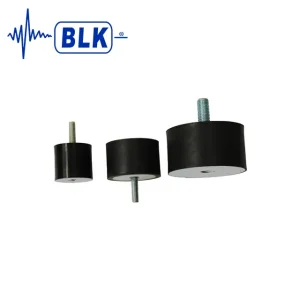
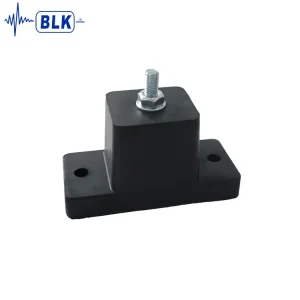
Cylindrical rubber mounts (commonly referenced as rubber bobbins, sandwich isolators, or cylindrical dampers) represent one of the most structurally reliable, cost-effective methodologies for controlling mechanical harmonics, torsional recoil, and structure-borne acoustic transmissions across rotational machinery.
Dual-Axis Stress Deflection: Shear vs. Compression
Cylindrical rubber mounts exhibit fundamentally distinct stiffness profiles depending on load orientation. When subjected to pure axial compression, the vulcanized rubber core displays high stiffness, making it ideal for supporting static dead-weights such as gensets and heavy compressors.
In shear mode, the elastomeric core exhibits roughly 4 to 8 times greater compliance than in compression. This allows engineers to obtain significantly lower natural frequencies ($f_n$) under lightweight rotational excitation, driving vibration transmissibility down below 5%.
Resonance Decoupling & Frequency Ratios
True kinetic isolation begins only when the disturbing frequency of the operational machinery ($f_d$) exceeds $\sqrt{2} \times f_n$ of the rubber isolator. Operating anywhere below this boundary induces mechanical amplification, potentially causing destructive resonance.
Isolation Efficiency: η = [1 - 1 / ((fd/fn)² - 1)] × 100%
For an electric motor operating at 1,800 RPM (30 Hz excitation), pairing it with an engineered cylindrical mount with a natural frequency of 8 Hz yields a frequency ratio of 3.75, delivering >92% empirical vibration isolation efficiency.
Molecular Bond Integrity: Chemlok® Adhesion
A frequent root failure of low-cost cylindrical mounts is catastrophic interface delamination between the threaded steel studs/plates and the rubber core. Bellking utilizes strict degreasing, abrasive grit blasting, and automated polymeric adhesive application (Chemlok bonding agent).
During the thermal vulcanization phase, cross-linked polymer chains fuse directly to the chemically prepared carbon steel or stainless steel end-plates, achieving rubber tear strength exceeding 12 MPa—guaranteeing that the elastomeric material yields before bond rupture occurs.
Macro Dynamics in Industrial Vibration Isolation Procurement
From automated Industry 4.0 production cells to decentralized energy storage hubs, international OEMs and EPC contractors face strict vibration management standards to safeguard electronics and structural longevity.
| Industrial Sector | Dynamic Excitation Challenge | Optimal Mount Configuration | Expected Life Cycle |
|---|---|---|---|
| HVAC & Commercial Chillers | Harmonic transmission via refrigerant pumps, rotary compressors, and dynamic fan buffeting. | Cylindrical compression bobbins with EPDM formulation for ozone and condensate resistance. | 12–15 Years |
| Renewable Energy & BESS | Inverter cooling liquid pump pulsation, transformer 100/120 Hz hum, thermal cycle expansion. | Dual-male threaded cylindrical neoprene mounts with high electrical isolation and flame-retardant rating. | 15+ Years |
| Mobile Hydraulics & Commercial EVs | Multi-axis shock loads up to 4.5G combined with continuous auxiliary power unit (APU) vibrations. | Shear-rated natural rubber bobbins with mechanical interlocks and Dacromet 900-hr salt spray studs. | 8–10 Years |
| Semiconductor & Cleanroom Automation | Sub-micron step settling delays on transfer robots, vacuum pump micro-vibrations disrupting lithography. | Low-outgassing silicone and fluororubber cylindrical mounts tuned to ultra-low creep parameters. | 6–8 Years |
Supply Chain Realities: Tier-1 vs. Low-End Imports
Global procurement teams often balance raw unit costs against dynamic fatigue failure. Low-grade commercial mounts utilize non-vulcanized recycled crumb rubber with heavy carbon-black filler, causing rapid dynamic drift, oil-induced softening, and early stud detachment.
Bellking balances cost-efficiency with high-precision engineering by operating integrated compression presses, robotic welding fixtures, and automated surface treatment directly in Kunshan, China—ensuring competitive unit economics without sacrificing metallurgical or polymer integrity.
Noise Abatement Regulations: OSHA & ISO 14001
Industrial structural vibration directly translates into secondary airborne noise (audible structure-borne radiation). Under strict workplace noise exposure thresholds (OSHA 85 dBA action levels and European Directive 2002/44/EC for human vibration exposure), plant managers utilize cylindrical mounts as primary physical barriers.
Installing balanced Shore 55A durometer cylindrical mounts beneath hydraulic manifolds and casing brackets typically drops structure-borne acoustic transmission by 14 to 22 dB, eliminating secondary room reverberations.
Custom Compound Formulation
Every industrial environment requires distinct compound customization. Standard natural rubber (NR) delivers superior mechanical resilience, tensile elasticity, and fatigue life down to -40°C. For hydrocarbon contact, Nitrile (NBR) prevents swelling. For outdoor exposure, EPDM resists UV embrittlement and ozone breakdown.
Localized Engineering Support & International Compliance Assurance
Procuring vibration hardware from Bellking guarantees compliance with stringent international regulatory frameworks, comprehensive QA documentation, and technical consultation directly tailored to your local region.
RoHS & REACH Compliance
Our complete rubber formulation chain conforms strictly to EU RoHS 3 (Directive 2015/863) and REACH SVHC regulations. Free of hazardous polycyclic aromatic hydrocarbons (PAHs), heavy metals, and toxic plasticizers, Bellking mounts are fully cleared for installation in sensitive HVAC, cleanroom, and consumer appliance assemblies.
Complete Material Test Reports (MTR)
Every factory production batch is supplied with full material traceability: ASTM D2240 durometer shore verification, ASTM D412 tensile strength and elongation testing, and ASTM D573 thermal aging test reports. Third-party testing through SGS and TÜV Rheinland is available upon request for EPC project submissions.
Rapid 24-Hour Plan Turnaround
Our dedicated engineering department in Kunshan offers rapid finite-element and mathematical vibration sizing plans within 24 hours. Submit equipment dry/operating weight, rotational RPM, mounting hole coordinates, and environmental exposure metrics to receive full dynamic deflection schedules.
Localized Industrial Application Scenarios
Review real-world deployment topologies where Bellking cylindrical mounts safeguard equipment longevity, dampen noise radiation, and eliminate structural fatigue.
Packaged Air Compressors & Vacuum Stations
Installed directly under the sub-frame of rotary screw and reciprocating piston air compressors. Cylindrical mounts absorb high-frequency pulsation and frame torque during start-up, preventing cracking in rigid brazed copper pipe manifolds and concrete foundation anchors.
Electrical Control Cabinets & Genset Switchgear
Mounted beneath floor-standing PLC enclosures and low-voltage distribution panels adjacent to heavy stamping presses or diesel gensets. Prevents harmonic chatter in mechanical relays, eliminates terminal block loosening, and shields delicate microprocessors from shock trip errors.
End-Suction Inline Pumps & Fluid Handling
Deployed between pump mounting feet and intermediate inertia bases. Mitigates hydraulic turbulence and shaft misalignment vibration, cutting high-frequency transmission through the building structure and reducing mechanical seal wear cycles.
Technical Roadmap & Future Outlook (2026–2030)
The vibration isolation sector is evolving toward smart, bio-based, and extreme-environment polymers designed to meet next-generation industrial sustainability and predictive maintenance demands.
Smart IoT-Embedded Isolator Bobbins
Bellking’s Kunshan R&D center is piloting embedded piezoresistive graphene strain sensors integrated into the core of cylindrical rubber mounts. This enables real-time dynamic deflection measurement, operational health monitoring, and automated early warnings before polymer fatigue limits are breached.
Next-Gen Sustainable Bio-Elastomers
In accordance with corporate ESG and decarbonization targets, our compound engineers are transitioning toward sustainable synthetic elastomers synthesized with recovered carbon black from devulcanized end-of-life mounts and bio-based silica cross-linking agents, lowering embodied carbon by 35% without altering shore hardness.
Ultra-Extreme Temperature Formulations
Standard synthetic rubbers experience glass transition and brittleness below -30°C and thermal softening above +80°C. Bellking’s advanced polymer series incorporates specialized fluorosilicone and hydrogenated nitrile (HNBR) bobbins functional across an extreme band from -55°C up to +150°C for defense, aerospace, and geothermal pump installations.
Frequently Asked Questions: Sizing, Selection & Procurement
Consult expert guidance on cylindrical rubber mount selection, load calculations, thread standards, and environmental resistance.
What are the key technical differences between Male-Male, Male-Female, and Female-Female mounts?
How do I calculate static deflection and determine natural frequency for rubber mounts?
Why is Shore A Durometer critical when ordering cylindrical rubber mounts?
How does oil, diesel, or chemical exposure affect cylindrical rubber isolators?
What anti-corrosion treatments are available for threaded metallic studs?
Precision Heavy-Duty Mounts, Damping Pads & Buffers
Explore additional certified models from our Kunshan manufacturing line, encompassing high-damping spring mounts, polymer pads, and custom rubber buffers engineered for industrial plants.
-
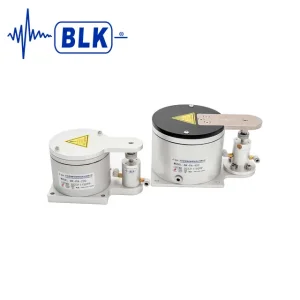
High-Quality BK-PA Type Precision Air Mounts Factories, Manufacturers
-
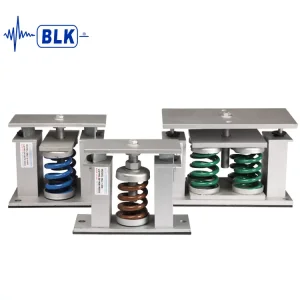
High-Quality MA Type Anti-vibration Spring Mounts Factory, Factories
-

Low Price BK-PM Type Polymer Damping Pad Factories, Manufacturers
-
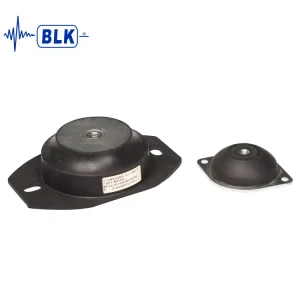
Low Price BKP Type Rubber Mounts Manufacturers, Manufacturer
-
-
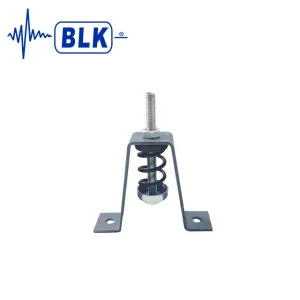
High-Quality HV Type Spring Hangers Manufacturers, Manufacturer
-
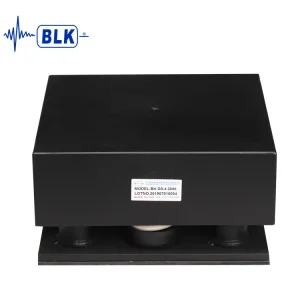
Low Price BK-DS Type Damped Spring Mounts Factory, Manufacturers
-