Industrial Anti-Vibration Mounts & High-Efficiency Isolators
Direct factory-priced isolation solutions optimized for low-frequency attenuation, heavy load support, and high durability under extreme operational conditions.

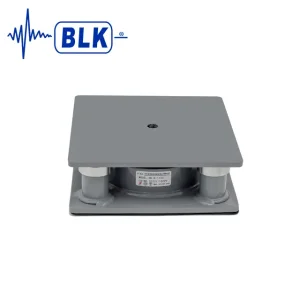
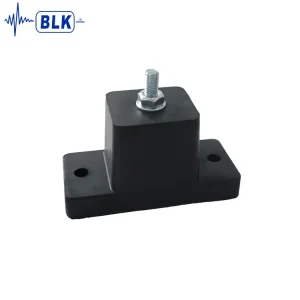
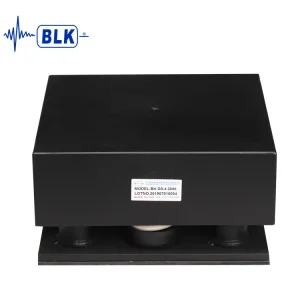


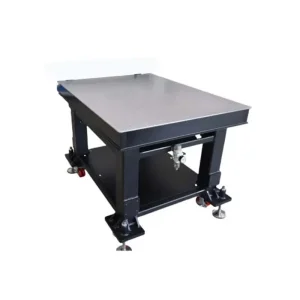

Industrial Machinery Vibration Control: Mechanical Principles & Dynamics
In modern high-precision industrial manufacturing, mechanical vibration represents one of the most insidious threats to operational continuity, equipment longevity, and sub-micron quality control. Uncontrolled harmonic excitation produced by rotating plant machinery—such as heavy HVAC chillers, industrial air compressors, stamping presses, and electric power transformers—transmits kinetic energy into building structures. This structure-borne noise and mechanical resonance result in premature component fatigue, structural degradation, non-compliance with environmental noise regulations, and costly production downtime.
To mitigate these dynamic forces, industrial vibration isolation systems utilize tailored elastic media (steel springs, elastomeric polymers, or pneumatic air bladders) to alter the natural frequency of the mechanical assembly. The primary objective is to achieve a system natural frequency ($f_n$) significantly lower than the disturbing frequency ($f_d$) generated by the operating machinery.
The isolation efficiency ($I_e$) of an anti-vibration mount is mathematically evaluated through its dynamic transmissibility ($T$), defined as the ratio of force transmitted to the foundation versus the force generated by the machine:
Isolation Efficiency (I_e) = (1 - T) * 100%
When the frequency ratio ($f_d / f_n$) exceeds $\sqrt{2} \approx 1.414$, the system enters the isolation zone ($T < 1$). For optimum industrial vibration control, design engineers target a frequency ratio between 2.5 and 4.5, which reliably yields an isolation efficiency exceeding 90% to 99% depending on internal damping factors.
Key Dynamic Selection Parameters
- Static Deflection (δ_s) 25mm - 50mm Typical
- Natural Frequency Range 1.7 Hz - 5.0 Hz
- Max Overload Margin 50% Above Rated Capacity
- Damping Ratio (ζ) 0.05 - 0.22 (Viscous/Elastomer)
- Environmental Resistance ISO 9227 Salt Spray >900h
Low Price Sourcing: Direct Factory Price vs Total Cost of Ownership (TCO)
Industrial procurement officers often evaluate "low price" strictly on unit acquisition cost. However, high-performance vibration control demands analyzing Total Cost of Ownership (TCO), including installation labor, maintenance cycles, static sag resistance, and anti-corrosion life span.
| Isolator Technology Type | Typical Price Range (USD/Unit) | Dynamic Stiffness & Deflection | Target Equipment Applications | TCO & Life Expectancy |
|---|---|---|---|---|
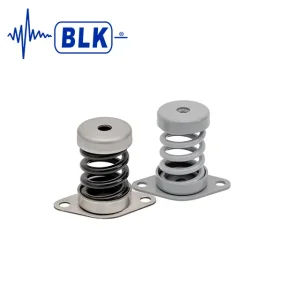
| Spring Mounts (MB / MD / MA) | $15 - $85 | High Static Deflection (25-50mm), Low Natural Freq (3-5Hz) | HVAC Chillers, Cooling Towers, Heavy Pumps, Gensets | 15+ Years; Minimal maintenance; High ROI for plant HVAC. |
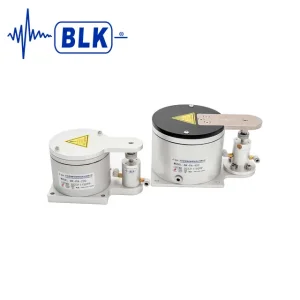
| Pneumatic Air Mounts (BK-R / BK-PA) | $120 - $450 | Ultra-low Natural Freq (1.7-2.5Hz) with Auto-Leveling | Semiconductor Tools, CMMs, Laser Scanners, Electron Microscopes | 8-10 Years; Requires clean compressed air supply line. |
| Elastomeric Rubber Pads (BKTS / BKDJ) | $3 - $25 | High Shear Damping, High Natural Freq (8-15Hz) | Motors, High-RPM Compressors, Electrical Cabinets, Small Fans | 5-8 Years; Economical replacement, oil & ozone resistant. |
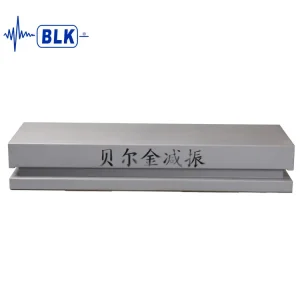
| High-Damping Platforms (BK-RT / BK-DT) | $350 - $1,800 | Integrated Viscous Damping with Matrix Structural Stiffness | Optical Benches, Precision Wafer Probers, Metrology Tables | 12+ Years; Protects multimillion-dollar lab setups. |
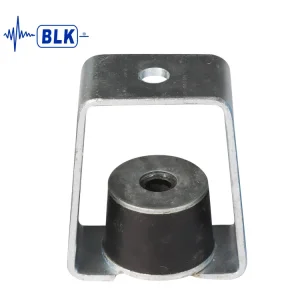
| Spring & Rubber Hangers (HR / Custom) | $8 - $42 | Ceiling-suspended Isolation with Misalignment Restraint | HVAC Ductwork, Suspended Hydronic Piping, Exhaust Fans | 15+ Years; Eliminates structure-borne acoustic bridging. |
By procuring directly from specialized OEMs in established manufacturing clusters (such as Kunshan, China), global buyers achieve a **35% to 55% reduction in unit acquisition price** compared to tier-1 Western brand markups, without sacrificing material metallurgy or dynamic dampening compliance under ISO 10816 standards.
Localized Industrial Application Scenarios
1. Semiconductor & Cleanroom Fabrication
In semiconductor manufacturing, photolithography, wafer inspection, and metrology equipment demand ISO Class 1 to Class 5 cleanroom compatibility and isolation from ambient floor vibrations. Ambient floor movement exceeding VC-E or VC-G micro-vibration criteria ruins sub-nanometer chip yields. **BK-PA Precision Air Mounts** integrate fast-response pneumatic leveling valves and ultra-low natural frequencies (down to 1.7 Hz), neutralizing internal stage acceleration and ambient foot-traffic disturbance.
2. Heavy HVAC & Coastal Coastal Environments
Rooftop chillers, cooling towers, and primary water pumps installed in humid or coastal marine environments face continuous atmospheric corrosion and harmonic transmission through building slabs. Standard painted steel spring mounts degrade rapidly. Incorporating **Dacromet surface treatment** (exceeding 900 hours in ASTM B117 salt spray testing) and neoprene sound-padding bases ensures long-term resistance against rust, salt fog, and chemical exposure while maintaining dynamic stiffness.
3. Power Grid Transformer Substations
Electrical transformers radiate constant 100 Hz / 120 Hz magnetostrictive hum and low-frequency vibration through concrete foundations into nearby commercial or residential zones. Specialized **Transformer Anti-Vibration Mounts** combine high load-bearing steel housings with oil-resistant elastomeric cores. These units isolate ground-transmitted hum, assisting substations in fulfilling strict municipal acoustic standards (e.g., DIN 4150-3 structural vibration standards).
4. High-Speed Stamping & Heavy CNC Machinery
Mechanical stamping presses and dynamic CNC centers generate massive transient shock impacts (3G to 5G acceleration force) that damage precision toolings on adjacent machines. Installing **BK-DS Damped Spring Mounts** featuring integrated viscous damping chambers absorbs instantaneous impact energy, prevents floor shock propagation, eliminates machine "walking," and removes the requirement for expensive deep concrete inertia pits.
China Factory Supply Chain Resilience & Manufacturing Efficiency
China’s specialized industrial equipment ecosystems—most notably centered in Kunshan, Jiangsu Province—provide unprecedented supply chain integration for noise and vibration reduction equipment. The proximity to raw high-tensile spring steel suppliers, automated vulcanization foundries, precision CNC machining shops, and surface finishing plants allows factories to produce world-class anti-vibration systems with unmatched lead times.
Key Sourcing & Production Advantages:
1. Vertically Integrated Metallurgy & Manufacturing: Sourcing high-grade 60Si2Mn and 50CrVa spring steel directly from regional steel mills ensures that every coil spring achieves exact load-deflection linear curves and high fatigue resistance (over 2,000,000 compression cycles without permanent set).
2. Automated CNC Machining & Robotic Welding: Advanced robotic welding stations for spring mount frames ensure structural integrity capable of withstanding extreme seismic sheer loading, conforming to international seismic safety codes.
3. Cost Efficiency Without Quality Compromise: Highly efficient production workflows lower fixed overheads by 40%. These operational savings are passed directly to international buyers, delivering premium industrial vibration solutions at competitive market pricing.
Rigorous Factory Quality Assurance
Every batch of anti-vibration mounts undergoes strict laboratory testing before dispatch:
- Static Load-Deflection Testing: Verification of spring rate ($K$) and static deflection (δ) via hydraulic test rigs.
- Dynamic Spectrum Analysis: Resonance frequency verification using multi-channel FFT vibration meters.
- Corrosion Chamber Testing: ASTM B117 salt fog exposure testing for Dacromet and powder-coated steel parts.
- Elastomer Durometer & Tensile Strength: Shore A hardness testing and rubber-to-metal bonding shear strength verification.
Technology Roadmap & Future Outlook (2025–2030)
Smart IIoT-Enabled Isolators
Integration of micro-MEMS wireless accelerometers inside spring and rubber mounts. Real-time dynamic vibration spectrum data is uploaded to cloud edge-AI platforms, allowing plant engineers to monitor machinery health and receive early warnings for bearing wear or shaft misalignment before catastrophic failure.
Active Piezoelectric Hybrid Systems
While passive spring and pneumatic isolators excel above 3 Hz, next-generation semiconductor fabrication lines demand active electromagnetic and piezoelectric cancellation. Hybrid air-piezo systems actively counteract floor movement within milliseconds, achieving sub-Hertz isolation from 0.5 Hz upward.
Eco-Friendly Elastomers
In response to strict global EU REACH and RoHS regulations, leading manufacturers are moving toward eco-compliant, recyclable thermoplastic elastomers (TPE) and bio-based synthetic polymers that offer superior oil and chemical degradation resistance without hazardous outgassing.
Localized Support & Global Compliance Standards
International Quality & Regulatory Standards
Industrial machinery projects require compliance with international engineering codes. Factory products adhere to:
- ISO 9001:2015: Quality Management System certification governing all design and manufacturing stages.
- ISO 10816 / ISO 20816: Mechanical vibration standards evaluating machine vibration intensity.
- ASHRAE Equipment Guidelines: Recommended deflection criteria for HVAC equipment isolation.
- CE & RoHS Directives: Material safety compliance for global machinery export.
24/7 Global Application Engineering
Navigating non-standard machinery vibration issues requires fast technical response. Factory application engineering teams offer worldwide technical support:
- Rapid 24-Hour Sizing & Calculation Reports: Submit equipment weights and RPM to receive custom CAD drawings and static deflection calculations.
- OEM & Custom Fabrication: Custom bracketry, special mounting hole layouts, and tailored spring rates delivered within 3-5 days.
- Global Express Dispatch: Standard model inventory stocked for rapid air or sea freight shipment.
Industrial Vibration Solution FAQ
Selection depends primarily on the operational disturbing frequency ($f_d$) of your equipment and required isolation efficiency. Rubber mounts (8-15 Hz natural frequency) suit high-speed machinery (>1,200 RPM) with light load requirements. Steel spring mounts (3-5 Hz natural frequency) provide high static deflection for low-speed equipment (chillers, pumps, fans running at 300-1,800 RPM). Pneumatic air mounts (1.7-2.5 Hz natural frequency) are essential for micro-vibration sensitive tools like semiconductor inspection equipment or optical tables requiring isolation down to ultra-low frequencies.
To receive an accurate engineering calculation, provide: (1) Total equipment operating weight, (2) Center of Gravity (CG) location, (3) Number and layout of mounting points, (4) Machine operating speed (RPM) or forcing frequency (Hz), (5) Environmental factors (outdoor, oil contact, cleanroom), and (6) Any seismic or lateral restraint requirements.
Direct factory purchasing removes multi-tiered regional distribution markups, import agent commissions, and brand licensing premiums. Sourcing direct from China’s integrated manufacturing clusters gives direct access to wholesale material pricing and streamlined production without sacrificing metallurgical quality or testing rigor.
Untreated carbon steel springs degrade quickly under atmospheric exposure, leading to micro-fractures and dynamic spring constant loss. Standard powder coating offers basic protection, whereas premium Dacromet treatment provides superior zinc-aluminum flake cathodic protection, surviving over 900 hours in neutral salt spray testing (ASTM B117) and extending outdoor service life to 15+ years.
Yes. In-house engineering teams routinely produce custom 1:1 OEM designs based on equipment CAD models. Customizations include special top plate bolt patterns, custom spring rates ($K$), integrated seismic snubbers, and non-standard paint finishes, with initial engineering submittals delivered within 24 to 48 hours.
Additional Machinery Isolation & Hanger Series
Explore specialized suspension hangers, heavy-duty damped spring mounts, and precision matrix mounts engineered for severe vibration environments.