
Precision Anti-Vibration Isolators & Pad Assemblies
Explore our high-performance rubber mounts, precision air platforms, and polymer damping pads designed for electrical transformers and industrial machinery.
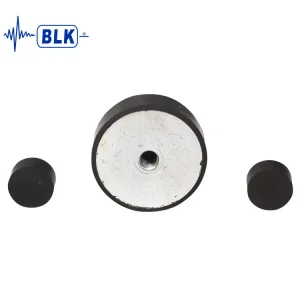

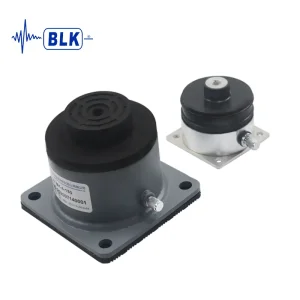

Physics of Electrical Transformer Vibration & Noise Abatement
Understanding magnetostriction, harmonic Lorentz forces, and structural resonance transfer mechanisms in modern power distribution assets.
Magnetostrictive Core Hum
Continuous 100Hz/120Hz fundamental vibrations caused by domain realignment in grain-oriented electrical steel, generating non-linear harmonics that propagate into transformer mounting feet.
Winding Lorentz Forces
Dynamic stray flux forces reacting across winding turns under high load current. Yields transient impact spikes during power surges that require elastomeric energy dissipation.
Structural Transmissibility
Direct coupling of rigid steel feet converts small kinetic displacement into high sound pressure levels (SPL) across floors, ceiling joists, and drywall partitions.
Localized Deployment Scenarios for Transformer Damping Pads
Engineered elastomeric and composite pad configurations tailored for demanding acoustic and environmental operating constraints worldwide.
1. Mission-Critical Urban Data Centers
Modern hyper-scale data centers place step-down transformers (e.g., 11kV to 415V dry-type) on mezzanine levels directly above or adjacent to server halls and Sensitive Equipment Rooms (SER). Unmitigated 100Hz vibration can resonate with server chassis, disturbing hard disk drive (HDD) read/write heads and delicate optical interconnects.
Engineered Solution: Laminated high-durometer neoprene pads integrated with internal steel load-distribution plates (BKDJ and BK-PM series). These pads achieve an isolation efficiency over 94% at 100 Hz, maintaining deflection under 15% to eliminate cable shear stress.
2. Indoor Residential & Mixed-Use Commercial Substations
Basement and rooftop distribution transformers in high-rise residential towers face strict municipal noise codes (e.g., NC-30 or NC-25 curves). Unisolated transformers frequently cause low-frequency acoustic hum complaints from upper-floor occupants.
Engineered Solution: Dual-layer matrix polymer damping pads with waffle or ribbed anti-skid surface patterns. By adjusting compound durometer (45 to 70 Shore A), the natural frequency ($f_n$) is tuned to 8–12 Hz, providing a dramatic insertion loss exceeding 18 dB for structural hum.
3. Renewable Solar & Wind Energy Microgrids
Step-up inverter transformers in utility-scale solar parks and wind turbine bases operate in harsh, unconditioned environments subject to solar UV radiation, thermal cycling (-40°C to +80°C), and high wind vibrations.
Engineered Solution: Weatherproof EPDM and fluorocarbon elastomer composite pads engineered for extreme ozone and thermal stability. Compounding additives resist permanent compression set, preventing pad degradation under continuous summer heat load.
4. Offshore Wind Substations & Marine Platforms
High-voltage offshore platform transformers endure relentless salt-spray exposure, dynamic wave excitation, and strict fire safety requirements (low smoke, toxicity, and flame retardancy).
Engineered Solution: Stainless-steel (316L) encapsulated elastomeric pads coated with Dacromet anti-corrosion barrier layers. Verified through 900-hour salt spray tests and compliant with UL94-V0 self-extinguishing ratings.
Technical Roadmap & Next-Generation Outlook
How advanced polymer chemistry, multi-physics finite element analysis (FEA), and IoT digital twin platforms are transforming vibration isolation.
1. Novel Polymer Nano-Composites
Traditional rubber formulations compromise between loss factor ($\eta$) and mechanical load capacity. Future transformer pads leverage carbon nanotube (CNT) and graphene-reinforced elastomeric matrices. These nano-composites elevate structural damping dissipation without increasing long-term static creep, allowing thinner profile pads under 100-ton power transformers.
2. Multi-Physics FEA Non-Linear Modeling
Transitioning from empirical pad sizing to non-linear Mooney-Rivlin and Ogden hyperelastic material models. Engineers simulate complex 3D stress-strain vectors and high-temperature thermal dissipation in real time, predicting non-linear dynamic stiffness ($K_d$) across full ambient operating spectrums prior to pad vulcanization.
3. Smart Damping with Embedded IoT Sensors
Integrating thin-film piezoelectric velocity sensors and wireless temperature/pressure transceivers directly inside the elastomeric pad matrix. These "smart pads" monitor load distribution imbalances, winding degradation, and thermal hotspots, streaming condition-based health metrics into building management systems (BMS) for predictive maintenance.
4. Circular Economy & Recyclable Thermoplastic Elastomers
Advancing fully recyclable Thermoplastic Vulcanizates (TPVs) that offer performance comparable to synthetic neoprene while permitting melt-reprocessing at the end of transformer service life. This transition supports global ESG carbon reduction mandates across power generation infrastructure.
China Manufacturing Cluster & Supply Chain Resilience
How Kunshan's advanced industrial ecosystem provides unmatched raw material access, precision molding efficiency, and cost advantages.
Integrated Polymer Compounding
In-house rubber masterbatch compounding allows precise control over durometer hardness (30 to 80 Shore A), loss factor, tensile strength, and oil/ozone additives tailored for transformer installations.
Automated Mold Engineering
High-speed 5-axis CNC mold tooling enables non-standard transformer pad geometries, custom bolt hole patterns, and steel insert bonding plates in as fast as 3 business days.
Strict ISO 9001 Quality Control
Every production batch undergoes dynamic servo-hydraulic stiffness testing, compression set verification (ASTM D395), and automated dimensional inspection prior to packaging.
Global Regulatory Landscape & Quality Certification
Meeting international acoustic, seismic, and environmental safety standards across North America, Europe, and Asia-Pacific.
| Standard / Regulation | Governing Scope | Engineering Compliance Requirement | Bellking Product Benchmark |
|---|---|---|---|
| IEC 60076-10 / IEEE Std 85 | Acoustic Sound Level Determination | Verifies structure-borne vibration conversion to sound pressure (dB). | Achieves >15–22 dB attenuation in 100Hz/120Hz fundamental bands. |
| IEEE 693 / IBC Seismic | Seismic Qualification for Substations | Pads must withstand horizontal shear forces up to 0.5g ZPA without shearing. | Steel-interleaved composite designs absorb shear forces up to 3–5 G spikes. |
| ASTM D395 Method B | Compression Set of Rubber | Measures permanent deformation after prolonged load exposure at high temps. | Compression set <12% after 70 hours at 100°C continuous stress. |
| ISO 9001 / ISO 14001 | Quality & Environmental Mgmt | Full traceability from raw polymer compounding to finished testing. | 100% factory inspection report issued with batch certificate of conformity. |
| RoHS 3 / REACH Directive | Chemical Safety & Off-Gassing | Eliminates heavy metals, phthalates, and hazardous volatile compounds. | Eco-compliant formulations safe for indoor HVAC and hospital utility rooms. |
Frequently Asked Technical Questions
Detailed answers to critical engineering, selection, and installation queries regarding custom transformer anti-vibration pads.
How do I calculate the required pad area and thickness for a specific transformer weight?
Sizing requires calculating the total operating weight of the transformer (including core, coils, oil, and enclosure) and dividing by the number of support feet to determine the static load per point. The optimal operating pressure for typical elastomeric pads ranges from 0.5 MPa to 2.5 MPa (approx. 70 to 360 PSI), depending on durometer hardness.
Pad thickness determines static deflection ($\delta$). To isolate a 100 Hz hum, you need a pad natural frequency ($f_n$) well below 100 Hz. Using the formula $f_n \approx 5 / \sqrt{\delta \text{ (cm)}}$, a pad deflection of 3 mm yields a natural frequency around 9 Hz. Since $100 \text{ Hz} / 9 \text{ Hz} > 11$, this puts the system deep into the isolation zone, removing over 95% of transmitted vibration energy.
What is the difference between Static Stiffness ($K_s$) and Dynamic Stiffness ($K_d$)?
Static stiffness ($K_s$) describes how much an elastomeric pad deflects under a steady static mass. Dynamic stiffness ($K_d$) represents the stiffness under high-frequency oscillating forces (such as the 100Hz/120Hz transformer magnetostriction hum). Elastomers naturally exhibit dynamic stiffening, where $K_d$ is higher than $K_s$ by a factor ranging from 1.2 to 2.0 (the dynamic-to-static ratio).
Bellking’s engineering team uses actual dynamic stiffness ($K_d$) values measured on servo-hydraulic test frames when calculating natural frequencies and transmissibility curves, ensuring that installed pads perform exactly as predicted in field acoustic audits.
How do Bellking custom pads prevent long-term elastomeric creep under continuous heavy load?
Creep is time-dependent plastic deformation under sustained mechanical stress. Unengineered commercial rubber pads sag over 3–5 years, causing transformers to tilt or touch base channels directly, short-circuiting the acoustic isolation path.
Bellking prevents creep through optimized rubber sulfur-vulcanization crosslinking networks, incorporating internal vulcanized steel shim plates (in our BKDJ and steel-laminated composite series). Steel laminations constrain lateral bulging of the elastomeric layers, increasing vertical load-bearing capacity without increasing shear modulus, guaranteeing over 15 years of stable performance.
What installation guidelines must be followed to avoid acoustic bridging?
Acoustic bridging occurs when a rigid mechanical path bypasses the anti-vibration pad. Common installation mistakes include: (1) Rigidly bolting transformer feet through the pad directly into the concrete floor without elastomeric isolation washers and bushings; (2) Rigid conduit or copper busbar connections that transmit vibration into nearby walls; (3) Debris or concrete spatter bridging the gap around the pad edge.
Always use isolation sleeves/washers on anchor bolts, install flexible expansion connectors on electrical conduits and fluid pipes, and maintain clean floor clearances around pad perimeters.
Are these pads resistant to transformer oil leaks and weather exposure?
Yes. While natural rubber provides superior elasticity, it degrades when exposed to mineral oil. For oil-immersed transformers, Bellking formulates pads using Nitrile (NBR), Neoprene (CR), or engineered fluoroelastomer blends. These compounds exhibit minimal swelling and retain tensile strength when exposed to transformer oil, ozone, and solar UV radiation.
What custom parameters can be specified for fast OEM factory production?
Clients can specify exact physical dimensions (length, width, thickness), target durometer hardness (40–75 Shore A), mounting hole locations/diameters, integrated steel top/bottom plates, threaded studs, and environmental certifications (UL94 flame retardancy or Dacromet anti-corrosion coating). Custom samples can be produced within 3 to 5 business days.
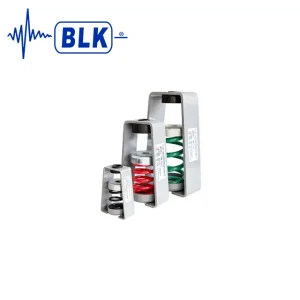
Complementary Vibration & Damping Hardware
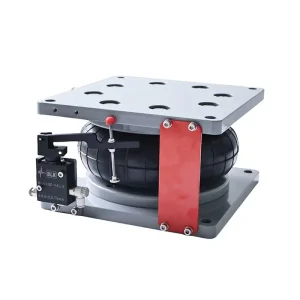
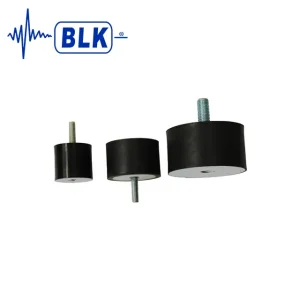
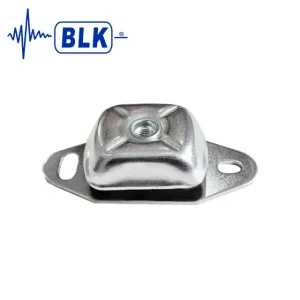
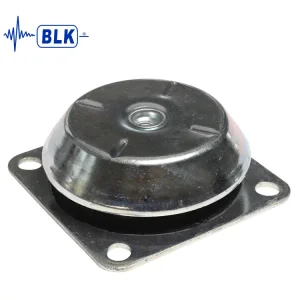
Explore our broader series of spring mounts, damped rubber isolators, and polymer damping systems.
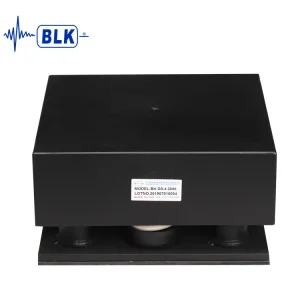

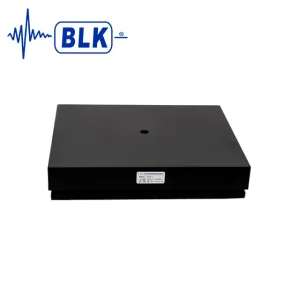
Request a Custom Transformer Isolation Engineering Calculation
Send us your transformer operating weight, mechanical dimensions, support point layout, and site noise limits. Our senior vibration engineers will provide CAD drawings, Finite Element Analysis (FEA) data, and a formal technical solution within 24 hours.