
High-Efficiency Anti Vibration Shock Mounts: Precision Series
Precision-manufactured at our Kunshan Facility 4.0. Standard inventory dispatches in under 24 hours with certified 900-hour Dacromet salt-spray resistance and 99% attenuation efficiency.

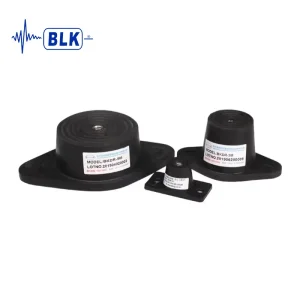
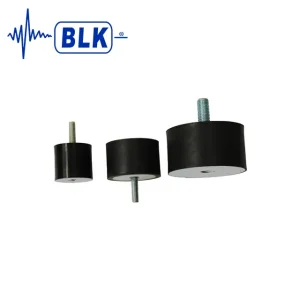


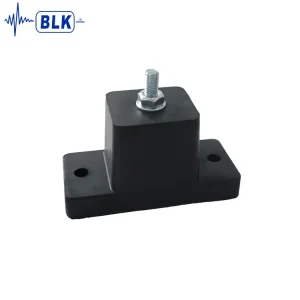
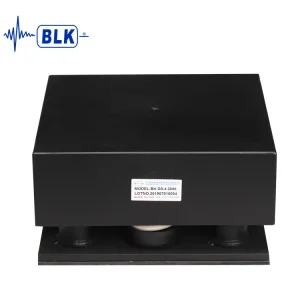
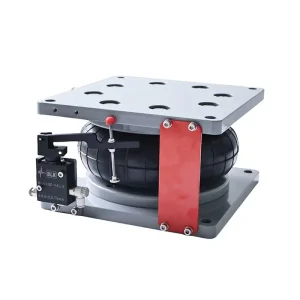
Industrial Anti-Vibration Isolator Economics: Demystifying Factory Pricing vs. Total Cost of Ownership (TCO)
In mission-critical industrial infrastructures—such as cleanroom semiconductor fabs, multi-megawatt HVAC plant loops, commercial power generation, and high-frequency stamping facilities—the search term “Low Price Anti Vibration Shock Mounts Factory & Price” is often misunderstood by non-technical procurement teams. Purchasing decisions made solely on the lowest Initial Purchase Price (IPP) without verifying the Transmissibility Equation ($T$), dynamic-to-static stiffness ratios ($K_d/K_s$), and long-term fatigue degradation curves inevitably culminate in catastrophic failures: foundation cracking, premature bearing seizure, piping flange rupture, and unacceptable structure-borne micro-vibration.
True manufacturing economy is not achieved by sacrificing raw material integrity (e.g., using reclaimed crumb rubber or low-carbon drawn steel wire). Instead, true cost efficiency stems from China Industry 4.0 lean manufacturing, highly automated robotic metal-forming, internal electrostatic Dacromet coating lines, and integrated finite element analysis (FEA). As an ISO 9001:2015 certified manufacturer with a 2,000 m² specialized facility in Kunshan, China, Bellking bridges high-precision elastomeric, helical spring, and pneumatic technology with direct-from-source wholesale scalability.
China Factory 4.0: Supply Chain Resilience, Automation, and Scalable Unit Cost Superiority
How Bellking's vertically integrated Kunshan facility achieves 30–45% procurement cost savings over Western legacy brands without compromising precision, metallurgical integrity, or fatigue lifespan.
Automated Robotic Metal-Forming
Our 2,000 m² production floor utilizes robotic six-axis multi-pass welders and CNC turret punch presses for housings and baseplates, eliminating human positioning variance and achieving tight structural tolerances (±0.05 mm).
Annual Capacity: 100,000+ UnitsAutomated Dacromet Surface Lines
Rather than relying on third-party electroplating (which causes hydrogen embrittlement in high-tensile spring steel), our in-house dip-spin Dacromet processing guarantees a non-electrolytic zinc/aluminum barrier tested beyond 900 salt-spray hours (ASTM B117).
Zero Hydrogen EmbrittlementVertical Raw Material Sourcing
Positioned directly within the Yangtze River Delta industrial supercluster, Bellking secures premium 60Si2Mn / 55CrSi spring steels and virgin synthetic chloroprene elastomers at localized wholesale bulk contracts, directly slashing raw material overhead by up to 28%.
Direct Factory WholesalingEngineering Physics: Dynamic Transmissibility, Resonance Avoidance, and Damping Ratios
A rigorous mathematical analysis of why sizing shock mounts by static load capacity alone leads to equipment failure, and how our isolation algorithms compute optimal dynamic deflection.
The Transmissibility Formula and the Resonance Hazard Zone
The fundamental measure of an anti-vibration mount's effectiveness is its Transmissibility ratio ($T$), defined as the proportion of vibrational force or displacement transmitted from the machine to the surrounding sub-structure:
Where:
• r = fd / fn (Frequency Ratio: Disturbing frequency of the machinery divided by the natural mounting frequency).
• ζ (Zeta) = c / cc (Damping Ratio: Actual viscous damping over critical damping).
• Isolation Criterion: Isolation can only occur when r > √2 (≈ 1.414). When r ≤ 1.414, the mount amplifies vibration. At resonance (r = 1.0), transmitted mechanical force peaks drastically, generating destructive resonance unless controlled by integrated damping fluid or elastomers.
Comprehensive Mount Typology Selection Matrix
| Mount Architecture | Resonant Natural Freq. (fn) | Damping Ratio (ζ) | Maximum Static Load / Point | Target Dynamic Applications | Lifecycle Expectancy |
|---|---|---|---|---|---|
| Helical Steel Spring Mounts (BK-DS / MB) | 2.8 Hz – 5.0 Hz | 0.02 – 0.08 (Dry) / 0.15–0.25 (Viscous) | 50 kg – 12,500 kg | Chillers, low-speed cooling towers, diesel generators, centrifugal fans | 15+ Years (Dacromet) |
| Elastomeric Rubber Mounts (BKDR, BKP, BKVV) | 8.0 Hz – 18.0 Hz | 0.08 – 0.18 (Polymer-dependent) | 10 kg – 2,200 kg | High-RPM electric motors, reciprocating compressors, mobile electronics, hydraulic skids | 8 – 12 Years (Environmental) |
| Pneumatic Air Springs (BK-PF, BK-R) | 1.2 Hz – 2.2 Hz | 0.04 – 0.12 (Pneumatic orifice) | 25 kg – 3,500 kg | Semiconductor wafer steppers, laser interferometers, electron microscopes (TEM/SEM) | 6 – 10 Years (Diaphragm) |
| Composite Damping Pads (BKTS, BK-PM) | 15.0 Hz – 35.0 Hz | 0.20 – 0.35 (Hysteresis) | Up to 60 kg/cm² | Punch presses, structural impact plates, acoustic sound isolation pads | 15+ Years (Immune to oil) |
| Precision Damped Platforms (BK-AT, BK-RT) | 1.5 Hz – 3.0 Hz | 0.12 – 0.22 (Bimodal tuned) | 100 kg – 1,800 kg | Laboratory surface metrology, optical benches, micro-balance scales | 10+ Years |
Macro-Industry Solutions: Eliminating Disruptive Kinetic Energy Across Critical Sectors
Engineered damping implementations deployed across more than 1,000 landmark installations globally.
Semiconductors & Nanotech Metrology
Sub-micron lithography systems and coordinate measuring machines (CMM) demand strict adherence to Generic Vibration Criteria (VC-D through VC-G curves). Bellking's BK-PF pneumatic mounts achieve resonant frequencies down to 1.7 Hz, isolating foot-traffic and HVAC excitation down to nanometer-level tolerances.
Commercial HVAC, Data Centers & Pumps
Variable-speed scroll chillers and high-pressure chilled water pumps generate acoustic structure-borne rumble throughout commercial skyscrapers and enterprise data center slabs. Our BK-DS enclosed spring mounts combined with fabricated steel inertia bases drop vibrational transmissibility by over 98%.
Power Substations & Transformers
Magnetostriction inside transformer core laminations produces 100 Hz / 120 Hz tonal hum that transmits directly into concrete foundations. Bellking custom matrix rubber-spring dampers isolate transformer weight up to 80 metric tons, preventing architectural acoustic complaints.
Heavy Stamping & Forging Presses
Repetitive high-tonnage stamping generates shock wave acceleration impulses reaching 3G to 5G. Unmitigated, this kinetic energy fractures nearby electronics and causes foundation settling. Our high-load BK-PM multi-layer polymer pads and viscous damped spring mounts decelerate impact loads smoothly.
Aerospace & Defense Testing Benches
Dynamometer engine stands and flight simulator platforms impart rapid dynamic load reversals along multi-axis directions. Bellking custom-engineers captive, fail-safe seismic spring isolators equipped with ductile iron snubber housings to resist combined shear and tensile shock overloads.
Marine & Offshore Propulsion Skids
Marine diesel auxiliaries require isolators capable of surviving severe roll-pitch rotational motion, ambient diesel vapors, and continuous saltwater exposure. Our Dacromet-plated, marine-grade rubber-bonded mounts ensure fail-safe mechanical captivity under extreme hydrodynamic heave.
Technology Roadmap: Next-Generation Smart Mounts, Nanocomposites, and Active Hybrid Control
How Bellking R&D is pioneering the convergence of passive mechanical damping, magnetorheological fluid dynamics, and IoT predictive condition monitoring.
Active-Passive Piezoelectric Hybrid Mounts
While passive spring isolators excel above 5 Hz, ultra-low frequencies (< 2 Hz) in next-gen EUV lithography require active feedback loops. Bellking's 10+ member R&D team is developing electromagnetic voice-coil and piezo-actuated hybrid platforms that read incoming seismic wavefronts and generate instantaneous anti-phase force within 1.2 milliseconds.
IoT-Integrated Predictive Health Monitoring
Future industrial mounts will feature embedded tri-axial MEMS accelerometers, piezoresistive strain gages, and LoRaWAN transceivers. By streaming real-time deflection and acceleration spectra to building management systems (BMS), facility operators receive automated alerts before spring micro-cracking or elastomeric plasticization occurs.
Graphene-Reinforced Elastomer Matrices
Conventional chloroprene and nitrile rubber suffer gradual vulcanization aging, ozone degradation, and oil swell. In collaboration with university polymer engineering laboratories, Bellking is testing multi-walled carbon nanotube (MWCNT) and graphene-doped fluoroelastomers that increase loss factor (η) by 40% while extending service life to 25+ years.
Global Enterprise Procurement Requirements, Compliance, and Localized Support
Meeting the rigorous technical audit criteria of international EPC contractors, OEM equipment builders, and global mechanical consulting engineering firms.
Statutory & Environmental Codes
All Bellking anti-vibration assemblies undergo strict third-party verification ensuring full alignment with RoHS Directive 2011/65/EU (and 2015/863), REACH Regulation (EC 1907/2006), and zero heavy metal off-gassing for ISO Class 1 cleanrooms. Welded structural assemblies conform to AWS D1.1 / EN 1090 structural welding standards.
Acoustic & Structural Vibration Standards
Our sizing calculations directly correlate with ASHRAE HVAC Applications Handbook Chapter 49 (Noise and Vibration Control), DIN 4150-3 (Structural Vibration - Effects on Structures), and ISO 2017-1 mechanical vibration isolator testing guidelines. Sizing simulation reports are exported within 24 hours of technical RFQ receipt.
Engineering Support & Rapid Sizing SLA
Every client is assigned a dedicated mechanical vibration specialist. Non-standard dimensions, bespoke mounting brackets, custom spring K-rates, or special durometer rubber formulas are drafted in CAD/SolidWorks, analyzed via ANSYS FEA, and prototyped in as fast as 3 business days.
Frequently Asked Technical & Procurement Questions (FAQ)
Comprehensive engineering guidance to eliminate selection errors and maximize structural isolation performance.
How does an engineer mathematically determine when to select spring isolators versus elastomeric rubber mounts?
Selection is strictly dictated by the equipment's disturbing frequency ($f_d$, typically RPM ÷ 60). True isolation requires a frequency ratio $r = f_d / f_n \ge 3.0$ for over 90% isolation efficiency. Rubber mounts generally exhibit natural resonant frequencies ($f_n$) between 8 Hz and 15 Hz; thus, they are suitable for high-speed machinery operating above 1,500 RPM (> 25 Hz). For slow-speed equipment (e.g., chillers, variable-speed fans, cooling towers operating at 300 to 1,200 RPM, or 5 to 20 Hz), rubber mounts enter the resonance amplification zone. Helical steel spring mounts, with $f_n$ between 2.5 Hz and 5 Hz, are mechanically mandatory for low-frequency isolation.
Why is Dacromet coating superior to standard hot-dip galvanizing or zinc electroplating for anti-vibration springs?
High-strength spring steels (such as 60Si2Mn) possess high tensile yield strengths (> 1200 MPa). Acid-pickling and electrolytic zinc plating drive atomic hydrogen into the steel's crystalline grain boundaries, causing catastrophic hydrogen embrittlement and sudden spring snapping under cyclic dynamic fatigue. Dacromet is a non-electrolytic, zinc-and-aluminum flake chemical dip-spin coating cured at 300°C. It is completely free from hydrogen embrittlement risks, creates a self-healing galvanic barrier, and easily surpasses 900 hours of ASTM B117 neutral salt-spray exposure without blistering.
How do you compensate for an eccentric Center of Gravity (CoG) in asymmetric machinery?
Asymmetrical equipment (such as chillers with end-mounted compressors or pumps paired with cantilevered motors) induces unequal static loads across corner mounting points. Sizing identical mounts for all positions causes uneven spring deflection, machine tilting, coupled rocking modes, and premature isolator bottoming out. Bellking's engineering team calculates the exact dynamic point loads using spatial mass distribution matrices, then specifies staggered spring constants ($K_1, K_2, K_3, K_4$) so that all mount points exhibit identical static deflection (δ), keeping the operating plane perfectly level.
What is the primary technical function of combining concrete inertia bases with anti-vibration mounts?
Concrete-filled steel inertia bases perform three critical dynamic functions: (1) They lower the overall Center of Gravity (CoG) of the mechanical assembly, mitigating rocking couples and rotational pitching moments during transient start-up/shut-down cycles; (2) They increase the mass ratio ($M_{base} / M_{machine} \ge 1.0\text{ to }2.0$), which reduces dynamic vibration displacement amplitude ($X = F_0 / K$); and (3) They provide structural flexural rigidity, preventing mechanical misalignment and shaft fatigue between independently mounted motors and pumps.
Can Bellking manufacture custom vibration isolators for extreme temperature or corrosive marine environments?
Yes. For extreme ambient temperatures (-40°C to +200°C) or aggressive hydrocarbon and chemical splash zones, we mold custom isolators using fluorocarbon (Viton®), high-grade silicone, or EPDM elastomers rather than standard natural rubber. For offshore marine platforms and coastal HVAC installations, all structural housings can be fabricated in AISI 304 or 316L stainless steel, or coated with heavy-duty C5-M epoxy-Dacromet multi-layer finishes.
Specialized Heavy-Duty & Custom Vibration Control Hardware
From seismic-rated modular spring hangers to multi-point matrix shock attenuators—engineered to withstand dynamic loads up to 100+ kN.





Request Factory-Direct Pricing & Certified Sizing Calculations
Do not let equipment vibration compromise structural safety or precision tolerances. Submit your equipment parameters—total operating weight, RPM excitation frequencies, support dimensions, and environmental conditions. Our senior application engineers will return a full vibration isolation proposal within 24 hours.