
Featured Core Isolation & Damping Systems
Calibrated for tropical thermomechanical stability, sub-resonant attenuation, and rigorous structural isolation requirements across Malaysian commercial and industrial facilities.

Industrial & Commercial Landscape of Kuala Lumpur: The High-Density Kinetic Challenge
The Federal Territory of Kuala Lumpur and the wider Klang Valley conurbation represent one of Southeast Asia's most architecturally ambitious and logistically dense metropolitan landscapes. Dominated by iconic super-tall edifices such as Merdeka 118, Exchange 106, and the Petronas Twin Towers, Kuala Lumpur’s commercial real estate profile demands extreme structural acoustic performance. In these vertical cities, high-capacity centralized mechanical, electrical, and plumbing (MEP) plants—consisting of water-cooled centrifugal chillers, high-static condenser water pumps, large-diameter air handling units (AHUs), and heavy primary power transformers—are frequently co-located directly above or adjacent to Grade-A corporate offices, luxury penthouses, and hospitality suites. Without superior elastomeric decoupling, continuous mechanical vibration propagates through reinforced concrete shear walls and post-tensioned floor slabs as audible structure-borne noise (rumble) and tactile low-frequency oscillations.
Simultaneously, Greater Kuala Lumpur is experiencing an unprecedented surge in hyperscale cloud data center deployments across nearby cyber-corridors including Cyberjaya, Bukit Jalil, and southern Selangor tech zones. Modern enterprise data centers house thousands of dense compute nodes with spinning hard drives (HDDs) and high-sensitivity optical networking gear. Mechanical vibrations generated by massive rooftop chillers, adiabatic cooling fluid coolers, and multi-megawatt backup diesel generator sets often induce micro-fracturing in hard disk head assemblies and degrade read/write throughput if transmitted to server chassis. Sourcing certified polymer vibration damping pads engineered to satisfy stringent VC-A to VC-E vibration criterion curves is no longer optional; it is fundamental to operational uptime and service-level agreements (SLAs).
Furthermore, Kuala Lumpur sits at the epicenter of national transit-oriented infrastructure developments, including the Mass Rapid Transit (MRT) Putrajaya and Kajang Lines, the upcoming Light Rail Transit 3 (LRT3 / Shah Alam Line), and terminal connections to the East Coast Rail Link (ECRL). Tunnels carved through karstic limestone formations and elevated viaducts traversing congested commercial districts generate substantial acoustic vibration energies. These dynamic pulses transmit through viaduct piers into neighboring commercial podiums and retail foundations, necessitating high-performance elastomeric trackbed mats, ballast pads, and structural bearing isolators to ensure acoustic habitability and structural longevity.
Super-Tall Vertical MEP Plant Rooms
Multi-stage chiller plants and booster pumps perched on skyscraper mechanical floors require elastomeric pads that eliminate harmonic resonance across 10 Hz to 120 Hz without long-term compression set.
Hyperscale Data Center Corridors
Protecting mission-critical storage and high-frequency computing servers in Cyberjaya and Klang Valley from structural energy emitted by cooling towers, UPS transformers, and standby diesel plants.
MRT/LRT Mass Transit Decoupling
Subterranean tunnels and elevated guide-ways require high-loss-factor polymer pads to insulate track-slab structures, preventing ground-borne train rumble from contaminating adjacent real estate.
Viscoelastic Damping Kinetics: Beyond Conventional Natural Rubber
The physical limitation of traditional natural rubber (NR) and general-purpose neoprene (CR) pads lies in their susceptibility to thermomechanical creep, oxidative hardening, and environmental hydrolysis. Under continuous compressive loads, standard elastomeric compounds exhibit irreversible deformation, shifting their fundamental natural frequency ($f_n$) directly into the excitation frequency band ($f_d$) of rotating machinery, causing sudden transmissibility spikes and acoustic failure.
Bellking’s proprietary cellular polyurethane (PUR) and cross-linked co-polymer formulations are synthesized using tightly controlled polyol-diisocyanate reaction chemistry. By engineering the microstructure to possess open-to-closed microcellular pore ratios, our polymer vibration damping pads exhibit a dynamic mechanical response characterized by high internal molecular friction. When dynamic shear or compressive stress is applied, long-chain polymer segments rotate and slide, dissipating mechanical kinetic energy as harmless micro-thermal energy.
Mathematically, this energy dissipation is governed by the material’s complex modulus ($E^* = E' + iE''$), where $E'$ represents the storage modulus (elastic capacity) and $E''$ represents the loss modulus (viscous dissipation capacity). The loss factor, defined as $\tan \delta = E'' / E'$, is engineered in Bellking polymer pads to remain extraordinarily stable ($\tan \delta \ge 0.15 \text{ to } 0.35$) across broad excitation frequencies (5 Hz to 200 Hz) and temperature regimes, guaranteeing an isolation efficiency exceeding 95% to 99% under realistic plant loads.
Global Evolution of High-Performance Elastomeric Decoupling
Worldwide, the structural vibration isolation market has pivoted sharply away from rudimentary unconstrained elastomeric layers toward scientifically formulated, closed-cell microcellular polyurethanes, fluoroelastomers, and dynamically vulcanized thermoplastic elastomers (TPEs). According to global acoustic engineering consensus reflected in ASHRAE Handbook Chapter 48 (Noise and Vibration Control) and ISO 2017-1 mechanical vibration guidelines, inadequate base isolation of industrial equipment accounts for over 40% of premature bearing failures, structural concrete micro-cracking, and acoustic code violations in commercial buildings.
In advanced manufacturing capitals across North America, Europe, and East Asia, stringent environmental noise limits established by municipal authorities and workplace safety organizations (such as OSHA and EU Directive 2002/44/EC) mandate strict vibration dose values (VDVs). In precision fabrication—encompassing extreme ultraviolet (EUV) photolithography, electron microscopy, and advanced thin-film battery manufacturing—ambient ground vibration must be constrained below 1.5 µm/s (VC-E standard) to prevent process aberrations.
Bellking brings this tier of global engineering excellence directly to Kuala Lumpur. Rather than supplying generic commodity rubber squares with unpredictable dynamic stiffness, our manufacturing facility in Kunshan applies robotic compounding, calibrated vacuum curing presses, and precision durometer monitoring to produce polymer pads with fully validated load-deflection profiles, predictable resonance behaviors, and negligible chemical off-gassing.
| Performance Characteristic | Bellking Microcellular Polymer Pad | Standard Commercial Neoprene | Traditional Recycled Rubber Pad |
|---|---|---|---|
| Dynamic Stiffness Ratio ($c_{dyn}/c_{stat}$) | 1.20 – 1.35 (Low dynamic hardening) | 1.60 – 2.20 (Significant hardening) | 2.50 – 3.50 (Unpredictable resonance) |
| Mechanical Loss Factor ($\tan \delta$) | 0.18 – 0.35 (High damping resonance peak suppression) | 0.08 – 0.12 (Moderate damping) | 0.05 – 0.09 (Prone to resonance amplification) |
| Compression Set (ASTM D395, 70h @ 70°C) | ≤ 4.5% (Exceptional long-term stability) | 15.0% – 25.0% (Progressive sagging) | 35.0% – 50.0% (Rapid permanent set) |
| Tropical Hydrolysis & Ozone Resistance | Zero degradation in 95% RH; anti-microbial additive | Moderate cracking over 3–5 years | High vulnerability to microbial rotting & embrittlement |
| Natural Frequency Range ($f_n$) | Down to 6 Hz – 12 Hz in single/dual pad configurations | 15 Hz – 25 Hz (Limited low-speed isolation) | > 25 Hz (Ineffective for 4-pole / 6-pole equipment) |
Localized Support & Compliance Assurance Serving Kuala Lumpur
Executing MEP engineering and structural construction projects in Kuala Lumpur requires seamless alignment with Malaysian building frameworks, statutory environmental mandates, and stringent client quality standards. Contractors, structural consultants, and acoustic engineers operating under the Malaysian Uniform Building By-Laws (UBBL) face rigorous acoustic emissions benchmarks enforced by the Department of Environment (Jabatan Alam Sekitar - DOE Malaysia) under the "Guidelines for Environmental Noise Limits and Control".
CIDB Malaysia & MS Compliance
Full technical documentation supports Construction Industry Development Board (CIDB) project submittals, aligning with Malaysian Standards (MS) and British Standard equivalents for civil works.
Green Building Index (GBI) Alignment
Our polymer vibration damping pads contribute directly toward GBI Malaysia and LEED indoor environmental quality (IEQ) credits by minimizing indoor ambient noise and structure-borne rumble.
Complete Laboratory Traceability
Supplied with comprehensive mill test certificates (MTC), independent tensile/compression curve reports (ASTM D412 / ASTM D395), and ISO 9001:2015 factory calibration records.
Kuala Lumpur Rapid Engineering Dispatch & Consultation
Understanding the fast-track scheduling of Klang Valley commercial and data center construction, Bellking offers direct engineering sizing, 2D/3D BIM CAD integration files, and 24-hour response cycles for acoustic submittals. Whether addressing a critical MEP retrofit in Jalan Ampang or a new industrial plant in Shah Alam, our calculation protocols ensure precise point-load distribution without risk of pad over-compression or acoustic bridging.
Localized Application Scenarios Across Klang Valley
Tailored elastomeric decoupling solutions engineered for the specific mechanical frequencies, environmental conditions, and structural substrates of Kuala Lumpur.
Rooftop Chillers & Cooling Towers in KLCC District
Large-tonnage variable-speed chillers and multi-cell cooling towers situated 50 stories high encounter severe tropical wind gusts and continuous mechanical rotation. Dual-durometer polymer pads provide critical high-frequency acoustic attenuation beneath concrete inertia bases, preventing structure-borne motor harmonics from penetrating the penthouse ceiling slabs.
Semiconductor & Metrology Facilities in Selangor Corridor
High-tech precision engineering and outsourced semiconductor assembly and testing (OSAT) cleanrooms in Petaling Jaya, Subang Hi-Tech, and Shah Alam deploy Bellking low-creep polymer damping pads beneath automated optical inspection (AOI) machines and wire bonders, shielding sensitive optical paths from forklift rumblings and nearby highway vibration.
Heavy Power Transformer Substation Isolation
Step-down dry-type and oil-immersed transformers operating in the basements of major shopping complexes and transit interchanges produce persistent 100 Hz core excitation hum. Our targeted damping pads decouple transformer skids from foundation retaining walls, eliminating magnetostrictive acoustic transmission into adjacent retail areas.
Technical Roadmap: Smart Elastomers & High-Frequency Modeling
As building automation and industrial monitoring embrace Industry 4.0 paradigms across Southeast Asia, the field of passive vibration control is undergoing a profound technological transformation. Bellking’s R&D team, collaborating with advanced polymer engineering research institutes, is advancing next-generation composite damping pads featuring embedded piezoresistive sensor meshes. These "smart pads" monitor localized compressive strain distributions, dynamic vibration spectra, and thermal micro-environments in real-time, streaming telemetry to central Building Management Systems (BMS) to forecast equipment bearing degradation before cataclysmic mechanical failure occurs.
Additionally, future material roadmaps focus on bio-derived, highly stable polyols that reduce embedded carbon footprints by up to 35% while exceeding current ISO dynamic stiffness benchmarks. By leveraging finite element analysis (FEA) harmonic response modeling, Bellking provides acoustic consultants with project-specific digital twin profiles, allowing predictive acoustic mapping of complex high-rise structures before a single cubic meter of concrete is poured in Kuala Lumpur.
Advanced FEA Harmonic Sizing
Predictive acoustic transfer functions modeled directly against Malaysian concrete compressive strengths ($C30/C37$ to $C60/C75$), factoring in reinforcement bar density, post-tensioned tendon resonance, and variable equipment loading scenarios.
IoT Condition-Monitored Isolators
Integration of ultra-thin, passive RFID and LoRaWAN-enabled strain sensors within the polymer core to monitor permanent set, localized fatigue cycling, and operational vibration shifts in inaccessible skyscraper plant spaces.
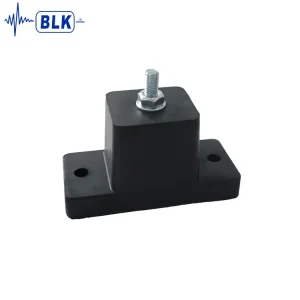
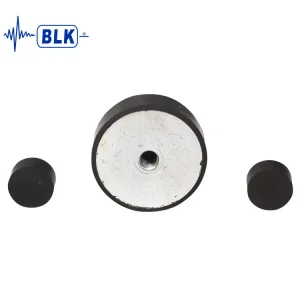
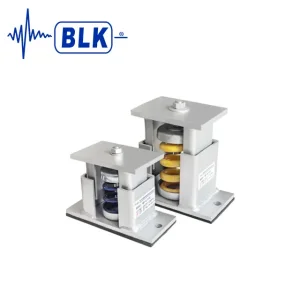
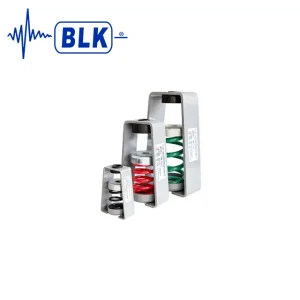
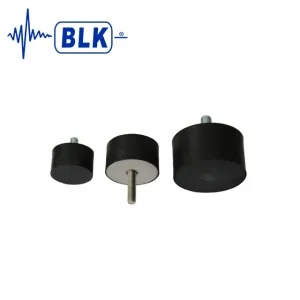
Engineered Isolators, Mounts & Acoustic Hangers
Full engineering solutions engineered to decouple building MEP equipment, isolated foundations, and piping distribution networks throughout Malaysia.

Frequently Asked Engineering Questions
Detailed technical responses compiled by Bellking's senior application engineers to assist M&E consultants, acoustic specialists, and contractors across Malaysia.
Why is polymer vibration damping pad performance superior to regular neoprene under Kuala Lumpur’s ambient climatic conditions?
Kuala Lumpur experiences perpetual high relative humidity (averaging 80% to 95%) and ambient temperatures ranging from 28°C to 36°C, alongside intense urban ozone concentrations. Standard commercial-grade neoprene (polychloroprene) and natural rubber pads suffer from accelerated plasticizer migration, oxidative cross-linking, and moisture-induced hydrolytic degradation. This results in progressive hardening (increasing dynamic durometer by 10 to 15 Shore A over just 3 years), which drastically reduces deflection, shifts the pad’s natural frequency into resonance with equipment running speeds, and amplifies structure-borne noise. In contrast, Bellking's microcellular polyurethane and engineered elastomers utilize non-hydrolyzing polyether backbones and anti-ozonant stabilization packages, ensuring negligible compression set (≤4.5% after 20 years) and completely stable dynamic stiffness across tropical operational lifespans.
How does an acoustic consultant calculate the required pad thickness and static deflection to avoid structural resonance?
Isolation theory dictates that positive vibration isolation only commences when the excitation frequency ratio $r = f_d / f_n > \sqrt{2} \approx 1.414$. For critical Grade-A commercial or hospital facilities in Kuala Lumpur, engineers target $r \ge 3.0$ to achieve an isolation efficiency of >90%. The natural frequency of an elastomeric pad is calculated via $f_n = \frac{1}{2\pi} \sqrt{\frac{c_{dyn}}{m}}$, where $c_{dyn}$ is the dynamic stiffness under operating load and $m$ is supported mass. For polymer materials, dynamic stiffness is higher than static stiffness ($c_{dyn} = k \cdot c_{stat}$, where $k \approx 1.25 \text{ to } 1.35$). Using static deflection ($\delta_{stat}$ in mm), natural frequency can be approximated by $f_n \approx \frac{5}{\sqrt{\delta_{stat} / k}}$. If a variable-speed chiller runs at 1,200 RPM ($f_d = 20\text{ Hz}$), an $f_n$ of 6 to 7 Hz is required, demanding a static deflection of approximately 7 to 9 mm. This is achieved by stacking calibrated Bellking BK-PM pads or selecting specific closed-cell densities without risking unconstrained lateral bulging.
Can polymer damping pads be utilized directly under concrete inertia bases for wastewater and booster pumps?
Yes, this is an established engineering best practice in high-density high-rises across Mont Kiara, KLCC, and Bangsar. Concrete inertia bases provide two structural functions: they lower the overall center of gravity of the pump assembly and add structural rigidity, minimizing rocking moments during motor startup. Installing full-surface or strip-configured Bellking BK-PM polymer pads beneath the inertia block eliminates the high-frequency metal-to-metal transmission often associated with bare coil springs (which can suffer from spring coil surge at frequencies above 200 Hz). The high loss factor ($\tan \delta$) of our polymer pad acts as a mechanical barrier against acoustic flanking paths, protecting the building's structural concrete from high-frequency hydraulic pressure pulsations.
What documentation and test verifications are supplied to satisfy CIDB and local council (DBKL) site audits?
Every shipment dispatched to Kuala Lumpur construction projects is accompanied by an inspection dossier conforming strictly to ISO 9001:2015 quality management procedures. This includes comprehensive raw material spectral analysis, durometer hardness reports (ASTM D2240), static and dynamic compressive load-deflection curves (DIN 53513 / ISO 4664), compression set compliance (ASTM D395 Method B), and 900-hour salt spray corrosion test certifications for bonded structural steel plates. For projects seeking Green Building Index (GBI) or BCA Green Mark recognition, we provide volatile organic compound (VOC) outgassing test data ensuring complete compliance with indoor air quality requirements.
How are dynamic point loads calculated for equipment with asymmetric weight distributions (e.g., centrifugal chillers with side-mounted evaporators)?
Industrial chillers and co-generation sets never feature uniform weight distribution; the compressor motor and evaporator barrel concentrate mass on one side. Sizing identical pads for all mounting feet inevitably causes uneven static deflection, tilting the equipment, placing excessive torsional strain on flexible pipe couplings, and causing premature acoustic failure on the overloaded pads. Bellking application engineers utilize 3D point-load matrix algorithms based on exact manufacturer center-of-gravity (COG) data. We supply mixed-durometer or dimensionally graduated polymer pads for individual support points, ensuring that every mounting foot achieves identical static deflection ($\pm0.5\text{ mm}$), maintaining absolute level alignment and uniform resonant frequency across the machinery skid.
What is the standard lead time for bespoke, non-standard polymer damping pad dimensions for Klang Valley delivery?
While standard BK-PM, BKTS, and MB series inventory models are dispatched within 24 hours of purchase order validation, custom geometries—including specialized waterjet-cut profiles, bonded sandwich steel load plates, or custom bolt-hole patterns for large transformer skids—are custom engineered at our Kunshan facility. Tooling and production lead times for bespoke formulations typically range from 3 to 7 working days, with expedited express air-freight options into Kuala Lumpur International Airport (KLIA) or consolidated sea-freight containers directly into Port Klang, ensuring your critical installation milestones are never delayed.
Accelerate Your Structural Vibration Isolation Specification
Collaborate directly with Bellking’s specialized engineering team. Submit your equipment operating weights, motor RPMs, center-of-gravity coordinates, and acoustic targets for an exhaustive, code-compliant vibration isolation schedule within 24 hours.